
These zucchini fritters are built around one goal: a crisp, golden exterior with a tender, cohesive center – no soggy middle, no falling apart in the pan. However, they’re made with grated zucchini, feta, dill and mint, bound with almond flour instead of breadcrumbs and inspired by the Greek tradition of kolokithokeftedes.
Quick Answer
These low-carb Mediterranean zucchini fritters combine grated zucchini with feta, dill, mint and a low-carb binder. Therefore, the key to crisp fritters is removing excess zucchini moisture before mixing, then shaping them thin and frying them in a properly heated, uncrowded pan. But they’re inspired by Greek kolokithokeftedes rather than presented as an unchanged traditional recipe. Also allow about 55 minutes from start to finish.
Why You’ll Love These Zucchini Fritters
- Genuinely crisp edges – not the pale, faintly steamed version you get when the zucchini isn’t dried out enough.
- A tender, cohesive center that holds together on the fork.
- Lower in carbs than flour- or breadcrumb-heavy versions, thanks to an almond flour binder.
- Feta, dill, mint and scallions give them a bright, savory Mediterranean flavor.
- Work as a mezze plate, a light lunch or a side for grilled fish or chicken.
- Honestly timed – including the zucchini draining step most recipes gloss over.
Are Zucchini Fritters Greek?
Zucchini fritters show up across Mediterranean and Middle Eastern kitchens in different forms, but the version closest to this recipe’s flavor profile comes from Greece.
Kolokithokeftedes and the Greek Connection
In Greek cooking, zucchini fritters are known as kolokithokeftedes-“kolokithi” meaning zucchini and “keftedes” referring to the fritter or patty family that also includes meat keftedes. Moreover, they’re a common meze dish, especially in home kitchens and tavernas, typically made with grated or finely chopped zucchini, feta, fresh herbs like dill or mint, egg and a dry binder such as flour or breadcrumbs, shallow-fried in olive oil. Further, they’re often served with a cooling yogurt-based sauce like tzatziki and a squeeze of lemon. Because zucchini fritters are also strongly associated with Crete, where similar dishes appear frequently in home cooking – though it would be inaccurate to say all Greek zucchini fritters originated there specifically, since versions are made across the country.
How This Low-Carb Version Is Different
| Traditional Greek-style | This low-carb adaptation |
| Often uses flour or breadcrumbs as the binder. | Uses almond flour for a lower-carb structure. |
| Proportions vary by household and region. | Tested specifically for a lower-carb result. |
| Greek-style flavor framework (feta, dill, mint, olive oil). | Same flavor direction, adapted binder. |
This recipe keeps the zucchini, feta, herbs and Greek-style flavor profile that define kolokithokeftedes, but it isn’t presented as an unchanged traditional recipe – it’s a low-carb adaptation built with that tradition as the reference point. Mediterranean-style eating more broadly emphasizes vegetables and minimally processed plant foods, with olive oil as a principal fat and this recipe fits comfortably within that pattern, even as a modern, lower-carb take on a classic.
Ingredients You’ll Need
The Key Ingredients
Zucchini is the base of the dish and also the biggest obstacle to crisp fritters – it’s mostly water, which is why the salting and squeezing step matters so much. Because feta adds salt, tang and a crumbly texture that holds up well against the zucchini. Egg binds everything together. Then dill and mint are the classic Greek herb pairing for zucchini dishes – dill brings a grassy, slightly anise-like note and mint keeps the mixture from tasting flat. Further, scallions add mild onion flavor without the harshness of raw yellow onion. The low-carb binder (almond flour, in this recipe) replaces flour or breadcrumbs to soak up remaining moisture and hold the fritters together. Also, olive oil does double duty – a little in the batter for richness and more in the pan for shallow frying, which is a defining feature of Mediterranean-style cooking.
Choosing the Right Low-Carb Binder
| Binder | Role | Texture | Best use |
| Almond flour | Main low-carb structure. | Tender, crisp, well. | Recommended. |
| Parmesan | Adds structure, browning and umami. | More savory, saltier. | Optional addition. |
| Coconut flour | Very absorbent. | Can turn dense or gummy. | Use cautiously, in small amounts. |
| Conventional flour/breadcrumbs | Traditional structure. | Familiar, neutral. | Not the low-carb choice here. |
How to Make Crispy Zucchini Fritters
1. Grate and Salt the Zucchini
Grate the zucchini on the coarse side of a box grater, then toss it with salt in a colander or bowl. Because the salt draws water out of the zucchini cells by osmosis – this is the step that determines whether your fritters end up crisp or soggy.
2. Drain and Squeeze Until Properly Dry
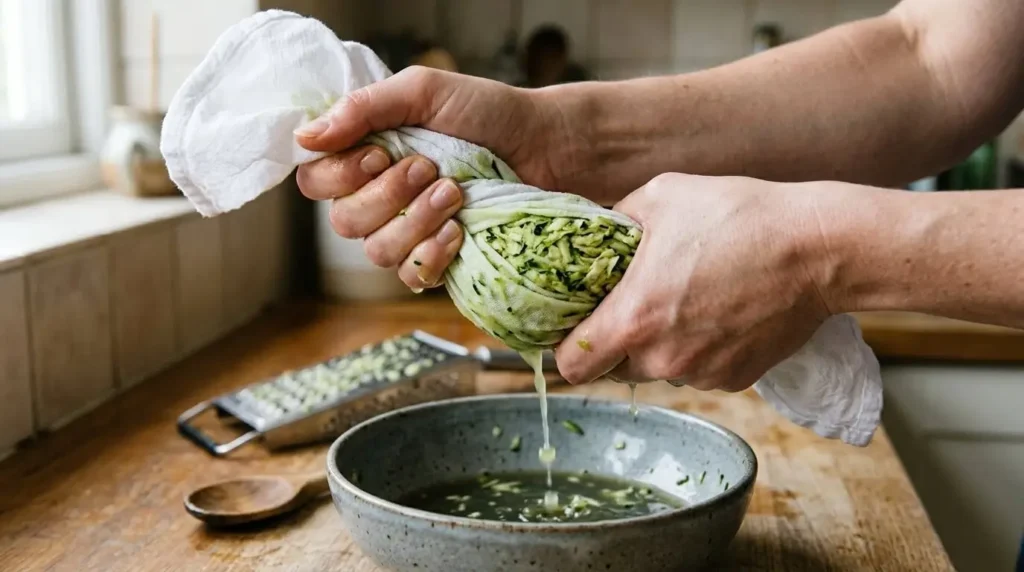
Let the salted zucchini sit for about 15-20 minutes to release liquid, then squeeze it – hard – in a clean kitchen towel or cheesecloth. Moreover, this is the step most recipes underexplain and it’s the single biggest factor in whether your fritters hold together and crisp up.
Quick decision guide
| If the zucchini looks… | Do this. |
| Very wet, liquid still pooling. | Squeeze again, twisting the towel tighter. |
| Damp but compact, it holds its shape when pressed. | Ready to mix. |
| Completely dry and starting to crumble. | Add back a small spoonful of the squeezed liquid. |
When I tested this recipe, I was surprised how much liquid a single large zucchini gives up – close to half a cup. However, skipping this step or rushing it is the fastest way to end up with a fritter that falls apart or steams instead of browning.
3. Mix Until the Batter Is Thick and Sticky
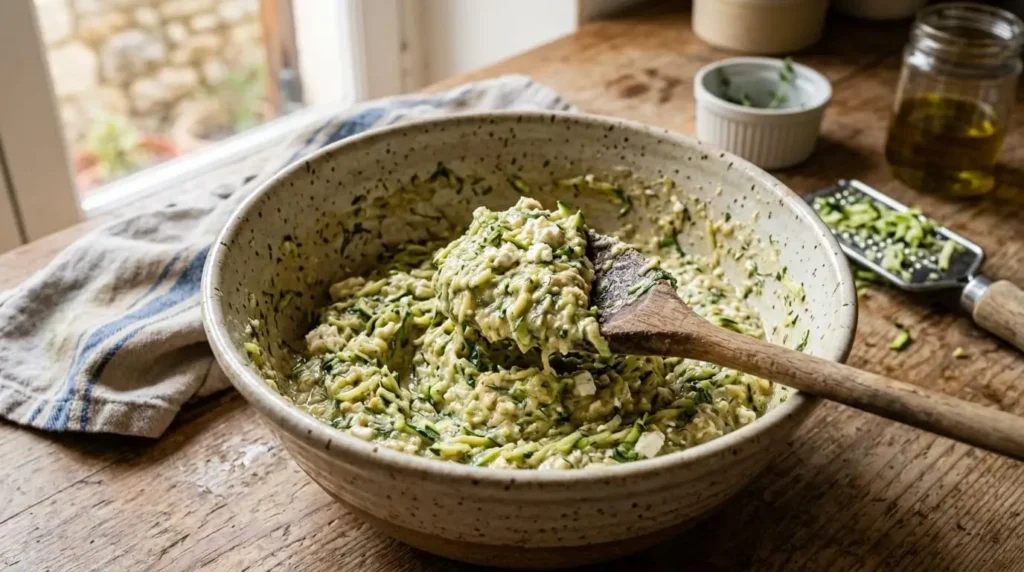
Combine the squeezed zucchini with egg, feta, almond flour, dill, mint and scallions. Because the mixture should be thick enough to hold together on a spoon, not runny or loose. If it still feels wet, stir in a little more almond flour, a tablespoon at a time, until it holds its shape.
4. Shape Thin Fritters
Portion the mixture into rounds and flatten them so they’re noticeably thinner than a typical burger patty. Therefore, thinner fritters cook through faster, brown more evenly on the surface and are far less likely to end up wet in the middle by the time the outside is done.
5. Fry in an Uncrowded, Properly Heated Pan
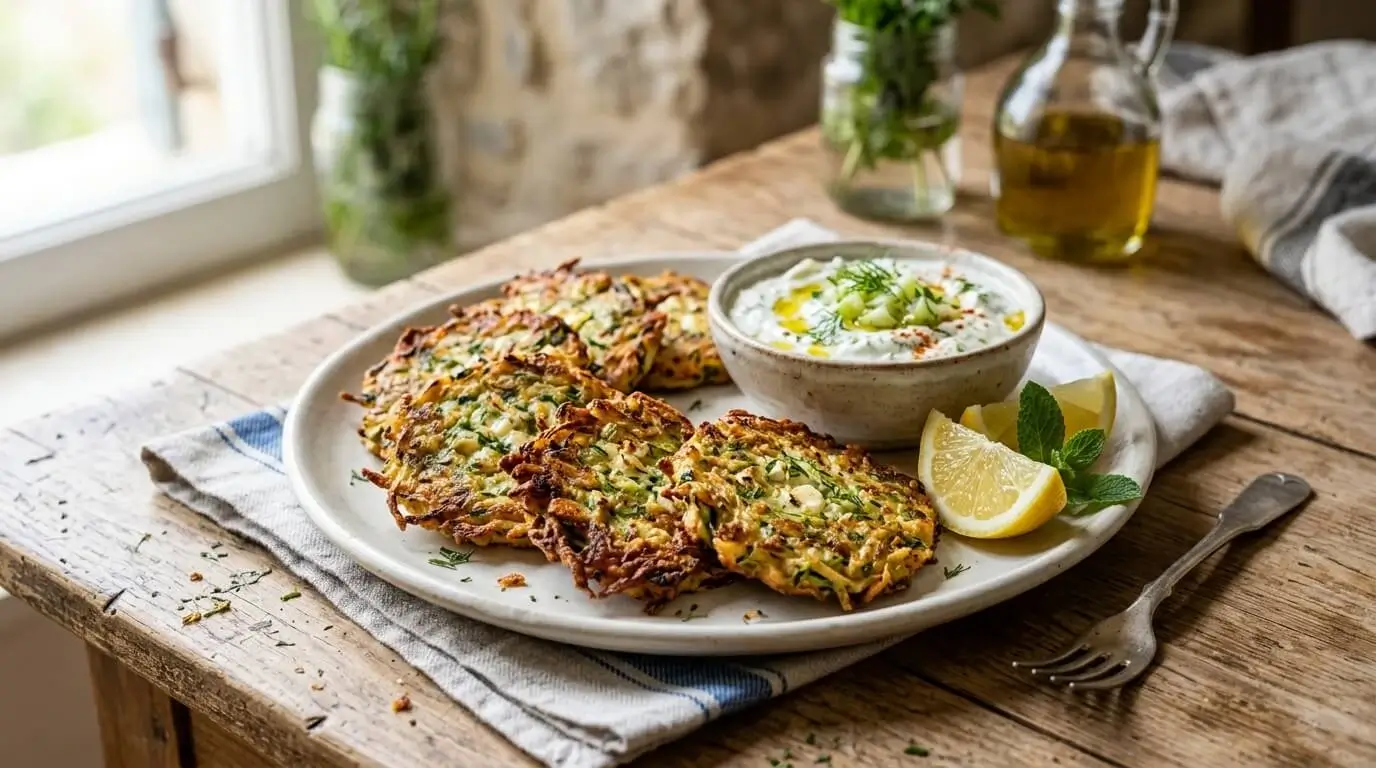
Heat olive oil in a wide skillet until it shimmers – a small piece of the mixture should sizzle immediately when it hits the oil. Also, add the fritters in a single layer with space between each one; crowding the pan drops the oil temperature and traps steam, which is exactly what produces pale, greasy fritters instead of crisp ones. Then fry for a few minutes per side until deeply golden, flipping once the first side has visibly set and browned. Cook in batches rather than forcing everything into the pan at once.

6. Drain on a Wire Rack
Transfer cooked fritters to a wire rack instead of stacking them on paper towels. Furthermore, paper towels trap steam underneath the fritter, which softens the crust you just worked to build. A rack lets air circulate on all sides.
Low-Carb Mediterranean Zucchini Fritters
Ingredients
Method
Notes
- The most important step is squeezing the zucchini thoroughly.
- Shape the fritters relatively thin for better browning and a fully cooked center.
- Don’t crowd the pan or the fritters will steam instead of crisp.
- Test the first fritter before cooking the entire batch.
- Drain cooked fritters on a wire rack to protect the crust.
- These are Greek-inspired low-carb zucchini fritters, not a claim that this exact formula is a traditional Greek recipe.
The Crispness Decision Guide
| Problem | Likely cause | Fix |
| Soggy center | Too much zucchini moisture or the fritter is too thick. | Squeeze more next time; shape thinner. |
| Falling apart | Batter too loose. | Add more almond flour, a tablespoon at a time. |
| Pale and greasy | Pan too cool or overcrowded? | Let oil reheat; cook in smaller batches. |
| Burnt outside, raw inside | Heat too high or fritter too thick. | Lower the heat; shape thinner. |
| Crisp at first, soft later | Steam buildup after cooking. | Drain on a rack; don’t stack fritters. |
How to Keep Zucchini Fritters from Falling Apart
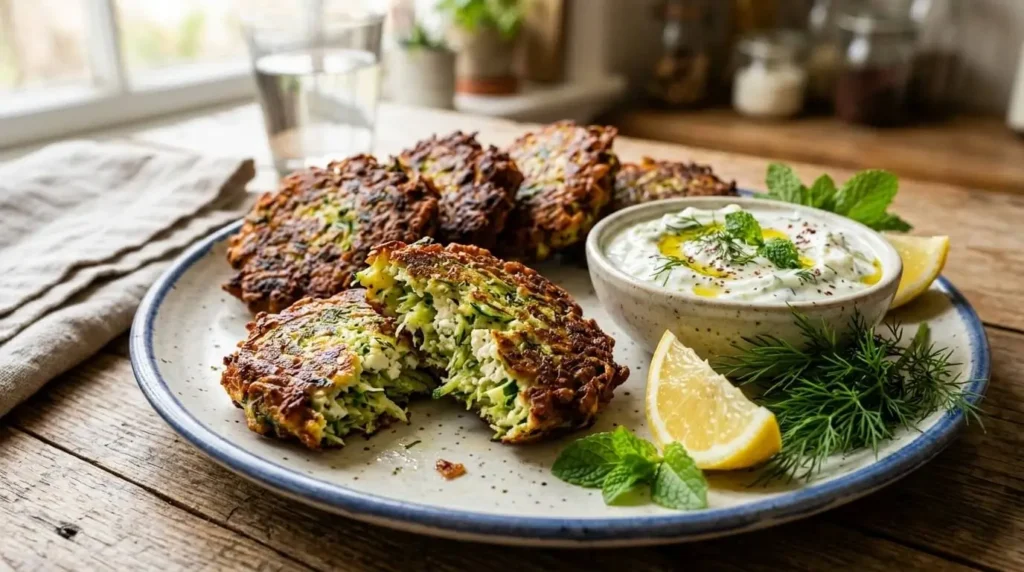
- Remove as much water from the zucchini as you possibly can – this matters more than any other single step.
- Use enough binder; if the mixture feels loose, add more almond flour rather than hoping it firms up in the pan.
- Keep fritters modest in size and thickness – large, thick patties are much more prone to breaking when flipped.
- Fry a test fritter first so you can adjust the batter before committing to the whole batch.
- Let the first side fully set and brown before attempting to flip; flipping too early is a common cause of fritters breaking apart.
Ingredient Substitutions
| Original | US-friendly alternative | Note |
| Feta | Standard block or pre-crumbled feta from any grocery store. | Block feta, crumbled by hand, tends to be less watery than pre-crumbled. |
| Fresh dill | Dried dillpre-crumbled.. | Use less – dried herbs are more concentrated. |
| Fresh mint | Dried mint. | Use sparingly; dried mint can taste stronger and more medicinal. |
| Almond flour | Another low-carb binder, such as Parmesan. | Not necessarily a 1:1 swap – adjust to reach the same thick consistency. |
| Greek yogurt | Plain, full-fat Greek yogurt. | For serving, as a simpler alternative to tzatziki. |
| Tzatziki | Homemade or store-bought Greek yogurt-cucumber sauce. | Use if available; otherwise, plain Greek yogurt with lemon works well. |
What to Serve With Zucchini Fritters
| If serving as… | Pair with |
| Mezze or appetizer | Tzatziki and a squeeze of lemon. |
| Light lunch | Greek salad or a simple cucumber salad. |
| Breakfast or brunch | Fried or poached eggs. |
| Main or light dinner | Grilled fish or grilled chicken with a side salad. |
Storage, Freezing & Reheating
Refrigerator Storage
Store cooled fritters in an airtight container in the refrigerator. Cooked leftovers are generally safe to eat for 3-4 days when properly refrigerated, so plan to finish them within that window.
Can You Freeze Zucchini Fritters?
Yes – cooked fritters freeze reasonably well. Also, cool them completely, then freeze in a single layer before transferring to a freezer bag or container, which keeps them from sticking together and makes them easier to reheat a few at a time.
How to Reheat Them Crisply
| Method | Expected texture | Best use |
| Skillet | Crisp | Small batches. |
| Oven | Crisp and warm throughout | Larger batches. |
| Air fryer | Crisp | Fast reheating. |
| Microwave | Soft, no crisp edge | Convenience only. |
Whichever method you use, reheat leftovers thoroughly to an internal temperature of 165°F before eating.
How Long Do Zucchini Fritters Take?
| Stage | Time |
| Active prep | 35 minutes |
| Zucchini draining | 20 minutes |
| Cooking | 20 minutes |
| Total | ~55 minutes |
Plenty of recipes online list zucchini fritters as a 25-30 minute recipe, but that rarely accounts for the actual time zucchini needs to release its water. The total time here includes the zucchini draining step, because skipping or rushing this stage is one of the easiest ways to end up with soggy fritters. Moreover, twenty minutes of hands-off draining time is still real time in your kitchen, even if you’re not standing at the counter for all of it.
Frequently Asked Questions
Are zucchini fritters Greek?
Zucchini fritters, known as kolokithokeftedes, are a well-established part of Greek home cooking and meze spreads, especially associated with Crete. Because this recipe is a low-carb adaptation inspired by that tradition, not a claim to be an unchanged traditional version.
What are zucchini fritters made of?
At their core, zucchini fritters combine grated zucchini, egg, a binder and seasoning. Therefore, this Mediterranean-style version adds feta, fresh dill, mint and scallions, with almond flour standing in for flour or breadcrumbs as a lower-carb binder.
How do you make zucchini fritters crispy?
Crisp fritters come down to removing enough zucchini moisture, mixing a thick batter, shaping the fritters thin, frying in a hot and uncrowded pan and draining them on a wire rack instead of paper towels so the crust doesn’t soften from trapped steam.
Can I make zucchini fritters without flour?
Yes. Furthermore, this recipe replaces flour and breadcrumbs with almond flour, which absorbs excess moisture and helps bind the mixture while keeping the carb count lower than a traditional flour-based fritter.
Why are my zucchini fritters soggy?
Soggy fritters are almost always a moisture problem: not squeezing the zucchini thoroughly enough, shaping fritters too thick or cooking them in a pan that’s too cool or too crowded, which traps steam instead of browning the surface.
Do zucchini fritters freeze well?
Yes, with a texture caveat – freeze cooked fritters in a single layer, then transfer to a freezer bag. However, they’ll lose a little crispness in the freezer, but reheating them in a skillet, oven or air fryer brings much of that texture back.
What should I serve with zucchini fritters?
Tzatziki and lemon are the classic pairing for a mezze spread. But for a fuller meal, add a Greek or cucumber salad, eggs for brunch or grilled fish or chicken alongside them for dinner.
Final Recipe Notes
Test one fritter before committing to the whole batch – it tells you immediately if the mixture needs more binder. Don’t crowd the pan, even if it means an extra batch, because these fritters are best eaten hot, right after frying, when the crust is at its crispest. And to be clear: this is a Greek-inspired, low-carb adaptation of kolokithokeftedes, not a claim to an unchanged traditional recipe.