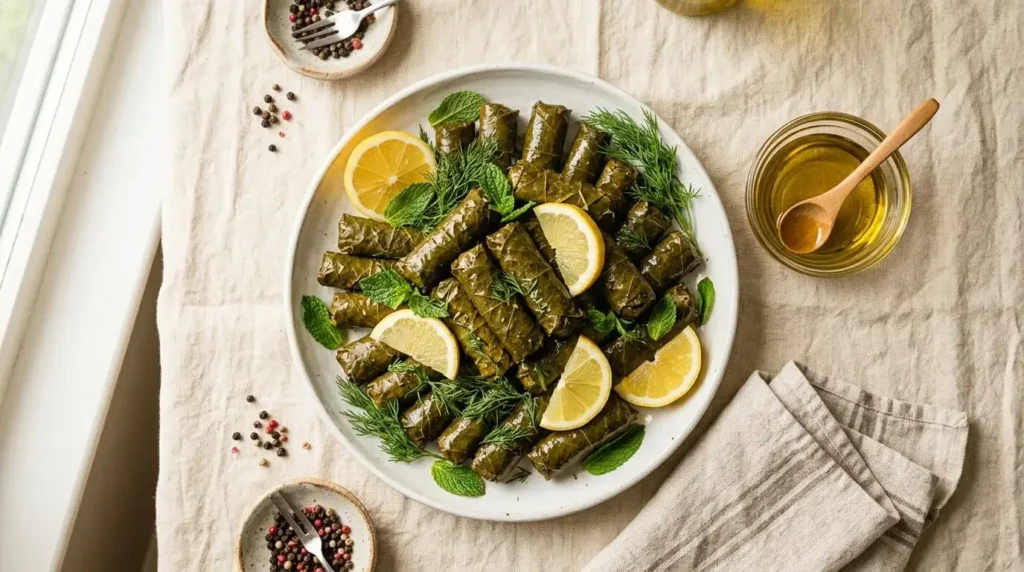
Vegan dolmas are grape leaves rolled around an herb-flecked rice filling, finished with lemon and olive oil – no meat, no substitutes standing in for anything. Therefore, this Greek-leaning version leans on dill, mint and parsley the way a proper Greek taverna plate does and it’s genuinely vegan rather than a meat recipe with the filling swapped out. Moreover, this recipe was made in three separate batches before writing a word of this article, because the biggest thing missing from most dolma recipes online isn’t the ingredient list – it’s an honest account of how long rolling actually takes.
Quick Answer Box
What are vegan dolmas?
Vegan dolmas are grape leaves wrapped around a meat-free filling, usually rice, herbs, onion, olive oil and lemon. However, Greek vegetarian dolmades and Turkish/Levantine yalanji are examples of traditional meatless grape-leaf preparations.
Are dolmas always vegan?
No. Dolma is a broad family of stuffed dishes and some versions contain meat. Therefore, meatless grape-leaf versions are traditionally found across several Mediterranean and Middle Eastern cuisines.
How long do vegan dolmas take?
The rolling is the time-consuming part. But allow significantly more time if you’re making them for the first time.
What Are Dolmas?
“Dolma” isn’t the name of one dish – it’s a word for a whole category of stuffed foods found across the Eastern Mediterranean, the Balkans and the Middle East. Because peppers, tomatoes, zucchini, cabbage leaves and grape leaves can all be “dolma” once they’re stuffed with a rice or grain filling. That’s why when people say “dolmas” in the US, they almost always mean the small, cigar-shaped grape leaf version – but that’s really one branch of a much larger family tree and different regions use different names for their own version of it.
Dolma vs. Dolmades vs. Yalanji
Dolma is a Turkish-origin word that spread across the region and now covers any stuffed vegetable or leaf dish. Moreover, Dolmades is the Greek plural form and in Greek kitchens it specifically points to stuffed grape leaves – the dish most US home cooks picture. Yalanji is the Turkish and Levantine term for the meatless, olive-oil-based version of stuffed grape leaves, historically distinguished from meat-filled dolma because it was often served cold as a mezze rather than hot as a main course. Further, sarma is used in Turkish and Balkan kitchens to describe rolled or wrapped preparations more broadly, including cabbage-leaf versions. Also, warak enab is the Arabic term used across the Levant, translating roughly to “grape leaves” and it covers both meat and meatless preparations depending on the household.
Are Dolmas Usually Vegan?
Not all dolmas are vegan. But some contain meat, while traditional meatless versions such as yalanji and vegetarian Greek dolmades can be vegan. However, the distinction has never been about one version being more “correct” than another – meatless grape-leaf dishes have their own long-standing place in Mediterranean and Levantine cooking, not as a substitution but as a category of their own.
| Name | Region/tradition | What it means here | Typical serving |
| Dolma | Broad regional term. | Stuffed dish family. | Varies. |
| Dolmades | Greek. | Stuffed grape leaves. | Room temp/chilled. |
| Yalanji | Turkish/Levantine. | Meatless grape-leaf dolma. | Cold/room temp. |
| Warak enab | Levantine. | Grape leaves. | Warm or cold. |
| Sarma | Turkish/Balkan usage. | Wrapped/rolled preparations. | Varies. |
What Goes Into Vegan Dolmas?
The filling is short. Therefore, that’s the point – a handful of pantry staples, treated carefully, rather than a long ingredient list trying to make up for thin flavor.
The Rice and Herb Filling
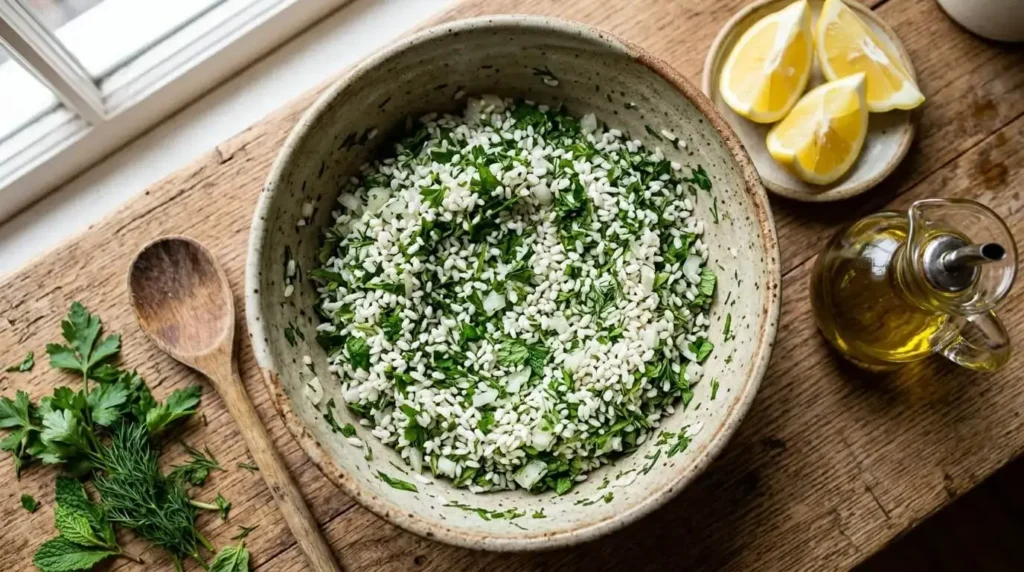
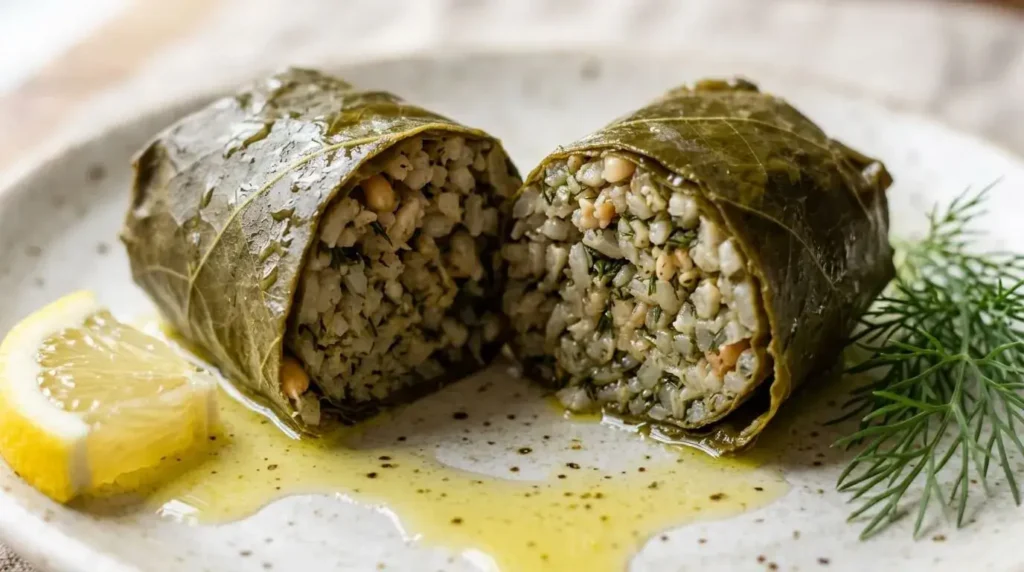
This filling is built on short- or medium-grain rice, finely chopped parsley, dill and mint, grated or minced onion, olive oil, lemon juice, salt and black pepper. Moreover, short- and medium-grain rice holds together better than long-grain once cooked, which matters when you’re trying to keep forty tightly rolled leaves intact in a crowded pot. Because the filling should feel moist and cohesive when you pinch it between your fingers – not wet enough to drip, not dry enough to crumble.But that moisture matters because the rice still has cooking to do once it’s rolled inside the leaf and it needs both liquid and room to finish expanding without bursting its wrapper.
Choosing Grape Leaves
Jarred grape leaves, found in the international aisle of most US grocery stores, are the easiest starting point – rinse them well to wash off the brine, which is sharp enough to throw off the whole dish if you skip this step. Hence, fresh grape leaves, when you can find them (often at Middle Eastern or Greek markets or from a backyard vine in late spring), need a quick blanch until pliable before you can work with them. Then smaller, more tender leaves roll more easily than large, leathery ones and if a leaf tears, you can usually patch the gap with a scrap from a smaller leaf without anyone noticing once the dolma is cooked.
Mini decision guide:
- Jarred leaves: easiest for beginners, consistent size, ready after a rinse.
- Fresh leaves: best when tender and in season, but require blanching first.
- Very large/tough leaves: harder to roll and may need extra softening or trimming of the thick center stem.
How to Prepare Grape Leaves and Filling
Prepare Jarred or Fresh Leaves
Drain the jar and rinse the leaves thoroughly under cool water, separating them gently so you don’t tear the delicate ones. Moreover, trim the tough stem at the base of each leaf if it’s thick enough to feel between your fingers. Furthermore, keep prepared leaves stacked under a damp towel while you work so they don’t dry out and crack at the edges. However, for fresh leaves, blanch them in batches in simmering water for 20-30 seconds each, just until they turn a duller green and go pliable, then transfer to a bowl of cool water.
Prepare the Rice Filling
Combine the uncooked rice with the chopped herbs, onion, olive oil, lemon juice, salt and pepper in a bowl, stirring until everything is evenly distributed and the rice grains are lightly coated in oil. Therefore, this recipe uses raw, uncooked rice in the filling rather than pre-cooking it, because the rice finishes cooking slowly inside the rolled leaf during simmering, which is what gives it that tender, herb-infused texture rather than a filling that tastes separately cooked and then assembled.
| Rice approach | Advantage | Trade-off |
| Par-cooked | Easier texture control. | Adds prep time. |
| Raw | Traditional in some versions. | Requires more precise liquid/cooking. |
| Fully cooked | Fast assembly. | Higher risk of mushy filling. |
How to Roll Vegan Dolmas
This is the section that actually determines whether your dolmas hold together – and it’s where most recipes stop at “roll it up” without explaining why each step matters.
The 7-Step Rolling Method
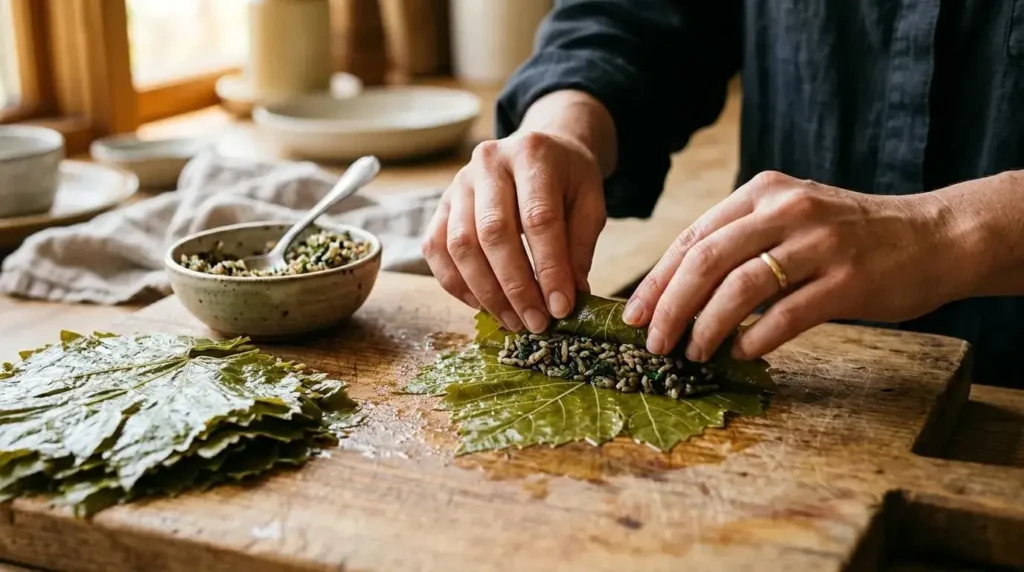
- Place the leaf shiny-side down, vein-side up, on a clean work surface.
- Position about 1-2 teaspoons of filling near the stem end, in a small horizontal line.
- Fold the bottom (stem) end up and over the filling.
- Fold both sides of the leaf inward, toward the center.
- Start rolling the leaf snugly toward the pointed tip.
- Roll firmly but leave a little slack for the rice to expand as it cooks.
- Set the finished roll seam-side down, so it can’t unravel on its own.
I found this step easy to describe and much harder to feel right the first dozen times – my first batch had rolls in three different sizes before my hands settled into a rhythm. Further, that’s normal and it gets faster and faster.
How Much Filling Should Go in Each Leaf?
Use roughly 1-2 teaspoons per leaf, depending on its size and never fill all the way to the edges. Because the rice needs room to expand as it absorbs liquid during cooking and a roll that looks slightly underfilled going into the pot is usually the right amount. However, smaller, more consistent rolls also cook more evenly than a mix of oversized and undersized ones.
Don’t overfill: The most common beginner mistake: too much filling. A dolma should look slightly underfilled before cooking because the rice still needs room to expand.
How to Cook Vegan Dolmas Without Them Falling Apart
Pack the Pot Correctly
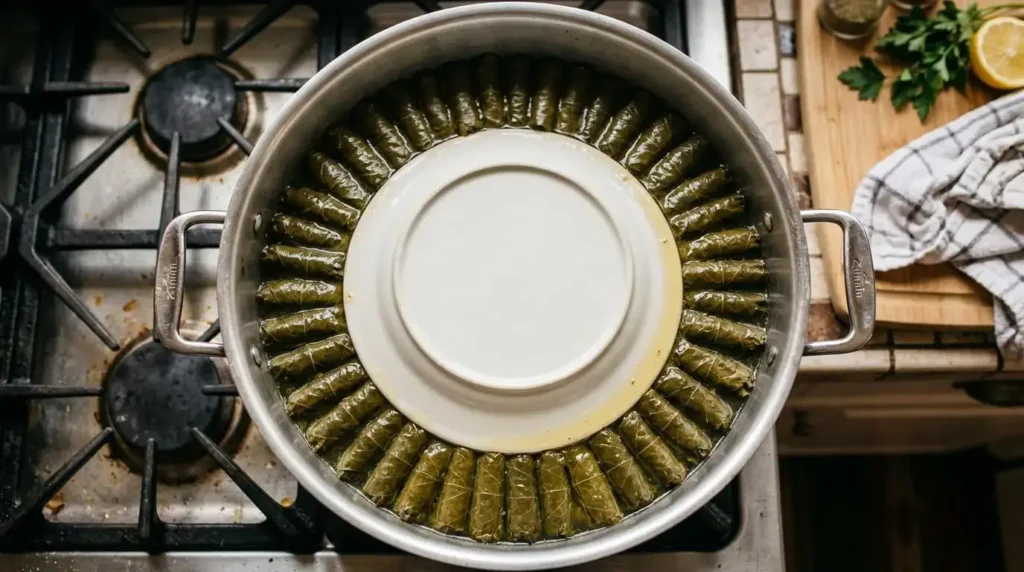
Line the bottom of the pot with a few spare or torn grape leaves to protect the rolls from scorching against direct heat. Arrange the dolmas seam-side down in tight, snug rows, packing them closely enough that they support each other and can’t shift or unroll. Hence, once the pot is full, set a heatproof plate directly on top of the rolls.
Simmer Gently and Let Them Rest
Add the recipe’s measured cooking liquid – a mix of water, olive oil and lemon juice – until it reaches partway up the sides of the dolmas. Moreover, bring it to a bare simmer, not a rolling boil, then cover and keep it gentle for the full cooking time; an aggressive boil is one of the fastest ways to blow rolls apart. Further cook until the rice is tender and the leaves have turned soft and yielding, then turn off the heat and let the pot rest, still covered, for a stretch before serving. Therefore, that resting period lets the rice finish absorbing liquid and firms up the rolls so they hold their shape when you lift them out.
Why the plate? The plate keeps the rolls from moving, floating or unraveling while they simmer.
How Long Do Vegan Dolmas Take?
Honest Active and Total Time
Here’s the part most dolma recipes online gloss over: a lot of them list 20-45 minutes of prep for 40-60 leaves and in a real kitchen, that number is optimistic for anyone rolling dolmas for the first time. That’s why rolling is the slow part, not the simmering – the simmering is genuinely hands-off. Give yourself real time for it.
| Experience | Active time | Total time |
| First batch | 90-120 min | 2½–3½ hr |
| Experienced | 45-60 min | 1½–2½ hr |
If this is your first time rolling dolmas, give yourself extra time. But the simmering is hands-off; the rolling is the project.
What Makes the Recipe Take Longer?
The total time shifts with the number of dolmas you’re rolling, the size of your leaves, how much rolling experience you already have, how far in advance you prep the filling and whether you’re working with jarred or fresh leaves – fresh leaves add a blanching step that jarred leaves skip entirely.
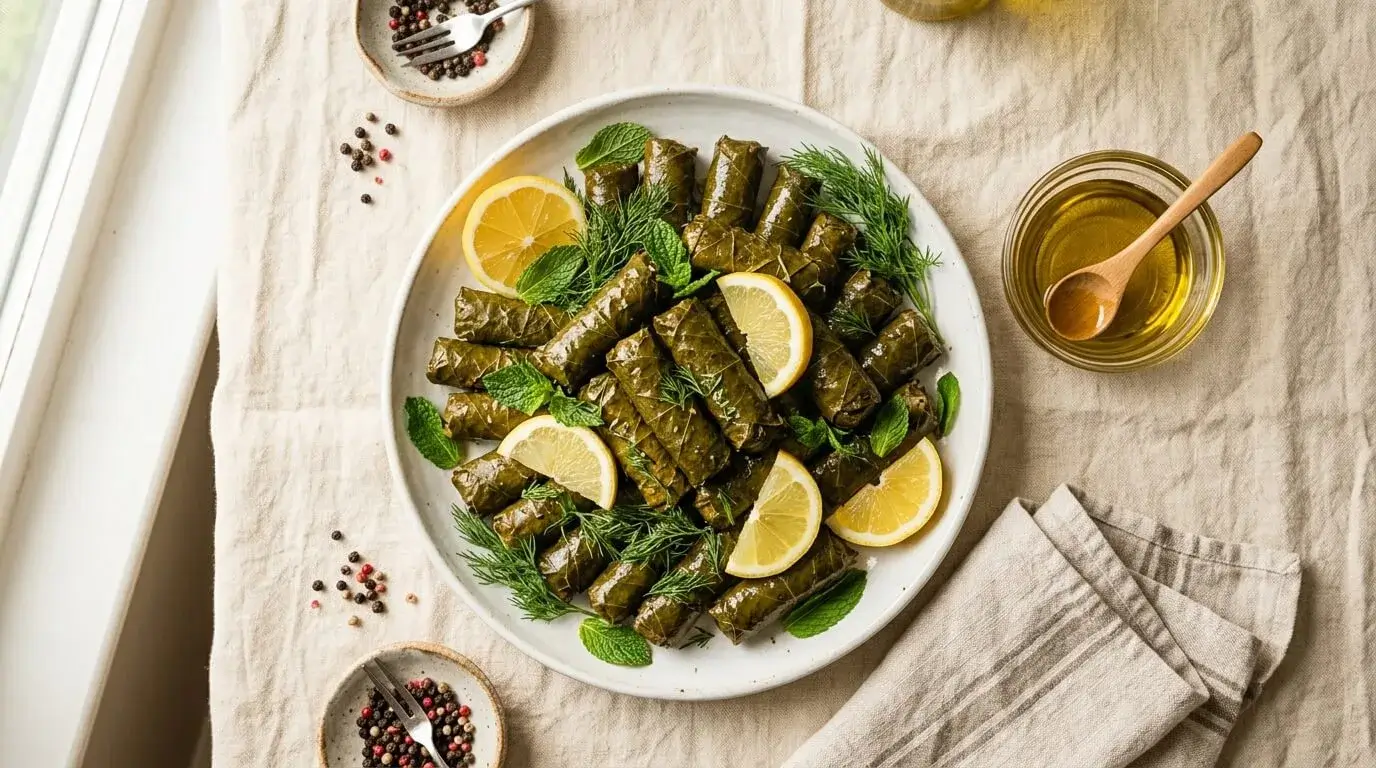
Vegan Dolmas (Greek Stuffed Grape Leaves)
Ingredients
Method
Notes
Vegan Dolmas by Regional Tradition
Greek Dolmades
Greek dolmades lean heavily on dill, mint and parsley in the rice filling, finished with lemon and good olive oil. However, they’re a staple on the mezze table, most often served at room temperature or chilled rather than hot, alongside other small plates.
Turkish & Levantine Yalanji
Yalanji is the meatless branch of Turkish and Levantine stuffed grape leaves, built around olive oil, herbs and lemon rather than meat and butter. Like Greek dolmades, they’re typically served cold or at room temperature, which is part of what distinguishes yalanji from the hot, meat-based dolma served as a main course in the same kitchens.
Warak Enab and Other Regional Names
Warak enab is the term used across Lebanon and the wider Levant for grape leaf dishes, with household recipes varying widely in herb ratios and seasoning. Moreover, Armenian and Assyrian kitchens have their own long-standing grape leaf traditions and koupepia is the Cypriot term for a closely related dish. Furthermore, these aren’t interchangeable recipes wearing different names – each reflects its own regional technique and flavor balance and none of them should be flattened into one “authentic” version.
| Name | Region | Typical filling style |
| Dolmades | Greece | Dill, mint, parsley and lemon. |
| Yalanji | Turkey/Levant | Herbs, olive oil, lemon and no meat. |
| Warak enab | Lebanon/Levant | Household-varied herb blends. |
| Koupepia | Cyprus | Regional Cypriot seasoning. |
Substitutions for US Home Cooks
Easy Grocery-Store Substitutions
| Traditional/ideal ingredient | US-friendly alternative | Effect |
| Fresh grape leaves | Jarred grape leaves. | Easier, more accessible. |
| Short-grain rice | Medium-grain rice. | Similar cohesion. |
| Fresh herbs | Use fresh whenever possible. | Dried changes texture/flavo. |
| Pine nuts | Walnuts or omit. | Regional/texture change. |
| Vegetable broth | Water and seasoning. | Neutral alternative. |
What Not to Substitute Casually
Swapping the rice for quinoa or adding chickpeas or a vegan meat substitute to the filling creates a genuinely different dish. Therefore, those swaps can be delicious, but they shouldn’t be presented as the traditional baseline version of vegan dolmas.
Troubleshooting Vegan Dolmas
Why Are My Dolmas Falling Apart?
Loose rolling and a lack of weight in the pot are the usual culprits. Hence, roll snugly, pack the dolmas tightly seam-side down and always cook them with a heatproof plate on top to hold everything in place.
Why Are the Leaves Tough?
Tough leaves are usually under-softened – either jarred leaves that weren’t rinsed and separated properly or fresh leaves that didn’t get a full blanch. Also, extend the softening step before rolling.
Why Is the Rice Mushy or Hard?
Mushy rice usually means too much cooking liquid or too long a simmer. Because hard rice usually means too little liquid or not enough time. But both are fixable by adjusting the liquid and continuing a gentle simmer until the texture is right.
Why Is the Filling Dry or Too Sour?
Dry filling needs more olive oil or liquid worked in before rolling. Overly sour filling usually means the lemon juice wasn’t balanced against the measured cooking liquid – cut back slightly and taste as you go.
| Problem | Likely cause | Fix |
| Rolls unravel | Loose rolling / no weight. | Pack tightly and plate weight. |
| Leaves tear | Tough or poorly softened leaves. | Soften properly. |
| Rice mushy | Too much liquid / overcooking. | Control liquid and heat. |
| Rice hard | Too little liquid/time. | Continue gentle simmer. |
| Filling dry | Insufficient moisture/fat. | Adjust oil/liquid. |
| Too sour | Excess lemon. | Balance with measured liquid. |
| Rolls burst | Too much filling. | Leave expansion room. |
How to Serve Vegan Dolmas
Hot, Room Temperature, or Chilled?
Serving temperature varies by tradition – some households eat dolmas warm straight from the pot; others let them cool fully before serving. Overall, for this Greek-leaning vegan version, I prefer them at room temperature or lightly chilled, the way vegetarian Greek dolmades and yalanji are traditionally served, which also lets the lemon and olive oil flavors settle in.
What to Serve With Dolmas
- Lemon wedges
- Olives
- Hummus
- Greek salad
- Tabbouli
- Baba ganoush
- Vegan yogurt or tzatziki-style sauce
- Fresh herbs
Storage, Freezing & Reheating
Refrigerator Storage
Store cooked, cooled dolmas in an airtight container in the refrigerator, ideally within a couple of hours of cooking. That’s why they’ll keep well for a few days when stored this way and the flavor often improves slightly after a day as the lemon and herbs settle in.
Freezing and Reheating
Cooked dolmas freeze well – arrange them in a single layer to freeze solid before transferring them to a freezer bag or container, which keeps them from clumping together. Thaw overnight in the refrigerator, then reheat gently, either steamed briefly or warmed in a covered pan over low heat with a splash of water. Furthermore, avoid blasting them in the microwave at full power, which tends to dry out the rice and toughen the leaves. But this make-ahead quality is part of what makes dolmas useful as a mezze you can prep well before guests arrive.
Frequently Asked Questions About Vegan Dolmas
Are dolmas usually vegan?
Not automatically. Dolma is a broad category that includes meat-filled versions, but meatless traditions like Greek vegetarian dolmades and Turkish/Levantine yalanji have long existed as their own established dishes, not as substitutions for a meat version.
What are dolmas made of?
Vegan dolmas are made from grape leaves wrapped around a filling of rice, fresh herbs like parsley, dill, mint, onion, olive oil and lemon juice. because The mixture is rolled and simmered gently until the rice is tender and the leaves are soft.
What is the difference between dolmades and dolmas?
Dolma is the broader term for any stuffed vegetable or leaf dish across the region. Therefore, Dolmades is the Greek plural specifically referring to stuffed grape leaves, making it a more specific term within the wider dolma family.
What rice is best for dolmas?
Short- or medium-grain rice works best because the grains hold together well after cooking. Overall, long-grain rice tends to stay looser and separate, which makes the finished rolls less cohesive when you cut into or lift them.
Do I need to cook rice before stuffing dolmas?
No. This recipe uses raw rice in the filling, which finishes cooking slowly inside the rolled leaf during the simmer. But that slow cooking is what gives the rice its tender, herb-infused texture rather than a separately cooked, assembled filling.
Do you eat dolmas hot or cold?
It depends on the tradition. Because Greek dolmades and Turkish/Levantine yalanji are typically served at room temperature or chilled as part of a mezze spread, while some meat-filled dolma versions in other households are served warm.
Can you freeze vegan dolmas?
Yes. Cooked dolmas freeze well when arranged in a single layer until solid, then transferred to a freezer container. Thaw them in the refrigerator overnight and reheat gently, either steamed or warmed in a covered pan with a little water.
Why do my dolmas fall apart?
Rolls usually fall apart from loose rolling or not enough weight during cooking. Moreover, roll each leaf snugly, pack the pot tightly with the rolls seam-side down and always place a heatproof plate on top while they simmer.