Harira is Morocco’s best-known soup – a tomato-based pot of chickpeas, lentils, fresh herbs and warm spices, finished with a flour-and-water thickener called tedouira until it turns silky and lightly creamy. Because this harira soup recipe follows that traditional-style method rather than a shortcut version and it walks through exactly why each step matters, from soaking the chickpeas to streaming in the tedouira slowly enough that it doesn’t clump.
Moreover, I tested this recipe with dried chickpeas soaked overnight, which is the traditional-style route and also ran it with canned chickpeas for a faster weeknight version – both are covered below, along with the honest timing for each.
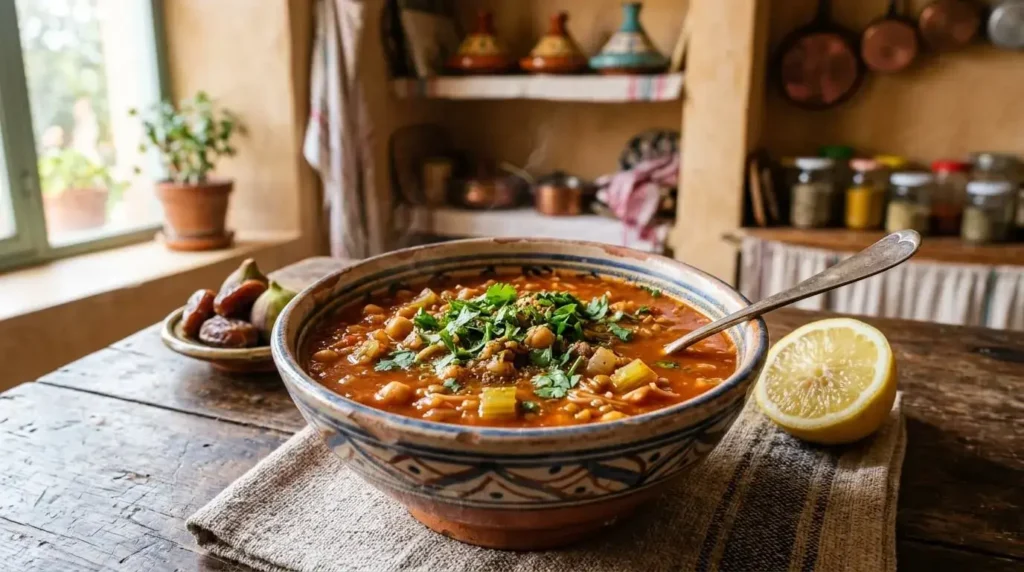
Quick Answer: Harira is a Moroccan soup built on tomatoes, chickpeas and lentils, simmered with fresh cilantro, parsley and warm spices like ginger, turmeric and cinnamon. However, it’s often made with beef or lamb, though meatless versions are common too. Further, what sets traditional-style Harira apart is tedouira, a flour-and-water mixture stirred in near the end to give the soup its characteristic silky, lightly thickened texture.
What Is Harira Soup?
Harira is a Moroccan soup made from a tomato base simmered with chickpeas and lentils, seasoned with fresh cilantro and parsley plus warm spices such as ginger, turmeric, black pepper and cinnamon. Furthermore, many versions include beef or lamb and most include a starch – either fine vermicelli or rice – added near the end of cooking. But it’s the soup most closely tied to Ramadan in Morocco, where it’s traditionally the dish that breaks the day’s fast at iftar, though Moroccan households make it year-round as well.
There isn’t one single “correct” recipe for Harira. Then families and regions vary the meat, the starch, the exact spice balance and how much they thicken it – which is part of why two versions from two different kitchens can taste noticeably different while both being genuinely traditional.
What Makes Harira Different From Other Moroccan Soups?
Harira’s identity comes from its combination of legumes, a tomato-forward broth and a heavy dose of fresh herbs and warm spices, often with meat and a fine starch stirred in toward the end. However, the detail that sets it apart from most other soups, Moroccan or otherwise, is tedouira – the flour-and-water thickener that gives finished Harira its glossy, lightly creamy body instead of a thin, watery broth.
Is This Traditional Moroccan Harira?
This recipe follows a traditional-style approach: chickpeas and lentils as the base pulses, a tomato-rich broth, plenty of fresh cilantro and parsley, a Moroccan spice profile of ginger, turmeric, black pepper and cinnamon and a flour-water tedouira stirred in at the end. Because that combination is the throughline across most home versions of Harira, even though the details around it vary a lot from household to household.
What varies is real and it’s worth naming plainly. But some Moroccan families make Harira with beef, others with lamb and many make it with no meat at all, especially for everyday meals outside Ramadan. Because some use rice instead of vermicelli, some use both fresh and canned tomatoes, and some thicken more or less aggressively depending on how the soup will be served. Hence, none of these choices make a version less authentically Moroccan – they’re evidence of a dish that’s cooked in millions of home kitchens rather than manufactured to one factory spec.
Traditional Harira vs. Shortcut Harira
| Element | Traditional-style approach | Practical US shortcut |
| Chickpeas.. | Dried, soaked overnight, skins optionally removed. | Canned, drained and rinsed. |
| Thickener. | Flour-water tedouira. | Alternative starch only if a dietary need requires it. |
| Starch. | Rice or fine vermicelli varies by household. | Whichever is easiest to find in a standard US grocery store. |
| Protein. | Beef or lamb is common. | Optional – omit for a meatless pot. |
| Timing. | Longer, due to soaking and simmering dried legumes. | Faster, since canned chickpeas are already cooked. |
The shortcut column isn’t a lesser version of Harira – it’s a legitimate weeknight adaptation. That’s why It’s just not the same timeline or texture as the dried-chickpea route and this article is honest about that difference rather than blurring it. However, for more dishes built around this kind of layered, herb-and-spice cooking, browse Mediterranean recipes by region.
Harira Ingredients
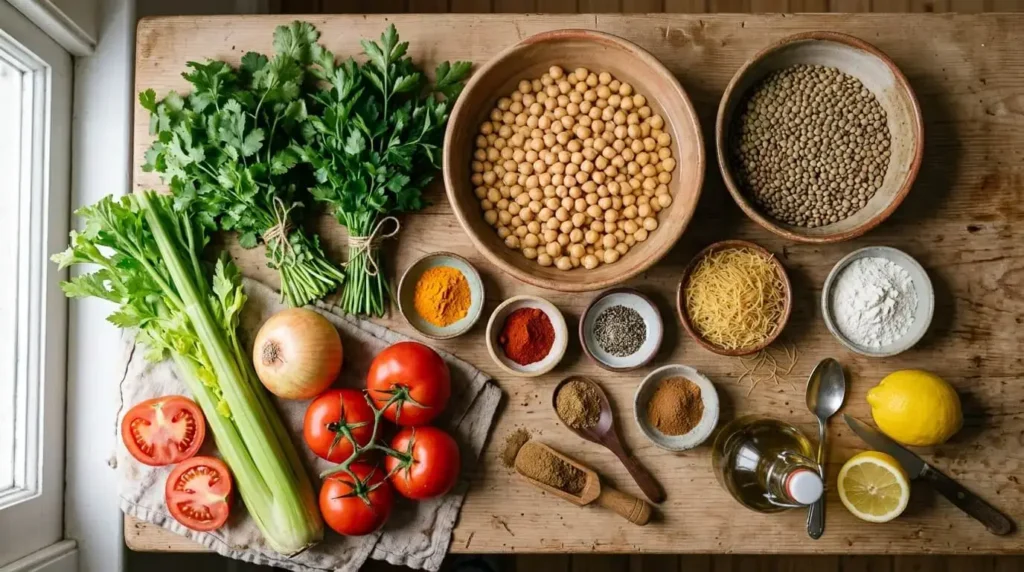
Chickpeas and lentils are the backbone of the soup – chickpeas hold their shape through a long simmer, while lentils break down slightly and thicken the broth on their own before the tedouira is even added. Because tomato, either fresh and grated or canned crushed tomato plus a spoonful of tomato paste, builds the color and acidity that define the broth. But onion and celery form the aromatic base. But fresh cilantro and parsley go in generously, not as a garnish but as a core flavor component – Moroccan Harira relies on a large volume of both.
Because the spice profile is warm rather than hot: ground ginger, turmeric, black pepper and cinnamon in modest amounts. Hence, if you’re using meat, beef or lamb cut into small cubes, simmer alongside the chickpeas until tender. Furthermore, toward the end, either fine vermicelli (broken into short pieces) or rice goes in to absorb broth and add body. Then flour and cold water make the dough. Since lemon wedges at the table cut through the richness and are close to essential for serving.
US Grocery Substitutions
| Traditional ingredient | US grocery equivalent | What changes |
| Fresh cilantro (coriander). | Standard fresh cilantro from any grocery store. | Nothing – this is the same herb, just labeled differently in some regions. |
| Moroccan fine vermicelli (cheveux d’ange). | Broken angel hair pasta or any thin vermicelli. | Cooking time may vary by a minute or two; taste for doneness. |
| Dried chickpeas. | Canned chickpeas, drained and rinsed. | Faster and no soaking, but a slightly softer texture and less deeply cooked flavor. |
| Fresh tomatoes. | High-quality canned crushed tomatoes. | A perfectly reasonable swap, especially outside peak tomato season. |
| Flour-water tedouira. | No real substitute recommended. | If needed for gluten-free diets, a cornstarch slurry works but changes the traditional character – treat it as a modern alternative, not an equivalent. |
Don’t swap ingredients just because it’s easier if the substitution meaningfully changes what the finished soup tastes or feels like – the tedouira in particular is worth making the traditional way if you’re able to.
How to Make Harira Soup
1. Prepare the Chickpeas
If you’re using dried chickpeas, soak them in plenty of cold water for 8-12 hours (overnight is easiest), then drain. However, canned chickpeas skip this step entirely – just drain and rinse them,-and add them later in the cooking process than you would dried ones, since they’re already cooked through.
2. Build the Tomato, Herb and Spice Base
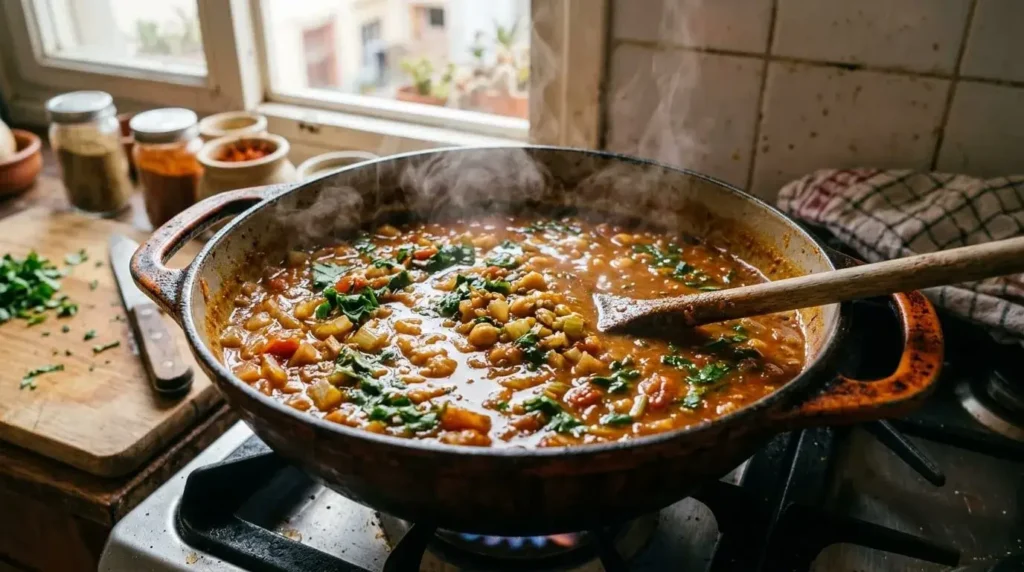
Cook the onion and celery in olive oil until softened, then add the ginger, turmeric, black pepper and cinnamon and stir for a minute until fragrant. Add the tomato and tomato paste along with about half the cilantro and parsley and let this cook down for several minutes before adding any liquid. Then this step matters more than it looks – a base that hasn’t had time to concentrate will leave the whole pot tasting thin, no matter how long it simmers afterward.
3. Simmer the Legumes and Meat
Add the water or stock, the soaked (or canned) chickpeas and the meat if you’re using it. Also bring to a simmer and cook until the chickpeas and meat are tender – judge this by tasting rather than watching the clock, since dried chickpea age and cut of meat both affect timing more than a fixed number can predict.
4. Add Lentils
Stir in the lentils partway through the simmer, timed so they finish tender rather than disintegrating into mush. Moreover, lentils cook faster than dried chickpeas, so they go in later in the pot, not at the same moment.
5. Add Rice or Fine Pasta
Add your chosen starch in the last 10-15 minutes of cooking. Then it continues to absorb liquid as it cooks and even after the pot is off the heat, which is exactly why it goes in near the end rather than earlier.
6. Make and Add the Tedouira
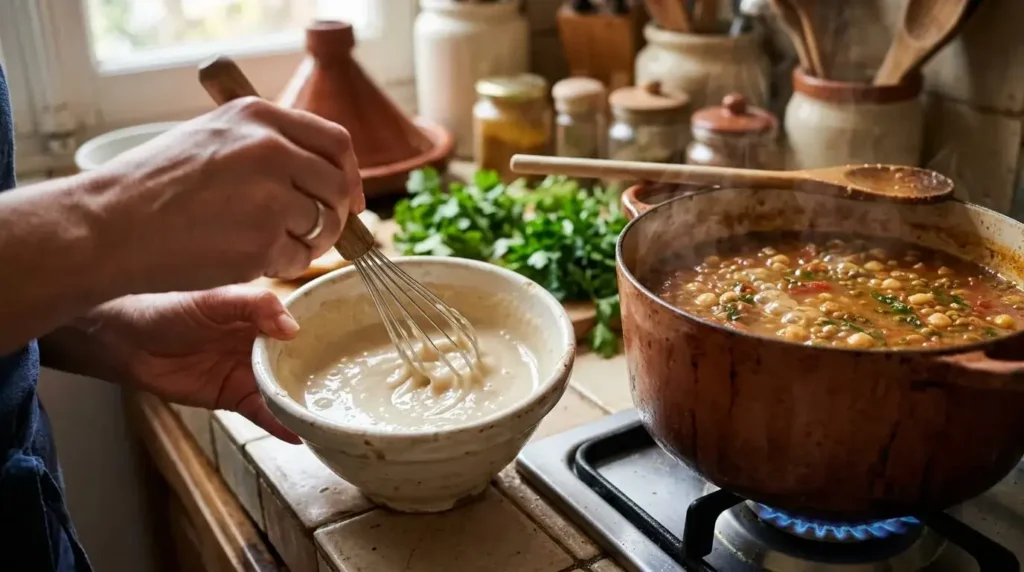
Whisk the flour into cold water until it’s completely smooth, with no visible lumps – strain it through a fine sieve if you have any doubt. With the soup at a gentle simmer, stream the mixture in slowly while stirring constantly. Therefore, adding it too fast or into a soup that isn’t actively simmering is the single most common cause of a lumpy pot. Also keep simmering for several minutes afterward so the raw flour taste cooks out completely; the soup should turn glossy and lightly thickened, not paste-like.
7. Finish and Serve
Stir in the remaining cilantro and parsley, taste and adjust the salt. Then serve hot with lemon wedges alongside.
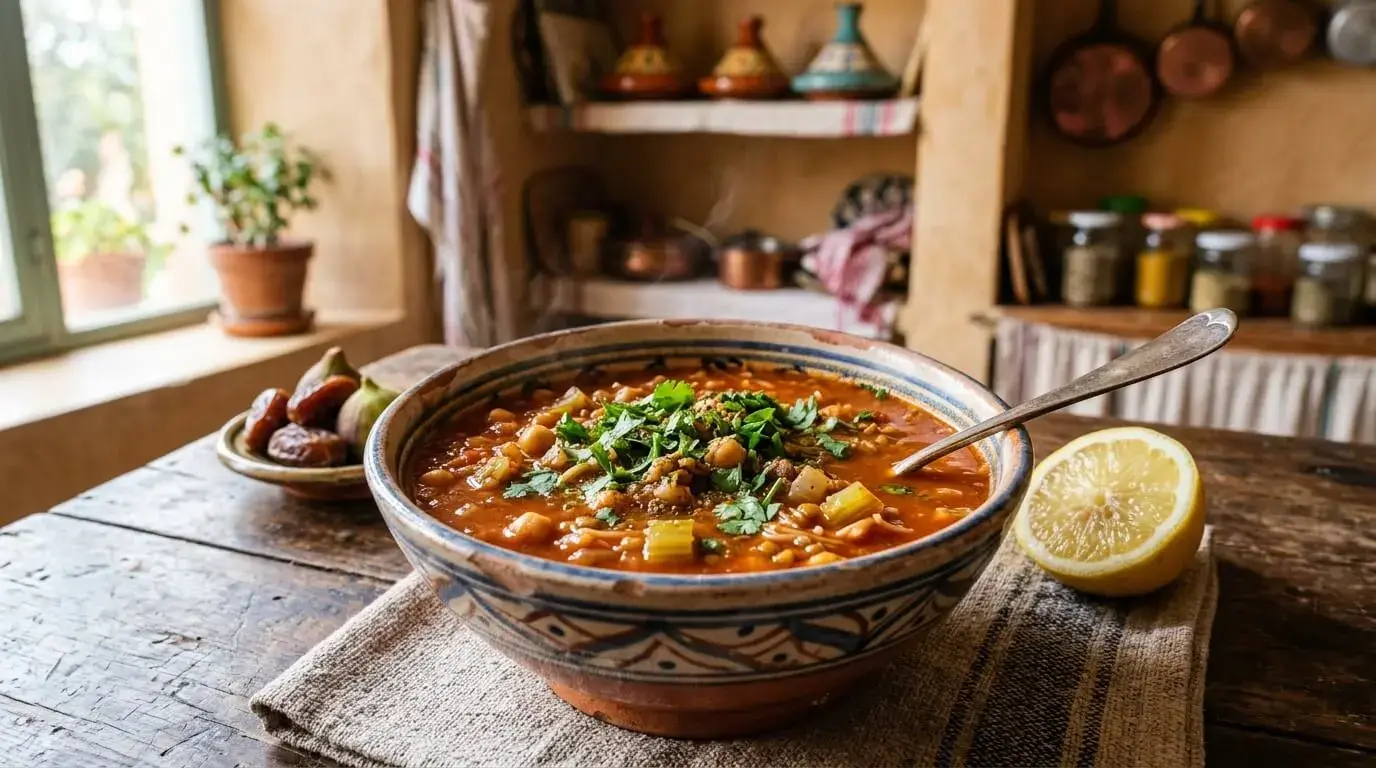
Traditional Moroccan Harira Soup
Ingredients
Method
- Prepare the chickpeas. If using dried chickpeas, soak overnight and drain. If using canned, drain and rinse; add later than dried, per step 4.
- Cook the aromatic base. Heat olive oil in a large pot and cook onion and celery until softened, about 5 minutes. Stir in ginger, turmeric, black pepper and cinnamon; cook 1 minute until fragrant.
- Add tomato and liquid. Stir in the crushed tomato, tomato paste, half the cilantro and half the parsley. Cook for 5-7 minutes to develop the base, then add 7 cups of water or stock.
- Add chickpeas and beef. Add soaked dried chickpeas and the beef (add canned chickpeas later, in step 5, if using). Bring to a simmer, cover partially and cook 45-55 minutes, until the beef and chickpeas are tender.
- Add lentils. Stir in the lentils (and canned chickpeas, if using) and simmer another 15-20 minutes, until the lentils are tender but not falling apart.
- Add the vermicelli or rice. Stir in the vermicelli (or rice) and simmer 8-10 minutes until just tender. It will continue absorbing liquid as the soup rests.
- Make the tedouira. In a separate bowl, whisk the flour into the cold water until completely smooth. Strain through a fine sieve if any lumps remain.
- Thicken the soup. With the soup at a gentle simmer, slowly stream in the tedouira while stirring constantly. Simmer 5-8 minutes more until glossy and lightly thickened.
- Finish and serve. Stir in the remaining cilantro and parsley. Taste and adjust salt. Serve hot with lemon wedges.
Notes
- Traditional-style note: Harira has many Moroccan household versions. This recipe follows a traditional-style tomato, chickpea, lentil, herb, spice and flour-thickened approach.
- Chickpea note: Dried chickpeas give a more traditional texture but need overnight soaking. Canned chickpeas are the practical US shortcut.
- Thickener note: Whisk the tedouira until fully smooth and add it slowly while stirring to avoid lumps.
- Texture note: Finished Harira should be silky and lightly thickened, not stew-like. Rice or pasta will keep absorbing liquid as it sits.
- Leftover note: Expect the soup to thicken in the refrigerator; loosen with hot water or broth when reheating.
-
- hot with lemon wedges.
Nutrition (estimated per serving, 6 servings)
- Calories: ~320
- Protein: ~22g
- Carbohydrates: ~40g
- Fiber: ~9g
- Fat: ~8g
- Saturated Fat: ~2g
- Sodium: ~680mg
How Thick Should Harira Be?
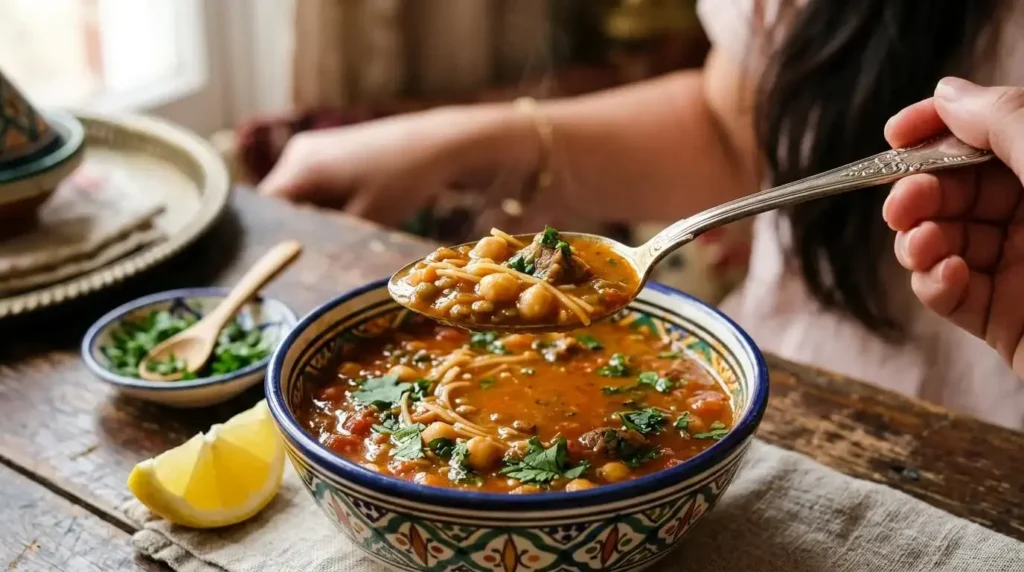
Properly finished Harira should be pourable and glossy, with a light creaminess from the tedouira rather than the thick, spoon-standing consistency of a stew. Moreover, it should coat the back of a spoon without feeling starchy or heavy. However, keep in mind that the rice or pasta keeps absorbing liquid as the soup sits, so it will thicken somewhat between the stove and the table – and again in the refrigerator overnight.
How to Fix Harira That Is Too Thin or Too Thick
| Problem | Likely cause | Fix |
| Too thin | Not enough tedouira or it wasn’t simmered long enough after adding. | Whisk a little more flour and cold water and stream it in, simmering a few minutes more. |
| Too thick | Too much starch or the soup was reduced further than intended. | Add hot water or stock a splash at a time until it loosens back up. |
| Flour lumps | Tedouira added too quickly or the soup wasn’t at a simmer. | Strain the slurry before adding and pour it in slowly while stirring. |
| Thickens after resting | Rice or pasta continues absorbing liquid off the heat. | Loosen with a little hot liquid just before serving. |
Harira Timing: What It Really Takes
Here’s the honest version: from soaked, ready-to-cook dried chickpeas, this recipe takes about 20 minutes of active prep and roughly 75 minutes of simmering, for a total of about 1 hour 35 minutes of hands-on cooking time. Therefore, if you’re starting from dried chickpeas, add 8-12 hours of soaking beforehand – that’s advance preparation, not active cooking, but it does mean this isn’t a same-hour dinner unless you plan ahead. Because a lot of recipes online advertise Harira as a one-hour soup, that’s realistic with canned chickpeas, but not with dried ones and I’d rather tell you that upfront than have the timing surprise you halfway through a weeknight.
Canned vs. Dried Chickpeas
Choose canned if:
- You need the soup on the table today, with no advance planning.
- Convenience matters more than the traditional-style texture.
- You want a shorter, more predictable prep window.
Choose dried if:
- You want the traditional-style route and the deeper texture it gives the chickpeas.
- You have time to soak them the night before.
- You want more control over how tender the chickpeas turn out.
Harira Variations: Meat, Vegetarian and Regional Differences
Harira doesn’t have one universal formula – it’s cooked differently from household to household across Morocco. However, some versions are made with beef, others with lamb and plenty are made with no meat at all, particularly for everyday meals rather than Ramadan iftar. Moreover, the choice between rice and fine vermicelli is largely a matter of family preference, as is how heavily the tomato is used and how thick the finished soup is meant to be. Hence, none of these differences make a version more or less “real” Harira.
Therefore, this particular recipe uses beef and fine vermicelli, with a moderately thickened finish – that’s the version tested and written up here, not a claim that it’s the only correct one.
Which Version Should You Make?
- Want the traditional meat-based experience? Also use beef or lamb as written.
- Cooking a vegetarian meal? Then omit the meat entirely; the chickpeas and lentils carry plenty of body on their own.
- Need the fastest weeknight route? Also, use canned chickpeas and skip the soaking step.
- Want the full traditional-style project? Also, use dried chickpeas soaked overnight and don’t rush the tedouira.
Is Harira Soup Spicy?
No – Harira is warmly spiced, not hot. Because the ginger, turmeric, black pepper and cinnamon build a rounded, fragrant flavor rather than any real chili heat. Moreover, some households do add a pinch of cayenne or a side of harissa for those who want heat, but that’s an addition, not a defining feature of the soup itself.
Is Harira Soup Healthy?
Harira leans on ingredients with real nutritional value: lentils and chickpeas both provide plant protein and fiber; the vegetables and herbs add micronutrients and a moderate amount of olive oil contributes healthy fats. However, if the recipe includes meat, that adds additional protein and iron; a meatless version still holds up as a fairly complete, fiber-rich meal on its own. Further, for more on how legumes fit into an overall healthy eating pattern, the Harvard T.H. Chan School of Public Health’s Nutrition Source is a solid reference.
That said, one soup isn’t a cure-all and it’s worth treating Harira as a nutritious, satisfying meal rather than a remedy for anything specific. Also, based on the tested recipe and a six-serving yield, this version comes out to roughly 320 calories per serving – see the recipe card below for the full nutrition estimate, which will vary somewhat depending on whether you include meat and how much oil you use.
Substitutions and Dietary Options
This recipe as written includes beef and wheat flour (in the tedouira), so it is not vegetarian or gluten-free in its base form. But for a vegetarian version, simply omit the meat – the chickpeas, lentils and vegetables carry the dish well without it. Then for gluten-free needs, the tedouira is the ingredient to address directly: a cornstarch slurry can stand in, though it won’t have quite the same silky quality as the traditional flour version and you’ll also want to double-check that your vermicelli or pasta choice is gluten-free if you’re using one. Hence, for a faster, canned-chickpea route, follow the timing and substitution notes above. Because rice can replace vermicelli in any version without any other changes needed. For a broader look at eating patterns built around vegetables, legumes and olive oil, see our Mediterranean diet guide.
How to Store and Reheat Harira
Let the soup cool before transferring it to an airtight container, then refrigerate for up to 3-4 days, following general USDA food safety guidance for cooked soups containing meat and legumes. Also expect the soup to thicken noticeably in the fridge as the rice or pasta keeps absorbing liquid – that’s normal, not a sign anything went wrong.
To reheat, warm it gently on the stovetop over medium-low heat, stirring in hot water or broth a little at a time until it loosens back to the right consistency. Moreover, avoid reheating it at a hard boil, which can break the tedouira’s smooth texture. But for general guidance on safely storing and reheating prepared foods, the FDA’s food safety resources are a useful reference as well.
What to Serve With Harira
Lemon wedges are close to non-negotiable – a squeeze right before eating brightens the whole bowl. Because Moroccan bread (khobz) is the traditional accompaniment for scooping and dipping. Moreover, during Ramadan, Harira is often served alongside dates as part of breaking the fast. Then a simple side salad or a plate of chebakia (a sesame-honey pastry) rounds things out for a more traditional iftar spread, though for an everyday dinner, bread and lemon are really all you need.
Frequently Asked Questions About Harira
What is Harira soup made of?
Harira is made with chickpeas, lentils, tomatoes, fresh cilantro, parsley, and warm spices including ginger, turmeric, black pepper, and cinnamon. However, many versions include beef or lamb and most include rice or fine vermicelli. A flour-and-water tedouira is stirred in near the end to thicken the broth.
Is Harira soup vegetarian?
Not always – Harira exists in both meat-based and meatless forms depending on the household and occasion. This recipe uses beef, but the meat can be left out entirely without changing the rest of the method; the chickpeas and lentils still make it a hearty, satisfying soup.
Is Harira soup spicy?
No, Harira is warmly spiced rather than hot. Therefore, ginger, turmeric, black pepper and cinnamon give it a fragrant, rounded flavor without chili heat. But some people add cayenne or a side of harissa if they want extra spice, but that’s a personal addition, not part of the traditional flavor base.
How do you thicken Harira soup?
Traditional Harira is thickened with tedouira, a smooth mixture of flour whisked into cold water and streamed slowly into the simmering soup while stirring constantly. Moreover, it needs a few extra minutes of simmering afterward to cook out the raw flour taste and reach a silky, glossy consistency.
What is Harira called in English?
There isn’t a widely used single-word English translation – it’s simply referred to as Harira or sometimes described as Moroccan tomato and lentil soup. Hence, using the Moroccan name is the most accurate way to refer to it, since translating it tends to lose what actually makes it distinct.
Can I make Harira with canned chickpeas?
Yes. Canned chickpeas are a practical, faster shortcut – just drain and rinse them and add them later in the cooking process since they’re already fully cooked. Because the texture will be a little softer than dried chickpeas and the total cooking time will be noticeably shorter.
How many calories are in Harira soup?
Based on this tested recipe’s six servings, each bowl comes out to roughly 320 calories, though the exact figure depends on whether meat is included, how much oil is used and portion size. Then see the recipe card below for the full nutrition breakdown.
Is Moroccan Harira soup healthy?
Harira is a nutrient-dense meal built around lentils, chickpeas, vegetables and fresh herbs, all of which contribute fiber, plant protein and micronutrients. Moreover, it’s a genuinely wholesome dinner option, though it’s best thought of as one healthy meal among many rather than a food with special health powers on its own.