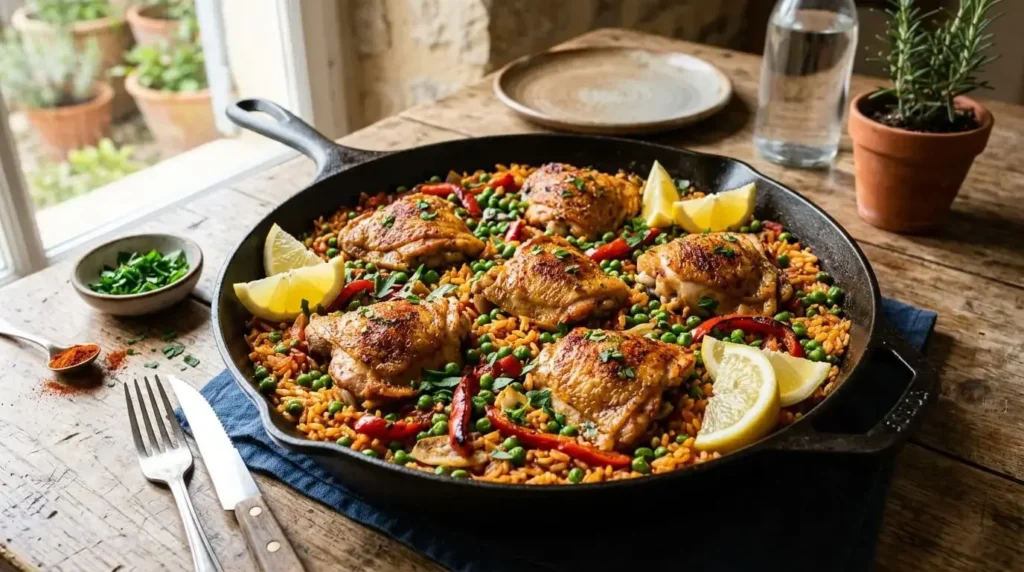
This Spanish chicken and rice comes together in a single skillet, with bone-in chicken thighs, smoked paprika, tomatoes and rice that soaks up every bit of the pan’s flavor. Moreover, it’s the kind of dinner Spanish home cooks make on a regular Tuesday, not a special-occasion dish – and that’s exactly what makes it worth adding to your rotation. Furthermore, I’ve made this Spanish chicken and rice recipe more times than I can count or adjusted the liquid and resting time until the texture was right every single time and this version reflects what actually works.
Quick Answer: What Is Spanish Chicken and Rice?
Spanish chicken and rice is a one-pan dish built on Spain’s everyday arroz con pollo tradition – bone-in chicken browned and simmered with rice, tomatoes, garlic and smoked paprika until the rice absorbs the stock and turns tender. That’s why it’s cooked in a regular skillet, stirred as needed and finished in about 70 minutes total, with chicken and rice together in one pot.
Why You’ll Love This Spanish Chicken and Rice
- One pan, minimal cleanup – chicken, rice and vegetables all cook together
- Real Spanish flavor – smoked paprika, garlic and tomatoes do the heavy lifting
- Weeknight-friendly – about 20 minutes of hands-on work
- Naturally dairy-free and nut-free as written
- Meal-prep and freezer friendly – reheats well for lunches later in the week
- Beginner-approachable – no special pan or hard-to-find ingredients required
Is This an Authentic Spanish Dish?
Spain doesn’t have one single “chicken and rice” recipe – it has dozens, also varying by region and household. Arroz con pollo, in its many forms, is a staple across Spanish home cooking, built on a base of olive oil, garlic, tomato and sweet or smoked paprika. Additionally, this recipe draws directly on that everyday tradition rather than trying to replicate any single restaurant dish. That’s why olive oil and a produce-forward approach to cooking are also central to the broader Mediterranean dietary pattern, which this dish fits comfortably within.
It’s worth being clear about what this recipe is not: it isn’t paella and I won’t call it that. So paella is a specific, technique-driven dish tied to Valencia, cooked in a wide and shallow pan over high heat with rice that’s left completely undisturbed to form a socarrat (the crisp bottom layer). This recipe is Spanish-inspired home cooking, made in an ordinary skillet and it doesn’t try to be anything more formal than that. Furthermore, if you want to dig deeper into other dishes from the region, explore Mediterranean regions or browse more Spanish regional recipes on the site.
Spanish Chicken and Rice vs. Paella
| Feature | Spanish Chicken & Rice | Paella |
| Pan | Large skillet or sauté pan | Wide or shallow paella pan |
| Rice | Medium-grain (bomba or similar) | Bomba or Calasparra and specifically |
| Stirring | Stirred during cooking | Left undisturbed for socarrat |
| Ingredients | Chicken, tomato, paprika and optional saffron | Often seafood, rabbit, or beans are regionally specific |
| Occasion | Everyday weeknight dinner | Traditionally a special or communal meal |
Ingredients You’ll Need
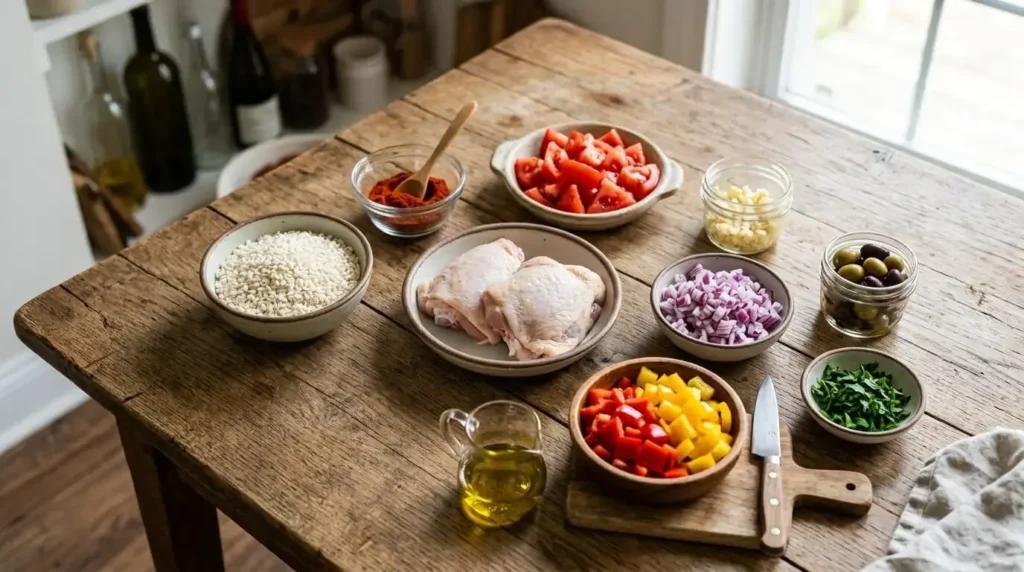
Chicken thighs (bone-in, skin-on) give you more flavor and stay juicier than breasts through the simmer. Instead, smoked paprika is the backbone of the dish’s color and smokiness – a Spanish pantry staple. So olive oil, onion, garlic and tomatoes form the sofrito base that flavors the rice as it cooks. Because chicken stock, not water, is what makes the rice taste like something rather than just filler.
Best Rice for This Recipe
| Rice | Recommended? | Notes |
| Bomba rice | Yes. | Absorbs liquid without going mushy; ideal texture |
| Calasparra rice | Yes. | Similar to bomba and holds shape well |
| Medium-grain rice (generic) | Yes | Reliable or widely available substitute |
| Arborio rice | With caution | Creamier than traditional; works but with less authentic texture |
| Long-grain rice | With caution | Cooks drier; adjust liquid down slightly |
| Instant rice | No | Doesn’t absorb the sofrito flavor properly and turns gluey |
Optional Ingredients for Extra Spanish Flavor
- Saffron – adds a floral note and golden color; also expensive, but a small pinch goes far
- Green olives – briny contrast to the rich rice
- Roasted red peppers – sweetness and color
- Chorizo – smoky or savory depth if you want to bulk up the dish
- Peas and parsley – brightness and freshness at the end
- Lemon wedges – a squeeze at the table wakes everything up
Ingredient Substitutions
| Original Ingredient | Substitute | Flavor Impact | Availability |
| Saffron | Extra smoked paprika | Loses floral note and gains smokiness | Paprika is easier to find |
| Bomba rice | Medium-grain rice (any brand) | Slightly less firm bite | Widely available |
| Bone-in chicken thighs | Boneless thighs | Less rich flavor, faster cook | Common in most stores |
| Fresh tomatoes | Canned crushed tomatoes | Minimal impact; more consistent | Pantry staple |
| Chicken stock | Low-sodium broth and extra salt | Slightly less depth | Easy substitute |
How to Make Spanish Chicken and Rice
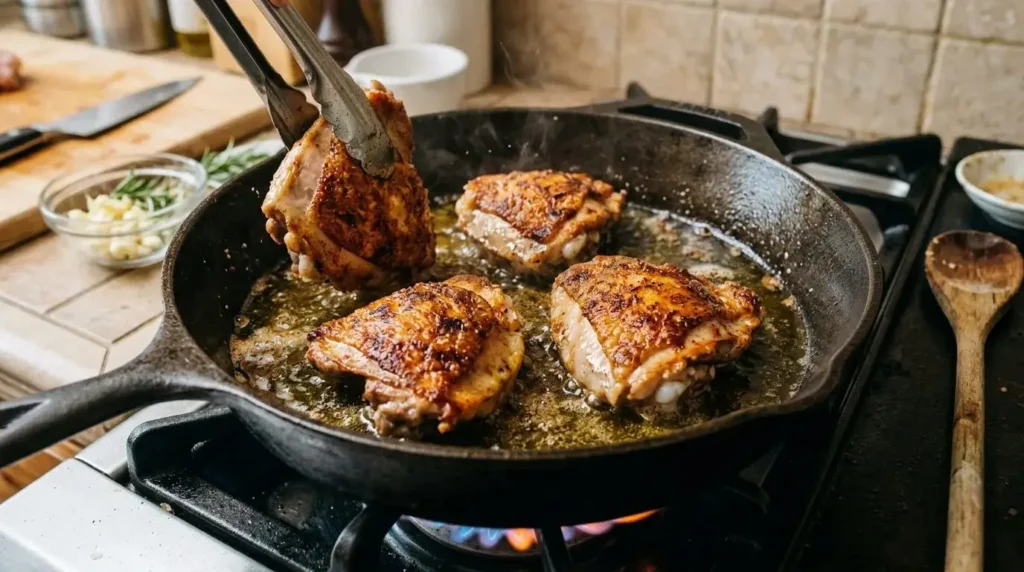
1. Brown the chicken. Season chicken thighs with salt and pepper, then sear skin-side down in olive oil until deeply golden. Because this step builds a fond on the bottom of the pan that flavors everything else – don’t skip it, even though it adds a few minutes. Also, remove the chicken and set aside; it will finish cooking later.
2. Build the sofrito. In the same pan, cook diced onion and red bell pepper until softened, then add garlic and smoked paprika. That’s why stir the paprika for only about 30 seconds – it burns quickly and turns bitter if left too long over direct heat.
3. Toast the rice. Add the rice directly to the pan and stir for a minute or two before adding liquid. Also, toasting coats each grain in fat, which helps it hold its shape instead of turning starchy and clumped once the stock goes in.
4. Add tomatoes and stock, then return the chicken. Stir in crushed tomatoes and warm chicken stock, scraping up any browned bits from the bottom. Then nestle the chicken back into the pan, skin-side up, so it finishes cooking gently without submerging (and softening) the skin.
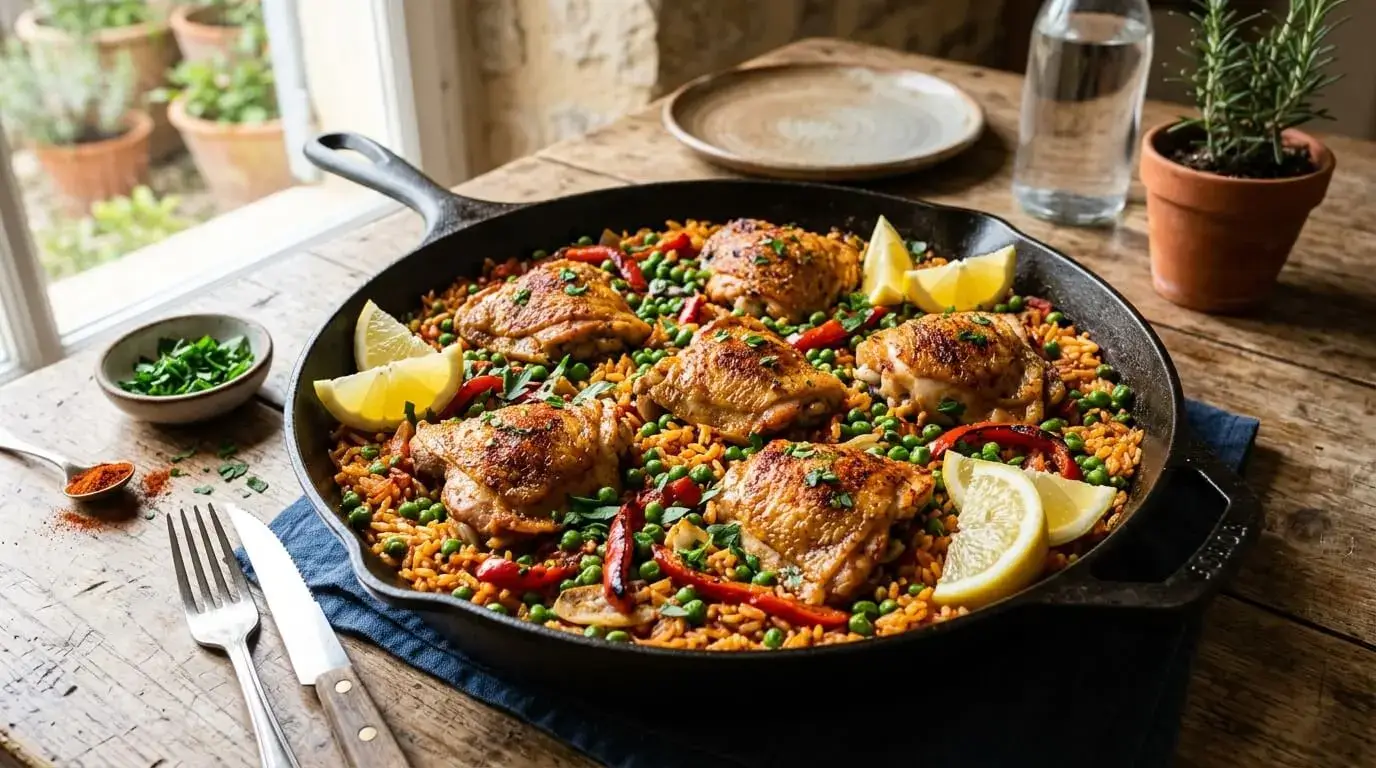
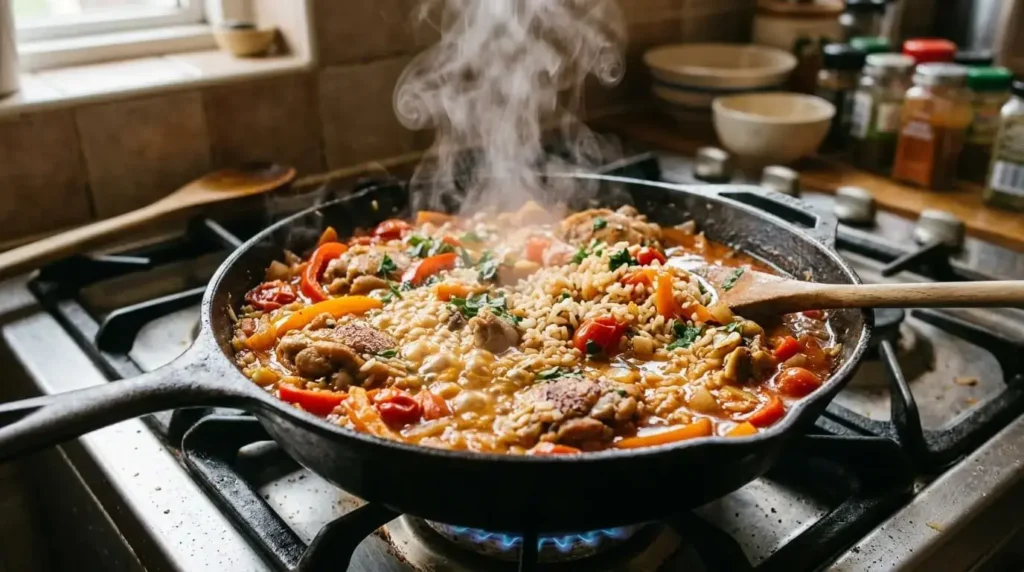
5. Simmer without stirring. Cover, reduce to a gentle simmer and resist the urge to stir. Constant stirring releases starch and can turn the rice gummy – let the pan do its job undisturbed. Furthermore, chicken is done when it reaches 165°F on an instant-read thermometer.
6. Rest before serving. Take the pan off the heat and let it rest, covered, for 10 minutes. Because this is the step most recipes skip and it’s the reason a lot of home versions come out unevenly cooked – the residual steam finishes the rice through without drying it out.
Honest timing note: Many online recipes advertise 30-35 minute totals for this style of dish, which isn’t realistic once you factor in properly browning the chicken and letting the rice rest. Also, in my kitchen, this recipe consistently takes about 20 minutes of active prep, 40 minutes of cooking and a full 10-minute rest – roughly 70 minutes to start to finish. Then rushing the rest is the single biggest reason home versions turn out unevenly cooked.
One-Pan Spanish Chicken and Rice
Ingredients
Method
- Season chicken with salt and pepper; brown skin-side down in olive oil, then remove from pan.
- Cook onion and bell pepper in the same pan until softened.
- Add garlic and smoked paprika; stir briefly until fragrant.
- Stir in crushed tomatoes.
- Add rice and toast for 1-2 minutes, stirring to coat.
- Pour in warm chicken stock, scraping up browned bits.
- Return chicken to the pan, skin-side up.
- Cover and simmer gently until rice is tender and chicken reaches 165°F.
- Stir in frozen peas and olives during the last 5 minutes.
- Remove from heat and rest, covered, for 10 minutes.
- Garnish with parsley and lemon wedges before serving.
Notes
- Bomba or Calasparra rice gives the most authentic texture, but any medium-grain rice works well.
- Resting the pan for the full 10 minutes is essential – don’t skip it.
- Smoked paprika burns quickly; stir it for only about 30 seconds before adding liquid.
- Saffron is optional but adds a distinct floral note and golden color.
- For a chorizo variation, brown sliced chorizo alongside the chicken.
- Freezes well for up to 2-3 months in airtight portions.
- Boneless thighs work but cook faster – check doneness a few minutes early.
Nutrition Estimate (Per Serving)
- Calories: ~560
- Protein: ~33 g
- Carbohydrates: ~42 g
- Fat: ~28 g
- Fiber: ~3 g
- Sodium: Varies by stock used
Tips for Perfect Rice Every Time
Use a wide, heavy-bottomed skillet – a pan that’s too small crowds the rice and leads to uneven cooking, while one that’s too thin risks scorching the bottom. Moreover, stick to the liquid ratio in the recipe card; adding extra stock “just in case” is the most common cause of mushy rice. That’s why keep the simmer gentle rather than a hard boil and keep the lid on throughout – every lift lets steam escape that the rice needs.
Quick checklist:
- The pan is wide enough that rice sits in a shallow or even layer
- Liquid measured exactly, not eyeballed
- Lid stays on during the full simmer
- Heat kept at a gentle simmer and not a boil
- Full 10-minute rest before uncovering
Serving Suggestions
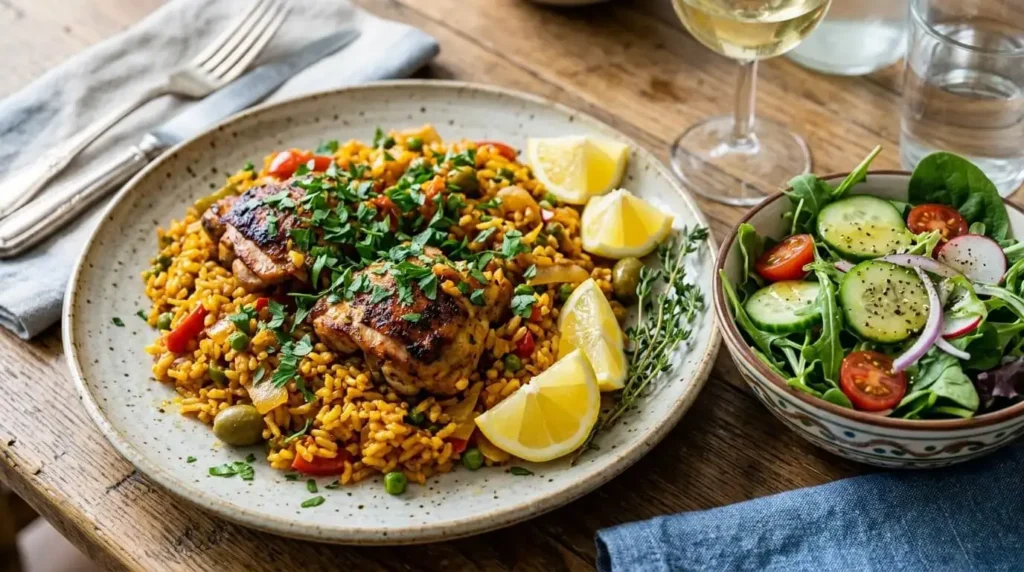
A simple green salad with a sherry vinaigrette cuts through the richness of the dish nicely and crusty, rustic bread is perfect for soaking up any extra sauce. Moreover, marinated olives, roasted vegetables or garlic- and green-bean-rounder things round things out into a fuller Mediterranean-style spread – consistent with the vegetable- and olive-oil-forward eating patterns the American Heart Association recommends for everyday meals. Also, for drinks, sparkling water with lemon or unsweetened iced tea both work well; a Spanish-style red wine is a reasonable pairing for the adults at the table, though it’s entirely optional. Furthermore, if you want more ideas for building out a full spread and the Mediterranean Diet guide has additional pairing inspiration.
Storage, Freezing & Reheating
Let the dish cool completely and refrigerate within two hours of cooking, per standard food safety storage guidance. Also store in an airtight container in the fridge for up to 4 days. Instead, for longer storage, freeze individual portions and use them within 2-3 months for the best texture.
| Method | Time | Best Practice |
| Refrigerator | Up to 4 days | Airtight container or cooled first |
| Freezer | 2-3 months | Portion before freezing |
| Stovetop reheat | 5-7 minutes | Add a splash of stock, cover and reheat over low heat. |
| Microwave reheat | 2-3 minutes | Cover loosely and add a splash of water |
Reheating on the stovetop with a splash of extra stock generally preserves the rice texture better than the microwave, after which it tends to dry out the edges.
Troubleshooting Common Problems
| Problem | Likely Cause | Fix |
| Rice is still hard. | Not enough liquid or lid lifted mid-simmer | Add a splash of more hot stock, re-cover, and continue simmering. |
| Rice is turned mushy. | Too much stock or wrong rice type | Reduce liquid next time; avoid instant rice. |
| Chicken is dry. | Overcooked or boneless cut used | Use bone-in thighs; check temperature earlier. |
| Burnt bottom | Pan too thin or heat too high | Use a heavier pan; lower heat before covering |
Rice still hard usually comes down to insufficient liquid or a lid that got lifted too often during cooking, letting steam escape. Additionally, mushy rice is almost always the result of too much stock or using a rice variety, like instant, that isn’t built for this method. Also, dry chicken typically means it was left on the heat too long after reaching temperature, which happens more easily with boneless cuts. Because a burnt bottom points to a pan that’s too thin for the burner’s heat or a simmer that was never actually turned down after the initial sear.
Frequently Asked Questions
What is Spanish chicken and rice?
It’s a one-pan dish inspired by Spain’s everyday arroz con pollo tradition, made with bone-in chicken, rice, tomatoes, garlic and smoked paprika, simmered together until the rice absorbs the stock. That’s why it’s simpler and less formal than paella and typically takes about 70 minutes to start to finish.
Is this the same as paella?
No. Paella is a specific Valencian dish cooked in a wide, shallow pan with rice left undisturbed to form a crisp bottom layer. This recipe uses a regular skillet, is stirred during cooking and is closer to everyday Spanish home cooking than to paella.
Can I use chicken thighs instead of a different cut?
Yes – bone-in, skin-on thighs are what this recipe is built around, since they stay juicy through the simmer. Then boneless thighs also work but cook faster and lose a bit of richness, so check for doneness a few minutes earlier.
Can I use brown rice?
You can, but you’ll need to increase both the liquid and cooking time significantly, since brown rice takes longer to absorb liquid than white medium-grain rice. Furthermore, expect a chewier texture than the recipe as written.
Can I make it ahead?
Yes. The dish reheats well and the flavors deepen slightly overnight, making it a good option for meal prep. Just be mindful that the rice will continue to soften slightly in the fridge, so reheat gently.
Can I freeze Spanish chicken and rice?
Yes – portion it into airtight containers and freeze for up to 2-3 months. Thaw in the fridge overnight before reheating on the stovetop with a little extra stock to restore moisture.
Can I add chorizo?
Absolutely. Brown sliced chorizo along with the chicken for extra smokiness and depth; it’s a common and welcome addition to many home versions of this dish.
What should I serve with it?
A simple green salad, crusty bread or marinated olives all pair well, then rounding the meal out into a fuller Mediterranean-style spread without much extra effort.
Recipe Summary
This Spanish chicken and rice recipe delivers real and tested flavor without demanding paella-level technique or equipment. Additionally, it’s approachable enough for a weeknight, honest about the time it actually takes and flexible enough to adapt with what you have on hand. Also give it a try and let us know in the comments how it turned out in your kitchen – or browse all recipes for more ideas from Mediterranean cuisines.
[IMAGE 3: brown-chicken-spanish-rice.jpg | Browning chicken for Spanish chicken and rice | Brown the Chicken First | Proper browning develops deep flavor. | Technique image.]
[IMAGE 4: spanish-rice-cooking.jpg | Spanish chicken and rice cooking in one pan | Simmer Until Tender | The rice absorbs all the flavorful stock. | Mid-cook process image.]