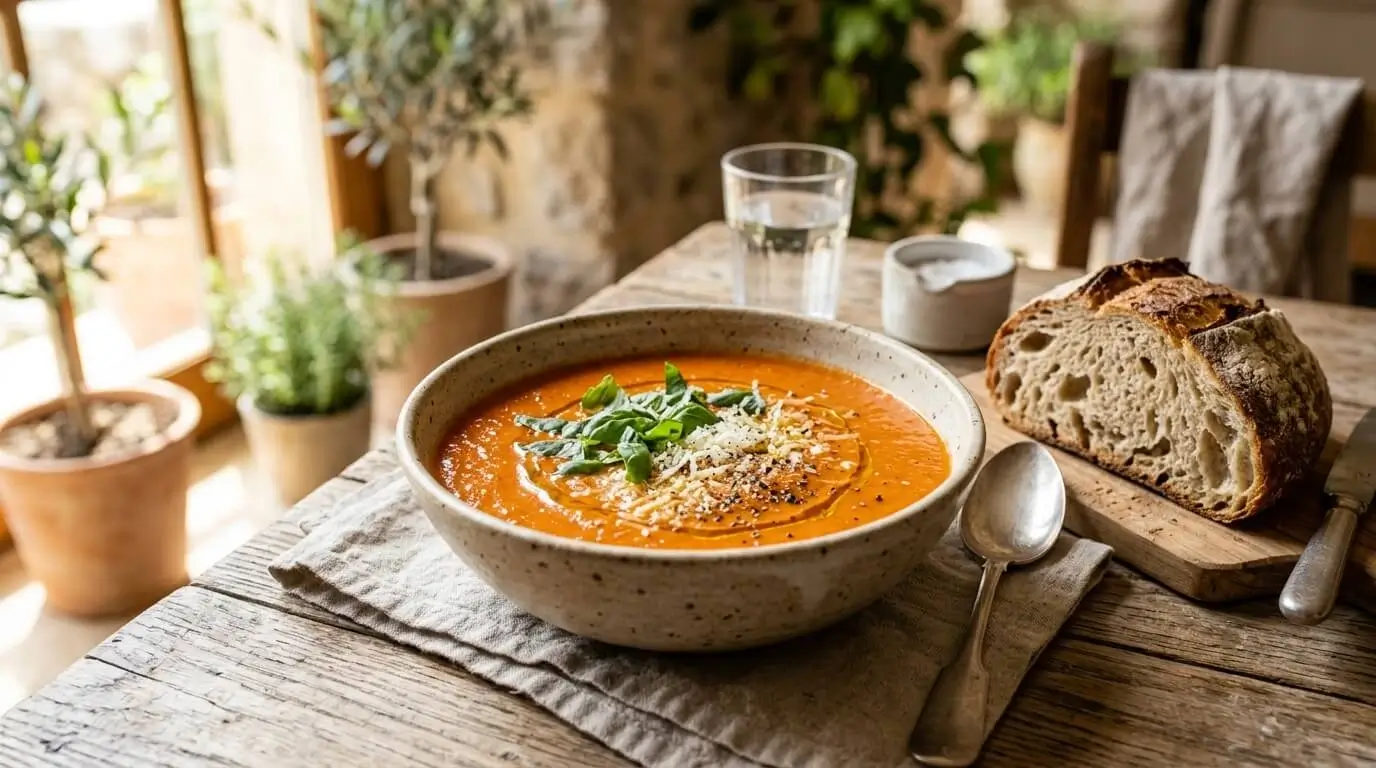
This creamy Italian tomato soup is built on slow-cooked onions, San Marzano-style tomatoes and fresh basil stirred in at the end, with a small amount of cream for a velvety finish. Moreover, it’s inspired by traditional Italian techniques rather than any single “official” recipe and it takes about an hour from start to bowl. Also, I’ve made this version dozens of times, then tested how long the tomatoes really need to simmer and the honest answer is longer than most recipes admit.
Quick Answer
What is Italian tomato soup? “Italian tomato soup” isn’t one fixed dish in Italy – it’s an umbrella term used mostly in English for tomato-based soups inspired by Italian cooking, from Tuscan pappa al pomodoro to simple pomodoro-based broths. That’s why this version is a creamy tomato basil soup made with slow-cooked aromatics, San Marzano-style tomatoes and a touch of cream and Parmesan. So it takes about 60 minutes total, including proper simmering time and it’s a good fit for home cooks who want something that tastes genuinely rich without a long ingredient list.
Honest Timing Note: Total time is about 60 minutes, further including simmering and 5 minutes of cooling before blending. Because some recipes online promise 30 minutes, but giving the tomatoes enough time to break down properly develops a much richer and naturally sweeter flavor.
Why You’ll Love This Italian Tomato Soup
This soup lands right in the middle of comforting and refined. Also, it’s creamy without being heavy, thanks to a modest half cup of cream stirred in at the very end rather than a full cup of dairy carrying the whole pot. Furthermore, the ingredient list is short and mostly pantry staples – onion, garlic, canned tomatoes, olive oil, Parmesan and basil. Thats why It comes together in one pot, freezes well (minus the cream, added after reheating) and the technique is forgiving enough for a first-time soup maker while still teaching real skills: building flavor in layers or simmering low and slow and finishing with fresh herbs instead of dried ones.
Is Italian Tomato Soup Actually Traditional?
Here’s something most recipe pages skip over: there isn’t one single dish in Italy called “Italian tomato soup” because the phrase is largely an English-language shorthand and Italy’s actual tomato-based soups vary a lot by region. Also, in Tuscany, pappa al pomodoro is a thick, bread-based tomato soup made with day-old bread, garlic, basil and good olive oil – no cream involved. Further south, tomatoes show up more often in brothy vegetable soups or as a base for pasta e pomodoro rather than a standalone pureed soup. That’s why fresh tomatoes dominate in summer, and canned tomatoes are standard the rest of the year, even in Italian kitchens.
Because cream, in particular, is not a traditional Italian addition to tomato soup – it’s more closely associated with American diner-style tomato soup and Italian-American cooking. That doesn’t make a creamy version bad;instead it just means this recipe should be understood for what it is:then a creamy tomato basil soup inspired by traditional Italian techniques – slow-cooked aromatics, quality tomatoes, fresh basil added late, good olive oil – rather than a claim to represent every regional Italian tomato soup.
| Traditional Italian Style | Creamy Italian-American Style |
| Often bread-thickened (e.g., pappa al pomodoro) or brothy | Thickened with cream and blended smooth |
| No dairy or a drizzle of olive oil to finish | Cream and often Parmesan stirred in |
| Basil and olive oil are the dominant finishing notes. | Basil is still present, but cream softens acidity. |
| Texture is rustic and sometimes chunky. | The texture is silky and pureed. |
| Varies significantly by region | Fairly standardized recipe |
Ingredients You’ll Need
Tomatoes
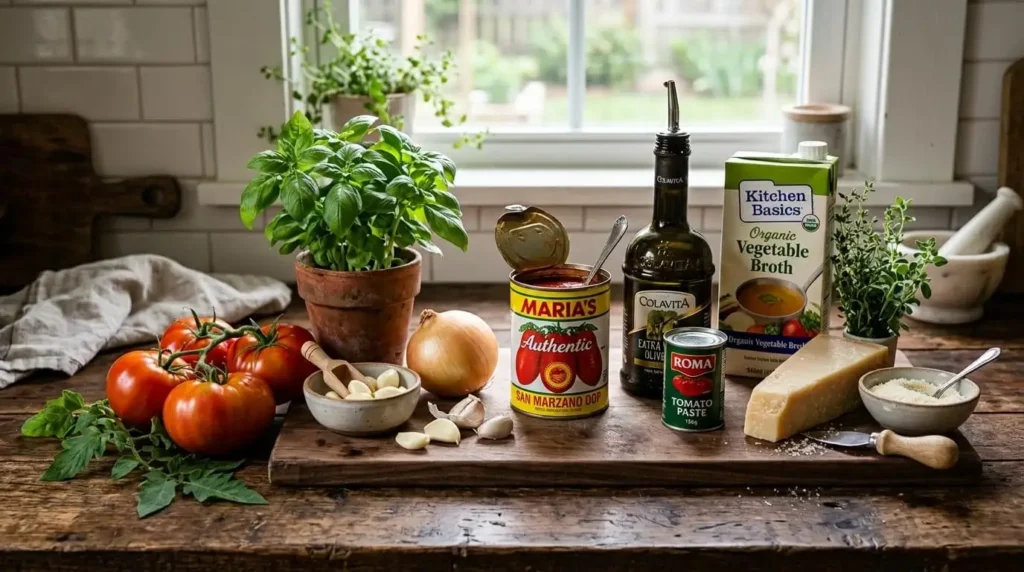
Canned whole- or peeled- San Marzano tomatoes (or a comparable quality canned tomato) give the most consistent results year-round, since they’re picked and canned at peak ripeness. because fresh tomatoes work beautifully in late summer when they’re genuinely in season, but out-of-season fresh tomatoes tend to taste watery and acidic in a soup like this.
Fresh Basil
Basil goes in at the very end, off the heat or over low heat, because prolonged cooking dulls its flavor and turns it slightly bitter. Also, adding it late keeps the soup tasting bright and fresh rather than like dried herbs.
Cream
The cream here is optional but recommended for the texture this recipe is going for. That’s why it’s added in a modest amount – enough to round out acidity and add richness without turning the soup into a cream-based dish.
Parmesan
Furthermore, a small amount of grated Parmesan adds umami depth and a subtle salty edge that balances the sweetness of the cooked tomatoes.
Olive Oil
Use a good extra-virgin olive oil, both for cooking the aromatics and as a finishing drizzle. Moreover, it’s one of the ingredients doing the most work to make this taste distinctly Italian rather than generic.
Aromatics
The onion and garlic form the flavor base. Also, the onion is cooked slowly until fully soft and translucent – not browned – so it turns sweet instead of sharp. But garlic goes in only at the end of that step and cooks briefly, since burnt or over-browned garlic turns bitter fast.
| Ingredient | US Grocery Substitute |
| San Marzano canned tomatoes | Any quality, whole- and peeled-canned tomatoes. |
| Fresh basil | 1 tsp dried basil (added earlier, but not at the end) |
| Heavy cream | Half- and full-fat coconut milk for dairy-free. |
| Parmesan | Pecorino Romano or nutritional yeast for dairy-free. |
| Vegetable broth | Chicken broth or water plus a pinch more salt. |
How to Make Italian Tomato Soup
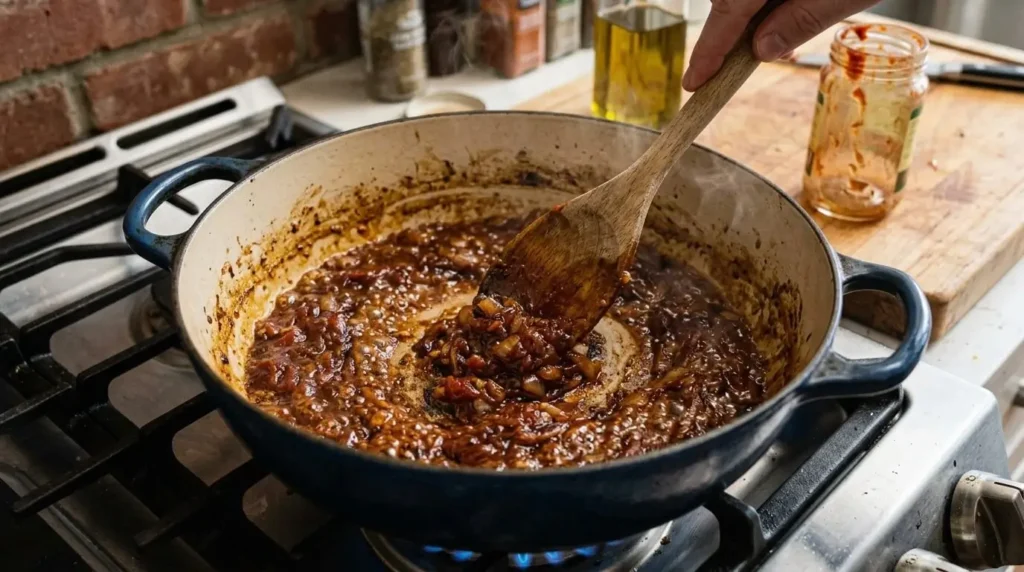
- Cook the onion slowly. Heat olive oil over medium heat and cook the diced onion for 8-10 minutes, until fully soft and translucent. Instead, this slow cook is what makes the onion sweet instead of sharp and it’s the step most rushed versions skip.
- Add the garlic briefly. Stir in minced garlic for just 30-60 seconds. Moreover, garlic burns quickly and turns bitter, so this step should be short.
- Cook the tomato paste. Also, stir in tomato paste and let it cook for about 2 minutes. This deepens its flavor before the liquid goes in.
- Add the tomatoes and broth. Add the canned tomatoes (crushed with a spoon), vegetable broth, salt, pepper, oregano and red pepper flakes if using.
- Simmer properly. Let the soup simmer uncovered for about 30 minutes. Furthermore, this is the step that builds real depth – it gives the tomatoes time to break down and sweeten naturally instead of relying on added sugar.
- Cool briefly, then blend.
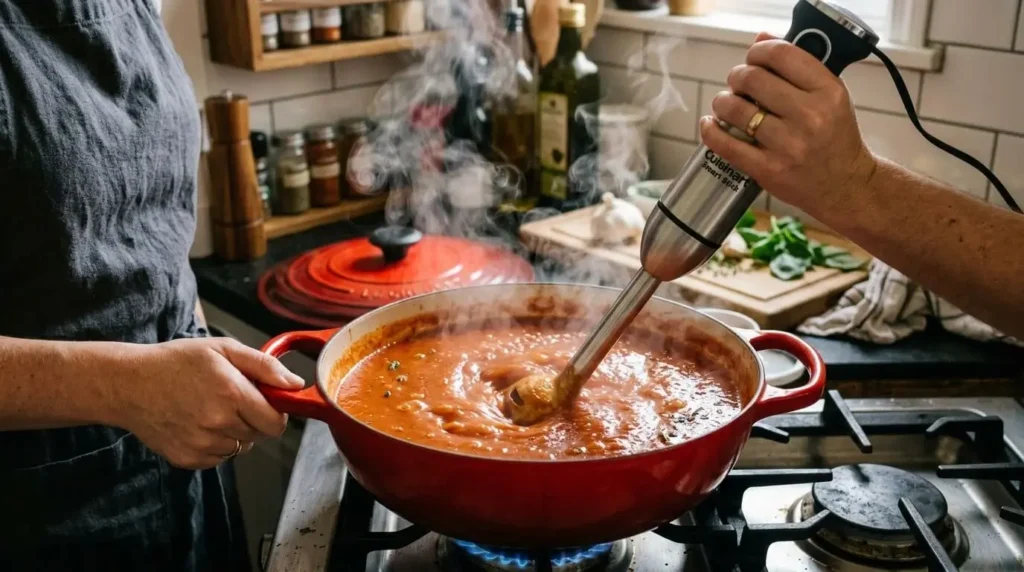
- Let the soup cool for about 5 minutes before blending. Then, blending hot liquid straight from the pot is a real burn risk, so this pause matters.
- Finish with basil and cream. Return the blended soup to low heat; moreover, then stir in the cream, Parmesan and fresh basil. Don’t let it boil once the cream is in or it can separate.
- Taste and adjust. Add more salt, because a pinch of sugar if the tomatoes are especially acidic or extra basil to taste before serving.
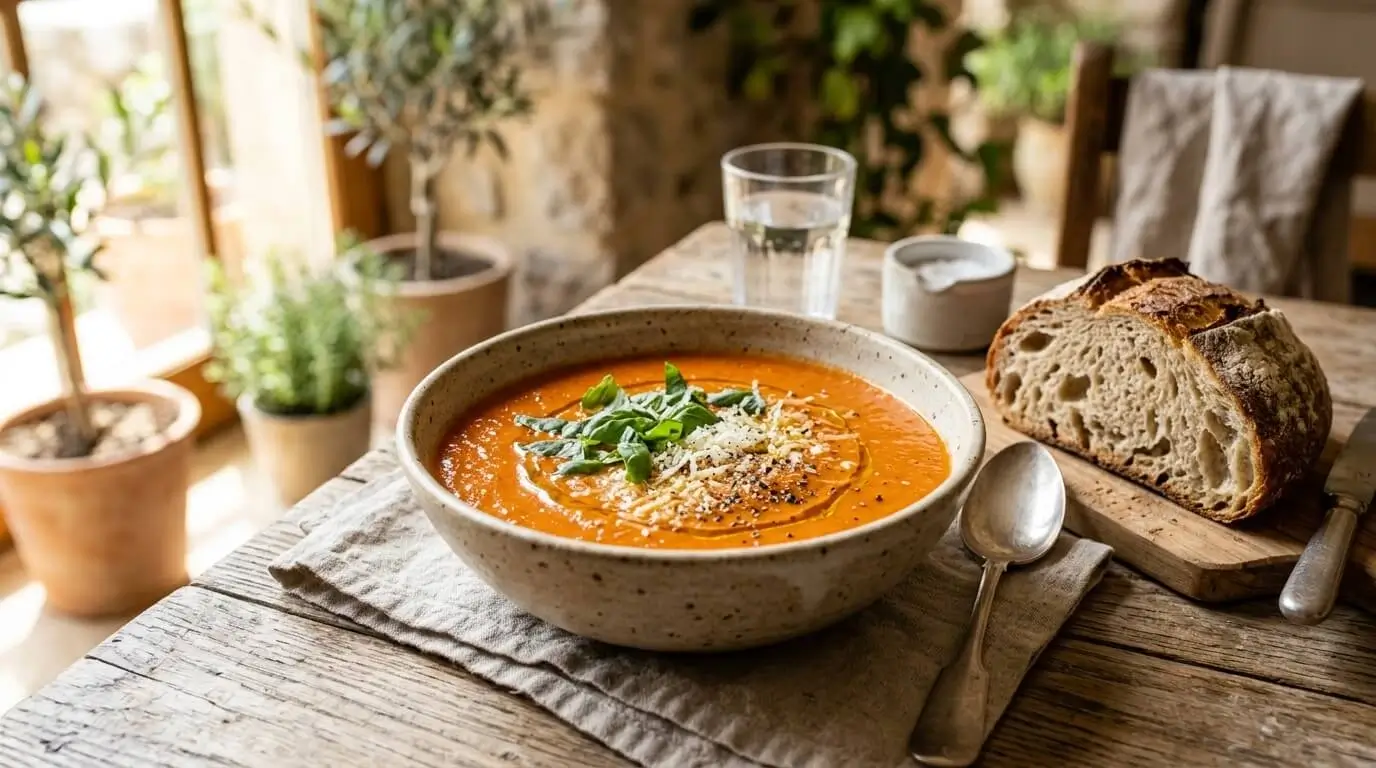
Creamy Italian Tomato Soup
Ingredients
Method
- Heat olive oil over medium heat.
- Cook onion until soft and translucent (8-10 minutes).
- Stir in garlic for 30-60 seconds.
- Add tomato paste and cook for 2 minutes.
- Add tomatoes and crush with a spoon.
- Pour in vegetable broth and seasonings.
- Simmer uncovered for about 30 minutes.
- Let cool for 5 minutes.
- Blend until completely smooth.
- Return to low heat.
- Stir in cream, Parmesan and basil.
- Taste and adjust seasoning.
- Serve with olive oil, basil, Parmesan and crusty bread.
Notes
- Fresh summer tomatoes can replace canned tomatoes when fully ripe.
- Do not boil after adding cream.
- Basil should be added at the end for the freshest flavor.
- Freeze before adding cream if making ahead.
- Blend carefully while hot.
Fresh Tomatoes or Canned?
| Type | Best Season | Flavor | Cost | Best Use |
| Fresh tomatoes | Peak summer only | Bright and variable | Moderate-high | Late-summer batches when tomatoes are fully ripe. |
| Whole canned San Marzano | Year-round | Sweet, balanced and consistent | Moderate | Default choice for this recipe. |
| Crushed canned tomatoes | Year-round | Slightly more processed and less complex | Lower | Fine substitute if whole cans aren’t available. |
Tips for the Best Flavor
Simmering matters more than any single ingredient in this recipe – a full 30 minutes gives the tomatoes time to concentrate and sweeten. That is why this recipe skips the sugar most versions lean on. That’s why Basil goes in at the end, off the direct heat, to keep its flavor fresh rather than muted. Additionally, once the cream is added, keep the heat low; boiling cream can cause it to separate and turn slightly grainy. Also, if the soup tastes sharp or acidic after simmering, a small pinch of sugar or an extra splash of cream will round it out far better than more salt. Then blend thoroughly for the smooth, restaurant-style texture people expect from this kind of soup and finish each bowl with a drizzle of good olive oil – it adds a final layer of flavor that gets lost if it’s only used for cooking.
Common Mistakes and Troubleshooting
| Problem | Likely Cause | Fix |
| Soup tastes too acidic. | Tomatoes weren’t simmered long enough or naturally tart. | Simmer longer or add a small pinch of sugar. |
| Soup is too thin. | Not enough reduction during simmering. | Simmer uncovered a bit longer before blending. |
| Soup is too thick. | Too much reduction or too little broth | Thin with a splash of broth or water. |
| Bitter flavor | Garlic browned too much or basil cooked too long | Cook garlic briefly; add basil at the end only. |
| Bland flavor | Under-salted or rushed, simmering | Taste and adjust salt gradually; don’t skip the simmer. |
| Grainy or separated texture | Cream boiled after being added | Keep the heat low once the cream is stirred in. |
Serving Suggestions
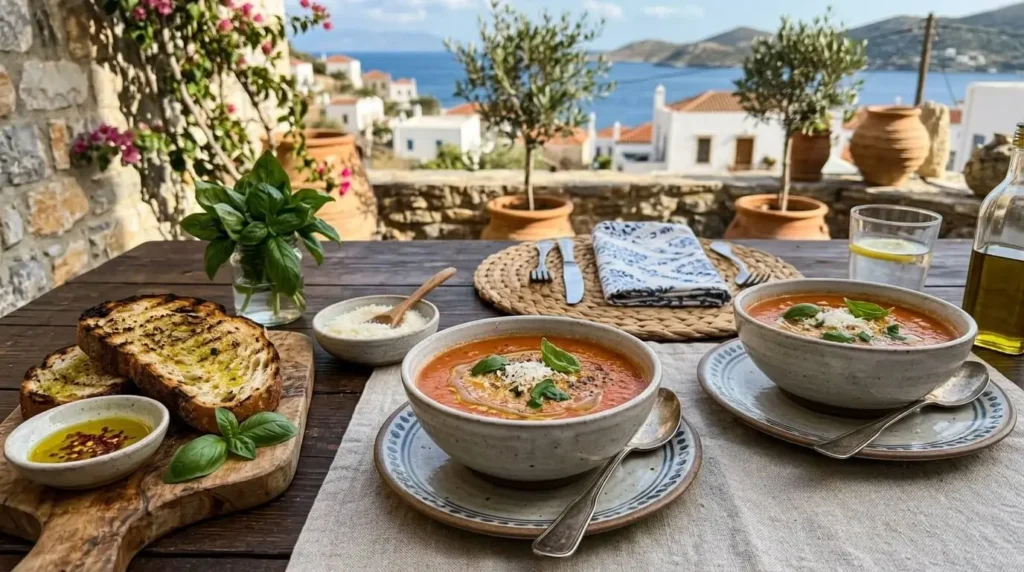
This soup pairs naturally with something to dip or tear. Because Crusty bread or grilled cheese is the classic match and a warm square of focaccia works just as well. That’s why, for a lighter meal, serve it alongside a simple green salad or a plate of roasted vegetables. Also, finish each bowl with a sprinkle of Parmesan, a few fresh basil leaves and a drizzle of olive oil – small touches that make a real difference in flavor. Furthermore, for more ideas, browse more Mediterranean recipes on the site.
Storage, Freezing, and Reheating
Refrigerate leftover soup within two hours of cooking, per USDA food safety guidance on leftovers and use it within about 3-4 days. For longer storage, freeze the soup before adding the cream – dairy-based soups can separate slightly after thawing, so it’s better to add the cream and Parmesan fresh after reheating. When reheating, warm the soup gently over low heat rather than at a hard boil and check the USDA FoodKeeper for general reheating guidance. The texture after thawing is very close to fresh, especially if you blend it briefly again after reheating.
Frequently Asked Questions
Is tomato soup common in Italy?
Tomatoes are common in Italian cooking, but a single dish called “tomato soup” isn’t standardized the way it is in the US. That’s why regional versions like Tuscany’s pappa al pomodoro exist, but they differ significantly from the creamy, pureed style most Americans picture.
What is Tuscan tomato soup?
Tuscan tomato soup or pappa al pomodoro, is a thick, rustic soup made with day-old bread, ripe tomatoes, garlic, basil and olive oil – no cream. Moreover, it’s closer to a bread stew than a smooth, blended soup.
Can I use fresh tomatoes?
Yes, especially in late summer when tomatoes are fully ripe; that’s why. Out-of-season fresh tomatoes tend to taste watery and overly acidic, so canned whole tomatoes are the more reliable year-round choice.
Can I freeze Italian tomato soup?
Yes. Freeze it before adding the cream and Parmesan, since dairy can separate slightly after thawing. Also, stir the cream in fresh after reheating for the best texture.
Why is my soup acidic?
Under-simmering is the most common cause – tomatoes need time to sweeten naturally. Furthermore, a short simmer or naturally tart tomatoes can leave the soup tasting sharp; a longer simmer or a small pinch of sugar both help.
Can I make it dairy-free?
Yes. Also, swap the heavy cream for full-fat coconut milk and use nutritional yeast in place of Parmesan. The flavor shifts slightly, but the texture stays creamy.
Can I use canned tomatoes?
Yes – canned whole- or peeled tomatoes, ideally San Marzano or a comparable quality, are the default choice in this recipe and give the most consistent results year-round.
What goes well with Italian tomato soup?
Crusty bread, grilled cheese or warm focaccia are classic pairings. A simple green salad or roasted vegetables also round out the meal well as a lighter side.
Because tomatoes provide vitamins and lycopene as part of a balanced diet rich in vegetables and fruits and olive oil is a foundational fat in Mediterranean eating patterns, this recipe fits comfortably into many vegetarian, Mediterranean-style diets. For more on the broader eating pattern, see our Mediterranean Diet Guide.
This creamy Italian tomato soup won’t claim to be the one true version of the dish – no single recipe can, given how much tomato soup varies across Italy’s regions. Moreover, what it will do is give you a rich, well-tested pot of soup built on real technique: a slow-cooked onion base, tomatoes given the time they need and basil added at the moment it tastes best. If you’re exploring more of the Mediterranean pantry, also visit Mediterranean Cuisines for more recipes rooted in the same approach or check out Greek recipes for a look at how neighboring Mediterranean traditions use similar ingredients differently. You can also browse recipes by region to explore more.
Image Placeholders
[IMAGE 1: italian-tomato-soup.jpg | Creamy Italian tomato soup with basil and Parmesan | Creamy Italian Tomato Soup | Creamy homemade Italian tomato soup served with basil and crusty bread. | Hero image showcasing the finished recipe with authentic Italian presentation.] (Placed immediately below H1.)
[IMAGE 2: italian-tomato-soup-ingredients.jpg | Italian tomato soup ingredients before cooking | Italian Tomato Soup Ingredients | Everything needed for rich homemade Italian tomato soup. | Ingredient overview before cooking.] (Placed in Ingredients section.)
[IMAGE 3: cooking-italian-tomato-soup.jpg | Cooking aromatics for Italian tomato soup | Cooking the Aromatics | Slowly cooking onions creates a naturally sweeter soup. | Technique-focused process image.] (Placed in How to Make section.)
[IMAGE 4: blending-italian-tomato-soup.jpg | Blending Italian tomato soup until smooth | Blend Until Smooth | Blend thoroughly for the classic velvety texture. | Shows the key texture step.] (Placed in Instructions section.)
[IMAGE 5: serving-italian-tomato-soup.jpg | Serving Italian tomato soup with crusty bread | Serving Suggestions | Italian tomato soup pairs beautifully with rustic bread and a fresh salad. | Serving inspiration image.] (Placed in Serving Suggestions section.)