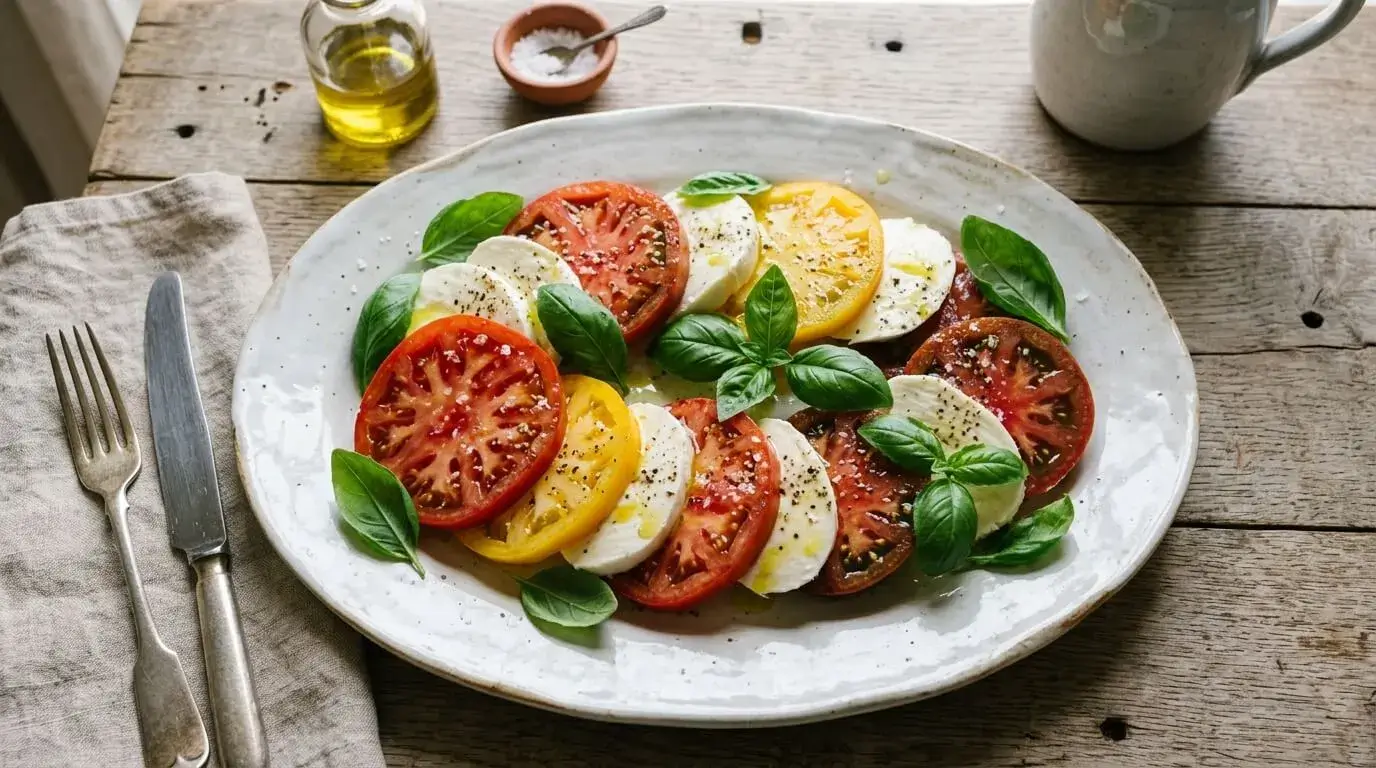
Caprese salad is a simple Italian dish of ripe tomatoes, fresh mozzarella and basil, finished with good olive oil and flaky salt – nothing more. Furthermore, it comes from the island of Capri in southern Italy, where the point was never to dress up the ingredients but to let three or four excellent ones speak for themselves. Also, from start to finish, this caprese salad recipe takes about 15 minutes of hands-on work. Then serve it the moment it’s assembled, at room temperature, as a starter, a side or a light summer lunch.
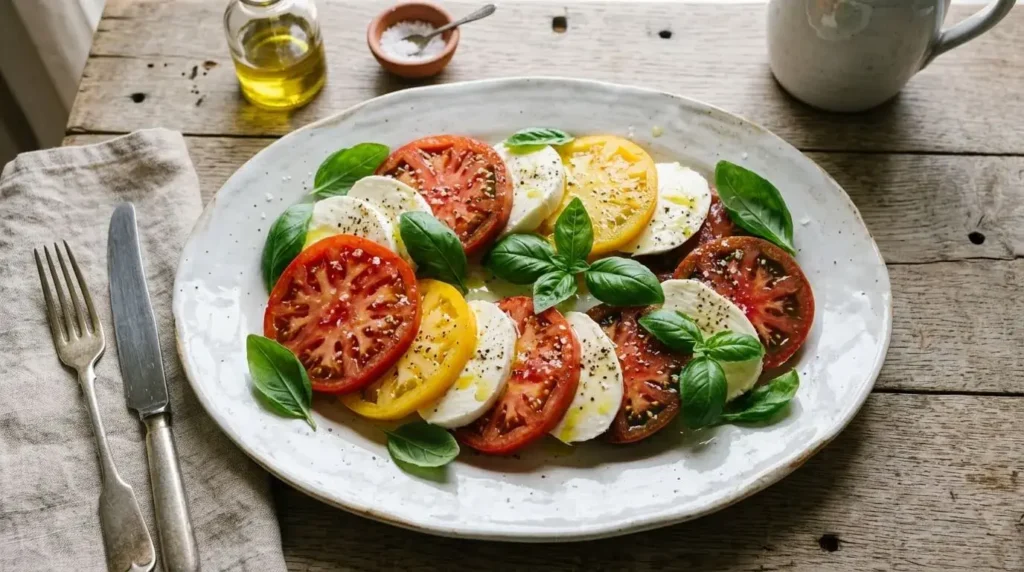
Welcome to Mediterranean Cuisines, where we test every recipe in a real kitchen before it goes on the site – and this one has been made more times than I can count.
Why You’ll Love This Caprese Salad
This isn’t a recipe you need to plan around. A few reasons it earns a permanent spot in the summer rotation:
- Authentic flavor – three or four ingredients, no shortcuts and no filler
- Genuinely simple – no cooking, no special equipment or just a knife and a platter
- Ready in about 15 minutes – most of that is washing and slicing
- Naturally vegetarian – it’s easy to make ahead of a meal without any last-minute stress
- Built for summer – it only works this well when the tomatoes are actually in season
What Is Caprese Salad?
Insalata Caprese or “salad of Capri,” takes its name from the island in the Bay of Naples where it’s said to have originated, in the Campania region of southern Italy. That’s why the classic pairing of tomato, mozzarella,and basil is often described as echoing the colors of the Italian flag, though the more practical explanation is that all three ingredients were simply local and in season together.
What defines Caprese salad isn’t a technique – it’s restraint. Moreover, there’s no dressing to make, no marinade and no cooking. The dish depends entirely on the quality of the tomatoes, the freshness of the mozzarella and the fragrance of the basil. Also, add a mediocre version of any of those and the salad falls apart. That’s the trade-off: it’s one of the easiest dishes to make and one of the easiest to get wrong. That’s why you can browse more recipes by region to see how this same principle – fewer ingredients, higher quality – shows up across Mediterranean cooking.
Ingredients You’ll Need
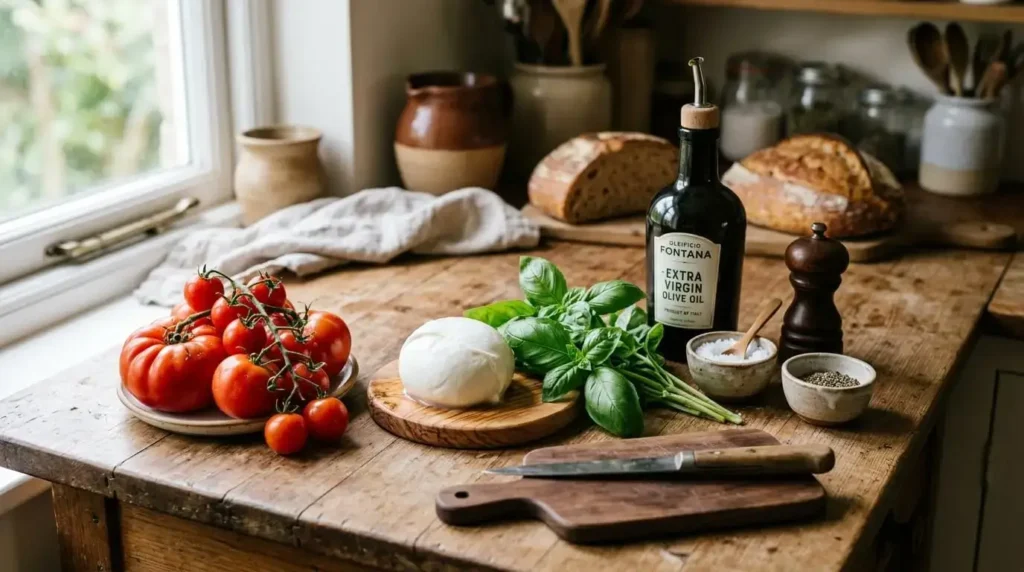
Fresh Tomatoes
Look for tomatoes that are fully ripe and heavy for their size – vine-ripened or heirloom varieties are ideal and Roma tomatoes work in a pinch if that’s what’s available. Instead, a tomato that’s slightly underripe will taste watery and acidic next to the mozzarella instead of sweet. Because this is one of those ingredients where seasonality matters more than the recipe itself, a great Caprese in January, using out-of-season tomatoes, is nearly impossible.
Fresh Mozzarella
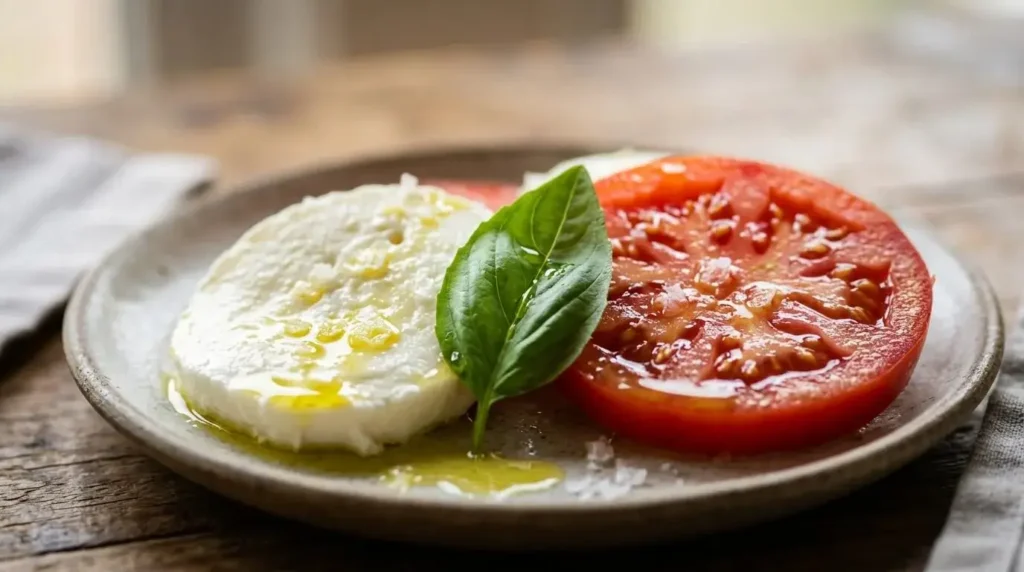
Fresh mozzarella is not the same product as the shredded, low-moisture mozzarella used on pizza – it should be soft, milky and packed in liquid.
| Type | Texture | Flavor | Best Use |
| Buffalo mozzarella (mozzarella di bufala) | Very soft, creamy or slightly springy | Rich, tangy and pronounced | The traditional choice for authentic Caprese |
| Cow’s milk mozzarella (fior di latte) | Firmer or milder moisture | Mild, milky and slightly sweet | A widely available or budget-friendly substitute |
Either works. Buffalo mozzarella is the traditional choice and worth seeking out if your grocery store carries it; that’s why cow’s milk mozzarella is more common in the US and still makes a good salad.
Fresh Basil
Basil should be torn by hand and not chopped with a knife. Also, chopping basil bruises the leaf and releases enzymes that turn the cut edges black within minutes – you’ll notice this happen if you slice it too far ahead. Tearing keeps the leaves looking fresh and releases their fragrance right before serving.
Extra Virgin Olive Oil
Because there’s no cooking involved, the olive oil is doing real work here as a finishing ingredient, not just a lubricant. Furthermore, a fruity, robust extra- virgin olive oil will noticeably outperform a flavorless “cooking” olive oil in this dish – it’s worth using the better bottle.
Should You Add Balsamic?
This is the most common point of confusion and it’s worth being direct about: traditional Insalata Caprese does not include balsamic vinegar or balsamic glaze. Moreover, that sweet-and-tangy drizzle is a modern, largely American restaurant addition.
| Traditional | Modern Adaptations |
| Extra- virgin olive oil, salt and pepper only | Balsamic glaze drizzled over the top |
| No vinegar of any kind | A splash of aged balsamic vinegar |
| Ingredients left un-marinated | Tomatoes are sometimes lightly marinated in vinegar beforehand. |
If you like balsamic, a small amount of aged balsamic vinegar is a reasonable addition – it won’t offend anyone. Because balsamic glaze, on the other hand, is thicker, sweeter and much further from the original dish; use it if you like it, but know it’s a departure and not a variation.
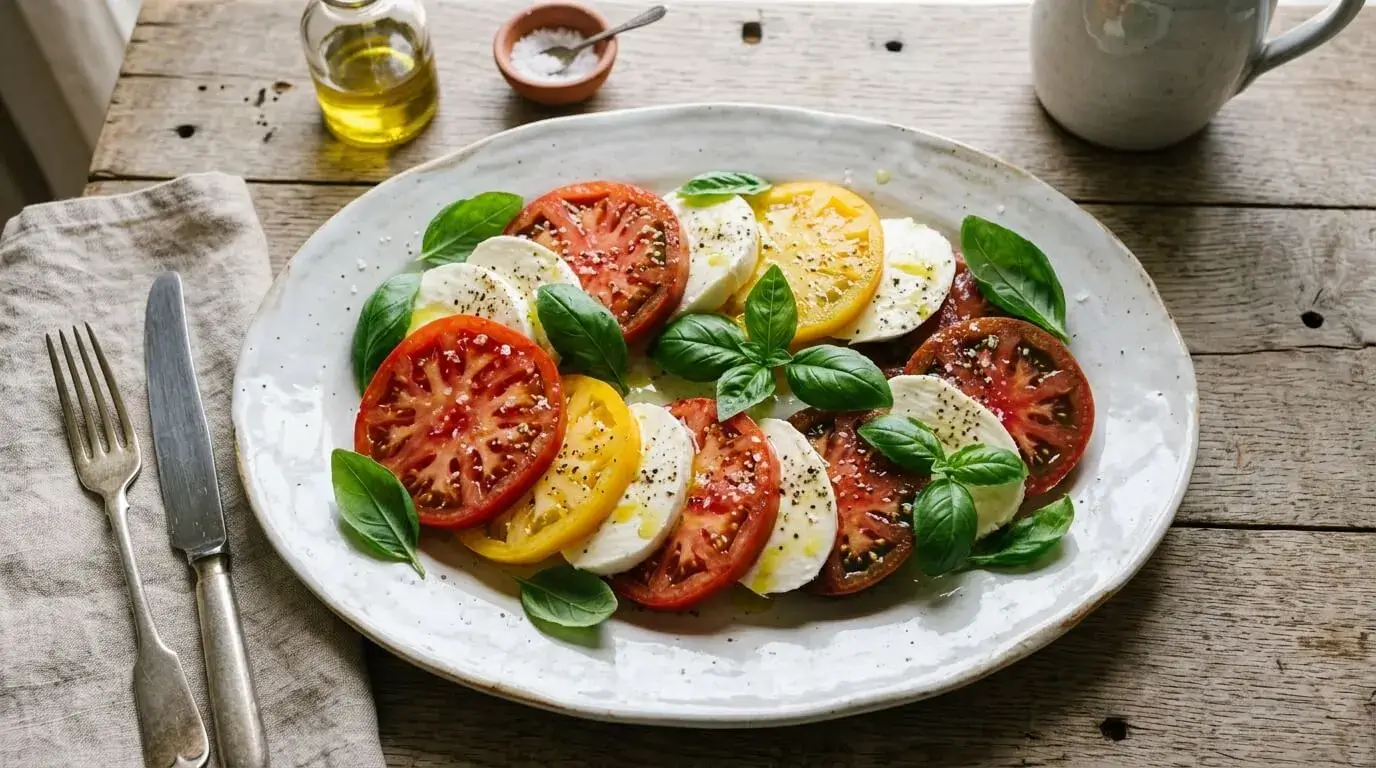
Authentic Caprese Salad
Ingredients
Method
- Wash and dry the tomatoes thoroughly.
- Slice the tomatoes evenly.
- Drain and slice the fresh mozzarella.
- Arrange alternating slices of tomato and mozzarella on a serving platter.
- Tuck basil leaves between the slices.
- Sprinkle with flaky sea salt and freshly ground black pepper.
- Drizzle with extra virgin olive oil.
- Add a small amount of aged balsamic vinegar only if desired (not traditional).
- Serve immediately at room temperature.
Notes
- Use tomatoes at room temperature for the best flavor.
- Fresh mozzarella should not be ice-cold when served.
- Tear basil leaves instead of chopping them to reduce bruising.
- High-quality extra virgin olive oil makes a noticeable difference.
- Traditional Caprese salad does not require balsamic glaze.
Nutrition Estimate (Per Serving)
Based on USDA FoodData Central reference values for mozzarella and tomatoes (estimate only):- Calories: ~220
- Protein: 11 g
- Fat: 17 g
- Carbohydrates: 6 g
- Fiber: 1 g
- Sugar: 4 g
- Sodium: ~330 mg
How to Make Caprese Salad
- Prepare the ingredients. Also, wash and thoroughly dry the tomatoes and basil.
- Slice the tomatoes evenly, about ¼ inch thick.
- Drain and slice the mozzarella to a similar thickness.
- Arrange alternating slices of tomato and mozzarella on a serving platter, slightly overlapping.
- Tuck basil leaves between the slices and tearing larger leaves as you go.
- Season with flaky sea salt or freshly ground black pepper.
- Finish with olive oil, drizzling it evenly over the top.
- Serve immediately, while the ingredients are still at room temperature.
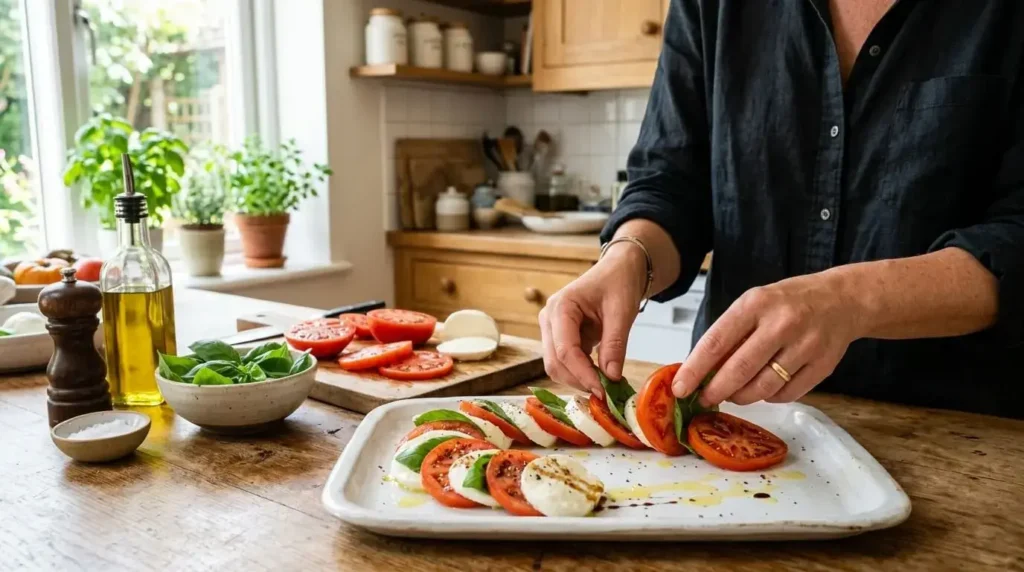
Honest timing note: Most recipe sites list this as a five-minute salad. Furthermore, in practice, once you factor in washing or drying the tomatoes and basil, because slicing everything evenly and arranging the platter with care, you’re closer to 15 minutes of active time. That’s still fast – just not instant – and it’s worth planning for the real number instead of being caught off guard.
Active Time: 15 minutes Total Time: 15 minutes
Common Mistakes to Avoid
| Problem | Cause | Fix |
| Watery salad | Tomatoes sliced too far ahead or salted too early | Salt just before serving and assemble close to serving time. |
| Bland tomatoes | Also underripe or out-of-season tomatoes | Buy vine-ripened or heirloom tomatoes at peak season. |
| Cold mozzarella | It’s served straight from the fridge | Let mozzarella sit at room temperature for 20-30 minutes before serving. |
| Too much balsamic | Overpouring glaze or vinegar | Use a light drizzle or skip it – it’s not traditional. |
| Overdressed salad | Too much olive oil masking the ingredients | Drizzle lightly; you can always add more. |
| Bruised, blackened basil | Basil was chopped instead of torn. | Tear leaves by hand right before serving. |
Ingredient Substitutions
| Traditional Ingredient | US Grocery Substitute | Flavor Difference |
| Buffalo mozzarella | Fresh cow’s milk mozzarella (fior di latte) | Milder, less tangy or slightly firmer texture |
| Heirloom or vine-ripened tomatoes | Ripe Roma and beefsteak tomatoes | Slightly less sweet or still workable if fully ripe |
| Fresh basil | Dried basil | Not recommended – dried basil lacks the essential fragrance for this dish. |
| High-quality and extra- virgin olive oil | Standard supermarket olive oil | Noticeably less fruity and aromatic |
These substitutions will still produce a good salad, but they won’t taste identical to the traditional version – ingredient quality is the whole point of this dish, so it’s worth splurging where you can.
Serving Suggestions
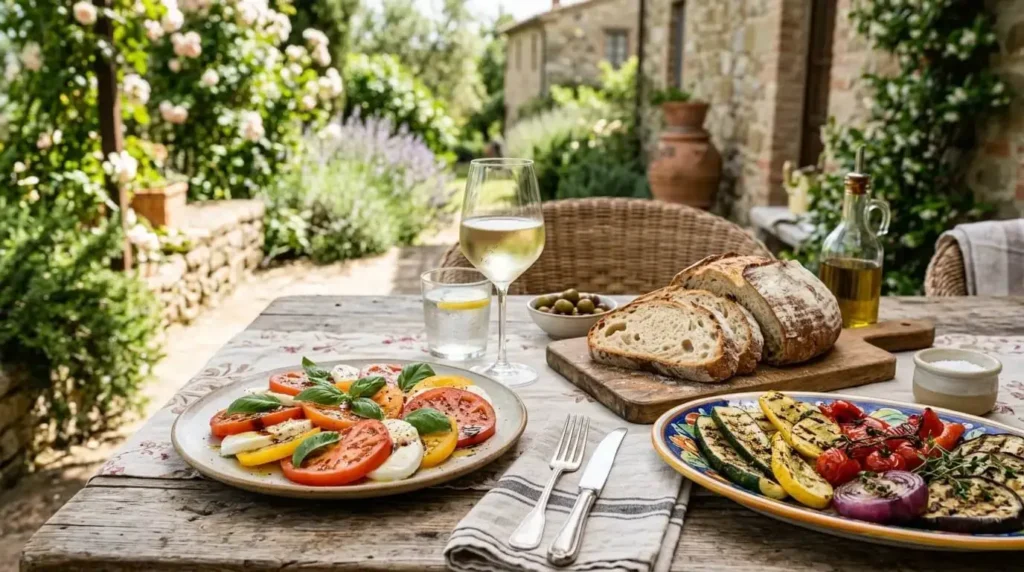
Caprese salad works well as a starter, a side dish or part of a larger spread. A few pairings worth trying:
- Crusty Italian bread, for soaking up the olive oil left on the platter
- Grilled vegetables and especially zucchini or eggplant
- Grilled chicken or a simple pan-seared fish
- As part of an antipasto spread alongside cured meats or olives
- A light summer lunch on its own with good bread
If you’re building out a full Mediterranean menu, that’s why it’s also worth exploring Greek recipes for dishes that share the same emphasis on fresh vegetables and olive oil.
Storage & Make-Ahead Tips
Can You Make Caprese Salad Ahead of Time?
Not really and it’s worth being upfront about that instead of pretending otherwise. Additionally, Caprese salad is best assembled just before serving – once the tomatoes are salted and the olive oil is added, but the tomatoes begin releasing water within an hour or two and the salad loses its texture. Then, if you want to get ahead of the work, also slice the tomatoes and mozzarella separately, keep the basil whole or assemble it right before guests arrive.
How to Store Leftovers
If you do have leftovers, refrigerate them in an airtight container or plan to eat them within 24 hours, in line with general guidance on refrigerating perishable foods. Keep in mind that chilling the tomatoes will dull their flavor and soften their texture, so leftovers won’t taste quite as good as the freshly assembled version. Furthermore, as with any fresh dairy and produce dish, proper food storage practices help keep it safe to eat.
| Situation | Recommendation |
| Prep ahead. | Slice ingredients separately; don’t assemble yet. |
| Fully assembled | Best eaten within 1-2 hours |
| Leftovers | Refrigerate; use within 24 hours. |
Caprese Salad Variations
The version above is the traditional Insalata Caprese, but a few popular adaptations are worth knowing about – none of them are “wrong”; that’s why they’re just not the original.
Burrata Caprese
It swaps mozzarella for burrata, which has a creamy, liquid center. Richer and less traditional, but very popular in the US.
Cherry Tomato Caprese
Uses halved cherry or grape tomatoes instead of sliced large tomatoes – useful when good full-size tomatoes aren’t in season.
Chopped Caprese Salad
All ingredients are diced and tossed together rather than layered, often dressed with balsamic vinaigrette.
Caprese Skewers
Bite-size mozzarella balls, cherry tomatoes and basil leaves threaded onto skewers – a common party appetizer format.
Caprese Pasta Salad
The same core ingredients tossed with cooked pasta for a heartier, make-ahead-friendly dish.
Frequently Asked Questions
What is Caprese salad made of?
Traditional Caprese salad is made of ripe tomatoes, fresh mozzarella, fresh basil, extra- virgin olive oil, salt and pepper. Furthermore, that’s it – no vinegar or balsamic in the original version, though many modern recipes add a light drizzle of balsamic.
Why is it called Caprese salad?
It’s named after the island of Capri, off the coast of Naples in Italy’s Campania region, where the dish is believed to have originated. Also, “Caprese” simply means “from Capri” in Italian.
Do authentic Italian recipes use balsamic glaze?
No. Traditional Insalata Caprese uses only olive oil, salt and pepper. Because balsamic glaze is a modern, mostly American restaurant addition, a small amount of aged balsamic vinegar is closer to an accepted variation but still not part of the classic version.
What tomatoes are best for Caprese salad?
Fully ripe, vine-ripened or heirloom tomatoes work best. They should feel heavy for their size and smell fragrant at the stem. Underripe or out-of-season tomatoes will taste watery and acidic instead of sweet.
Can I make Caprese salad ahead of time?
Not fully assembled – it’s best put together just before serving, since salted tomatoes release water quickly. Furthermore, you can slice the tomatoes and mozzarella ahead and store them separately, then assemble right before eating.
Is Caprese salad healthy?
Yes, in moderation. It’s built on vegetables, fresh dairy and olive oil, which are core components of the Mediterranean dietary pattern and generally associated with health benefits. Moreover, portion and mozzarella quantity affect the overall calorie and fat count.
What’s the difference between a Caprese salad and a tomato-mozzarella salad?
They’re closely related, but caprese salad specifically refers to the traditional Italian dish with basil and olive oil as the only seasonings. Instead, “tomato-mozzarella salad” is a broader, less specific term that may include other dressings, herbs or ingredients not part of the original.
Can I use burrata instead of mozzarella?
Yes, though this makes it a Burrata Caprese rather than the traditional version. But burrata’s creamy, liquid center gives the salad a richer texture, but it’s a modern adaptation and not the classic preparation.
Conclusion
Caprese salad rewards patience with ingredients more than it rewards technique. Also, buy tomatoes at their peak, use fresh mozzarella, tear the basil by hand and finish with good olive oil – the rest takes care of itself. Then keep it simple, serve it immediately and let the ingredients do the work. Additionally, for more dishes built on the same idea, browse our Mediterranean recipes collection.