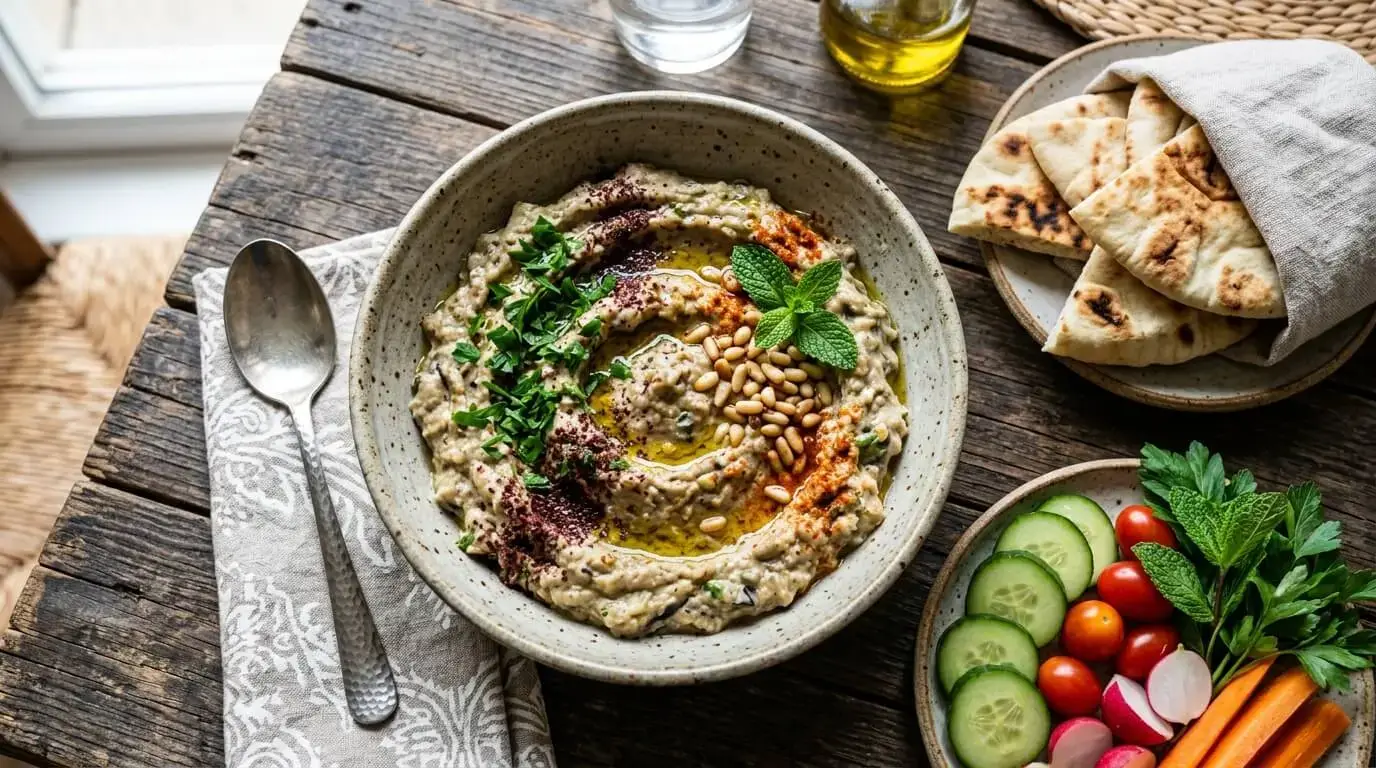
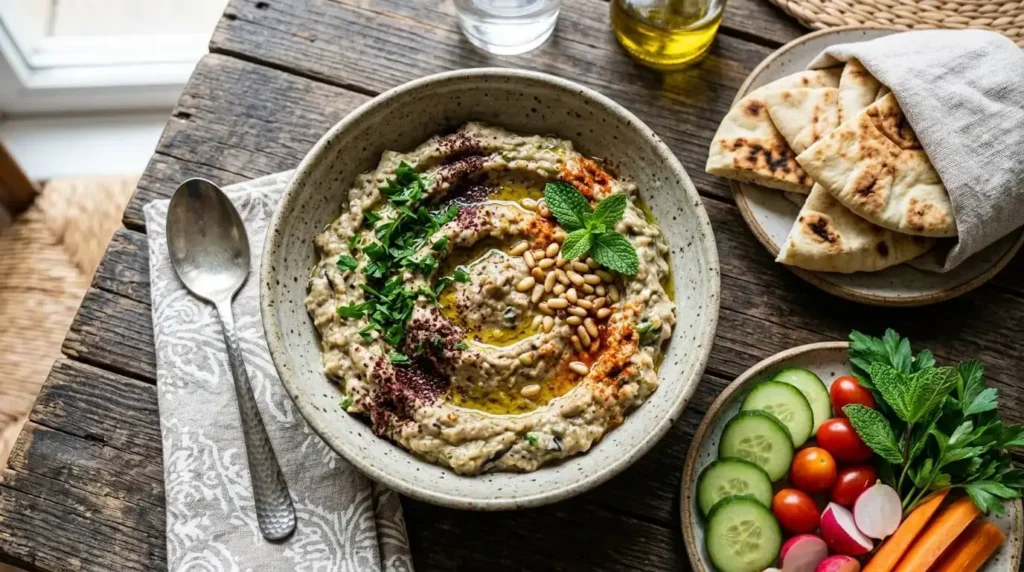
Baba ganoush is a creamy, smoky Levantine dip made from charred eggplant, tahini, garlic and lemon juice. Furthermore, real baba ganoush depends on one non-negotiable step: proper charring and not just roasting. Also, skip that step and you get a flat, vegetal puree instead of the deep or campfire-like flavor that makes this dish worth making at home.
Because I’ve made this recipe more times than I can count, testing gas flame, grill, broiler and oven methods side by side. Overall, what follows is the version that consistently produces the right texture and flavor, along with realistic timing – because most recipes online quietly skip over how long roasting and cooling actually take.
Quick Answer
Baba ganoush is a Levantine eggplant dip made by charring whole eggplants until smoky, then blending the flesh with tahini, garlic, lemon juice and olive oil. Moreover, it originated in the Levant – the region spanning Lebanon, Syria, Palestine and Jordan – and is traditionally served as part of a mezze spread with warm pita. That’s why active prep takes about 20 minutes, but between charring, cooling and peeling, plan on roughly 80 minutes total for the best texture and flavor.
Why You’ll Love This Baba Ganoush
This baba ganoush recipe sticks close to traditional Levantine technique while staying realistic for a home kitchen. Instead, a few reasons it’s worth adding to your rotation:
- The authentic smoky flavor from properly charred eggplant and not just roasted
- It’s naturally vegetarian and easy to make vegan
- Also gluten-free, with no substitutions needed
- Built from a handful of simple, pantry-friendly ingredients
- It tastes even better the next day, so it’s genuinely make-ahead friendly
What Is Baba Ganoush?
Baba ganoush is a dip made from charred eggplant blended with tahini, garlic, lemon juice and olive oil until smooth or lightly chunky. Further, it belongs to the mezze tradition of the Levant – the region that includes Lebanon, Syria, Palestine and Jordan – where small shared plates are served alongside warm pita, olives and other dips before or alongside a main meal.
The charring is what defines the dish. Moreover, cooking the eggplant directly over an open flame or grill until the skin blisters and blackens infuses the flesh with a smokiness that roasting alone can’t replicate. Also, tahini matters just as much: it adds body, a subtle bitterness that balances the eggplant’s sweetness and the nutty richness that separates baba ganoush from a plain eggplant puree. Instead, across the Levant, texture varies – some cooks prefer it silky smooth, others leave it rustic and chunky – but the smoky char and tahini base stay constant. That’s why American recipes sometimes skip the char entirely and roast the eggplant whole in the oven, which is faster but produces a noticeably milder and less traditional dip.
Baba Ganoush vs. Hummus
Baba ganoush and hummus are often served on the same plate, which leads a lot of people to assume they’re variations of the same thing. Instead, they’re not. Hummus is built on chickpeas; baba ganoush is built on eggplant. Additionally, the two dishes share a few ingredients – tahini, garlic, lemon – but the base vegetable changes everything about texture, flavor and color.
| Feature | Baba Ganoush | Hummus |
| Main ingredient | Roasted eggplant | Chickpeas |
| Texture | Loose or slightly chunky | Thick and smooth |
| Flavor | Smoky and earthy | Nutty or mild |
| Color | Beige-gray | Pale yellow |
| Traditional ingredients | Eggplant, tahini, garlic and lemon | Chickpeas, tahini, garlic or lemon |
| Common serving uses | Mezze dip or spread | Mezze dip, spread and sandwich filler |
If you’re searching for “baba ganoush vs hummus” because you want to know which to make first, the honest answer is they’re different enough in flavor and technique that keeping both on a mezze platter is worth the extra effort.
Ingredients You’ll Need
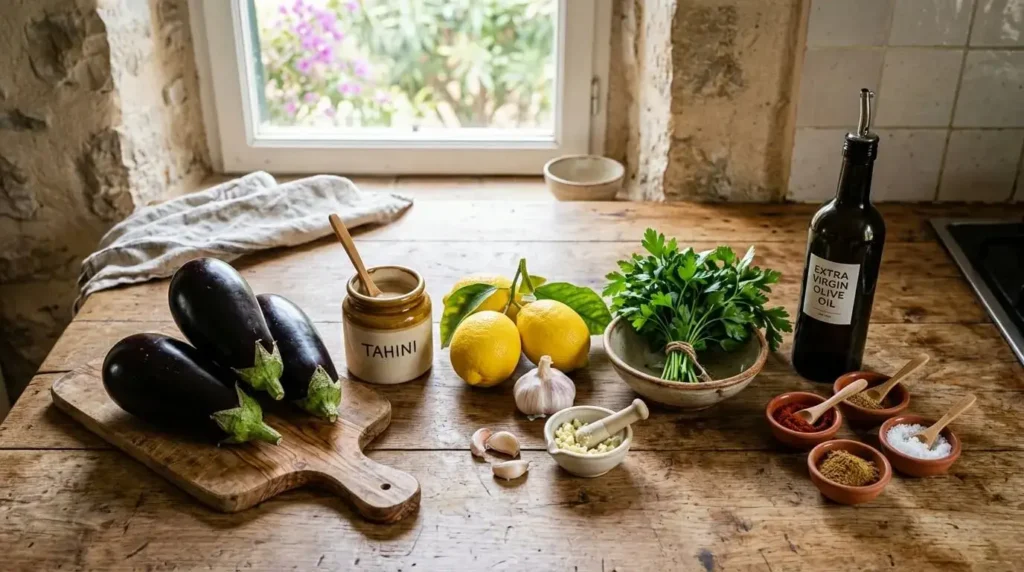
Essential Ingredients
- Eggplants – globe eggplants are charred evenly and yield the most flesh; this is the entire foundation of the dish.
- Tahini- also adds richness and the characteristic slightly bitter, nutty backbone.
- Garlic -it provides sharpness; start with less than you think you need, since raw garlic intensifies as the dip sits.
- Lemon juice – it cuts through the richness of the tahini and olive oil.
- Extra-virgin olive oil – rounds out the flavor and is also used generously for finishing.
- Salt -further essential for balancing the eggplant’s natural sweetness.
Optional Garnishes
- Parsley – also adds freshness and color.
- Smoked paprika – reinforces the smokiness visually and in flavor.
- Sumac -it brings a bright, tangy note common in Levantine cooking.
- Pomegranate seeds – also add a pop of sweetness and texture.
- Extra olive oil -it’s drizzled just before serving.
Ingredient Substitutions
Overall, these are the substitutions I get asked about most, along with what they actually do to the finished dip:
| Ingredient | Best Substitute | Effect on Authenticity |
| Tahini | Well-stirred natural peanut butter (small amount) | Noticeably changes flavor; moves away from traditional taste. |
| Lemon juice | Red wine vinegar, used sparingly | Similar acidity, but loses the bright citrus note. |
| Extra-virgin olive oil | Any neutral olive oil | Fine substitution: slightly less fruity flavor. |
| Garlic | Garlic powder (¼ tsp per clove) | Milder and flatter; fresh garlic is preferred when possible |
Tahini and lemon are the two ingredients most home cooks in the U.S. are tempted to swap, since good tahini isn’t always sold locally. Moreover, swapping tahini changes the dish enough that it stops tasting like true baba ganoush; that’s why I’d only recommend it if tahini genuinely isn’t available.
How to Make Baba Ganoush
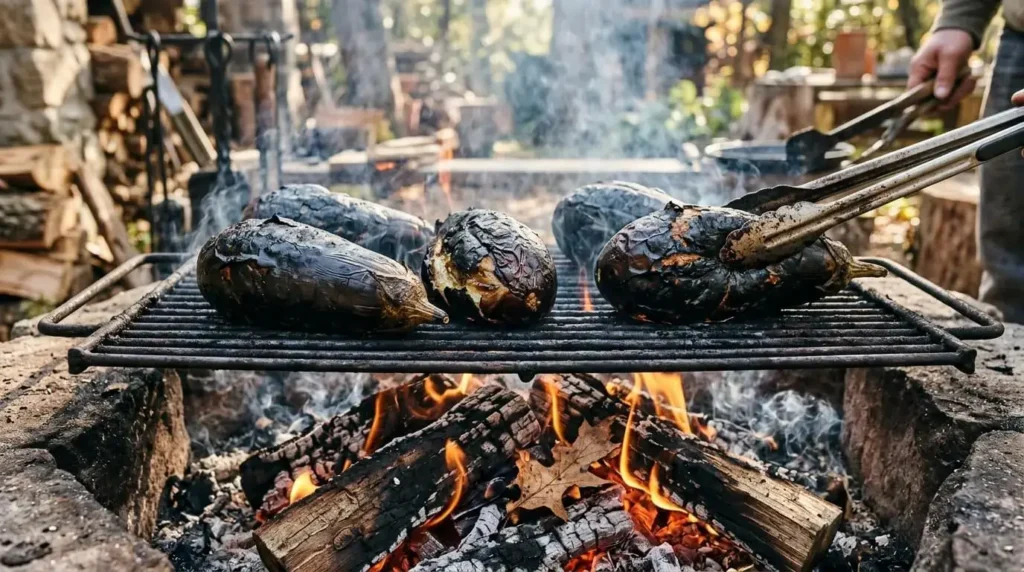
Roast or Char the Eggplants
The charring method you choose has the single biggest impact on final flavor. Here’s how the common options compare:
| Method | Smokiness | Difficulty | Best For |
| Grill | Highest | Easy | Outdoor cooking and summer batches |
| Gas burner (open flame) | High | Easy | Weeknight cooking or small batches |
| Broiler | Medium | Easy | No grill or gas stove available |
| Oven (roasting only) | Low | Easiest | Convenience and milder flavor |
For a gas flame or grill, turn the eggplant directly over the heat every few minutes until the skin is blackened and blistered on all sides and the flesh feels completely collapsed and soft – this usually takes 12-15 minutes per eggplant. Further, a broiler gets you most of the way there if you don’t have open flame access; just keep the eggplant close to the heat and turn it often. Instead, oven roasting alone (400°F, no direct flame) is the easiest option, but expect a milder, less smoky result.
Cool and Peel
Let the charred eggplants sit until cool enough to handle, about 15 minutes. Overall, this isn’t a step to rush – trying to peel a hot eggplant tears the flesh and makes it much harder to separate the skin cleanly. Furthermore, once cooled, split the eggplant and scoop out the flesh, leaving the blackened skin behind. Some seeds are fine; also, a few scattered around are traditional and not a flaw.
Blend the Dip
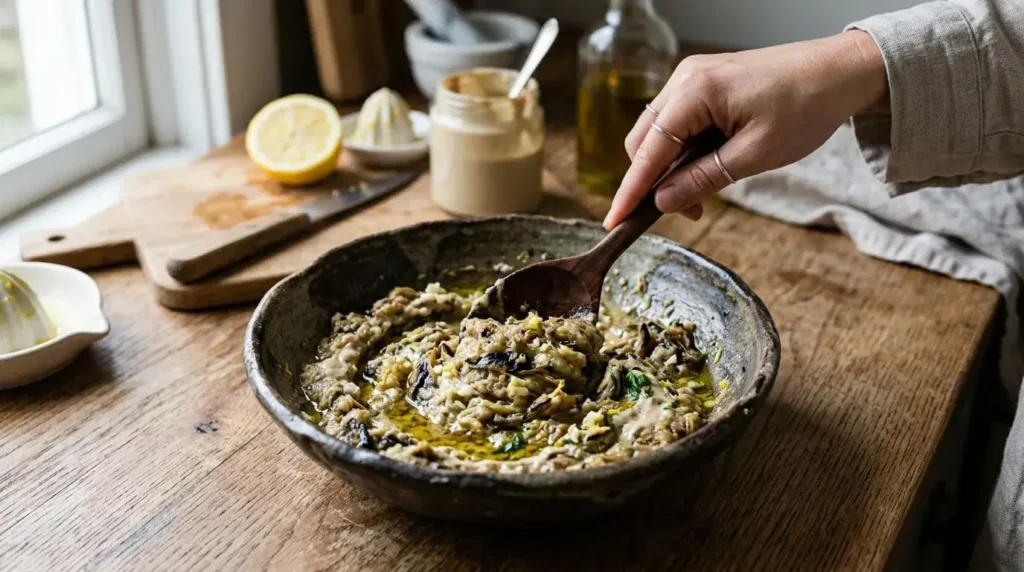
Also, mash the eggplant with a fork or pulse it briefly in a food processor. I’d steer you toward mashing by hand or using very short pulses – over-processing turns the eggplant gluey and strips out the rustic texture that’s part of what makes this dip distinct from hummus.
Taste and Adjust
Stir in the tahini, garlic, lemon juice, olive oil and salt, then taste before adding more of anything. Add garlic and lemon; both intensify as the dip rests, so if it tastes slightly mild right after mixing, that’s normal – wait 15 minutes and taste again before adding more.
Honest Timing Notes
A lot of baba ganoush recipes online quote 30-40 minutes total, which only accounts for the time actively spent cooking or mixing. Because it skips the roasting time needed for full charring and the cooling time needed to peel the eggplant cleanly. In conclusion, based on testing this recipe repeatedly in a home kitchen and here’s what it actually takes:
| Stage | Time |
| Prep | 20 minutes |
| Cook (char/roast) | 45 minutes |
| Cooling | 15 minutes |
| Total | 80 minutes |
The hands-on work is genuinely minimal – most of that time is the eggplant charring unattended or cooling on the counter. But if you’re planning this for a party, budget the full 80 minutes rather than the 30-40 minutes some recipes promise.
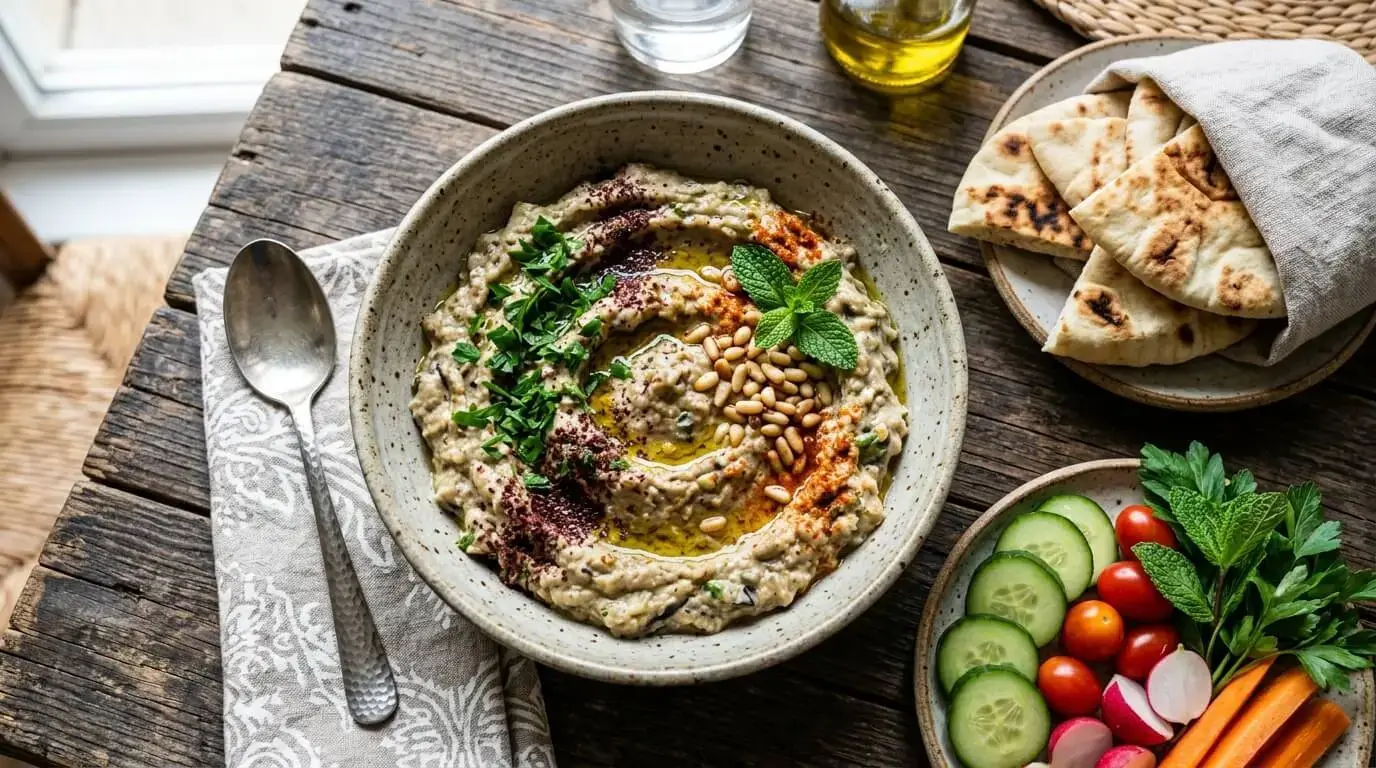
Authentic Baba Ganoush (Smoky Eggplant Dip)
Ingredients
Method
- Roast or char the eggplants until the skins are blackened and the flesh is completely soft.
- Cool slightly until easy to handle, about 15 minutes.
- Peel away the charred skin.
- Drain excess liquid if the flesh seems watery.
- Mash or pulse the eggplant, keeping some texture.
- Stir in tahini, garlic, lemon juice, olive oil and salt.
- Taste and adjust seasoning.
- Chill briefly or serve immediately with a drizzle of olive oil and garnishes.
Notes
- Grill or open flame provides the smokiest flavor.
- Allow the eggplant to cool before peeling.
- Drain excess moisture if the flesh is watery.
- Flavor improves after 30-60 minutes of chilling.
- Avoid over-processing for the most authentic, rustic texture.
Nutrition Estimate (Per Serving)
Calories: ~120 | Fat: 10 g | Carbohydrates: 8 g | Fiber: 4 g | Protein: 2 g | Sodium: ~180 mg (Estimate only – recalculate with your nutrition plugin before publishing. General ingredient nutrition data available via USDA FoodData Central.)Troubleshooting Baba Ganoush
| Problem | Cause | Solution |
| Too bitter | Eggplant skin left in or eggplant undercooked | Peel more thoroughly and make sure the flesh is fully soft before blending. |
| Too watery | Excess liquid from eggplant not drained | Let mashed eggplant sit in a strainer for 10 minutes before mixing in other ingredients. |
| Not smoky enough | Charred with oven roasting only or the char was too light | Use a grill or open gas flame and char until the skin is fully blackened, not just browned. |
| Too thick | Too little olive oil or lemon juice | Stir in olive oil or lemon juice a teaspoon at a time until it loosens. |
| Too much garlic | Added too much raw garlic upfront | Balance with extra lemon juice and a pinch more tahini and use less garlic next time. |
How to Serve Baba Ganoush
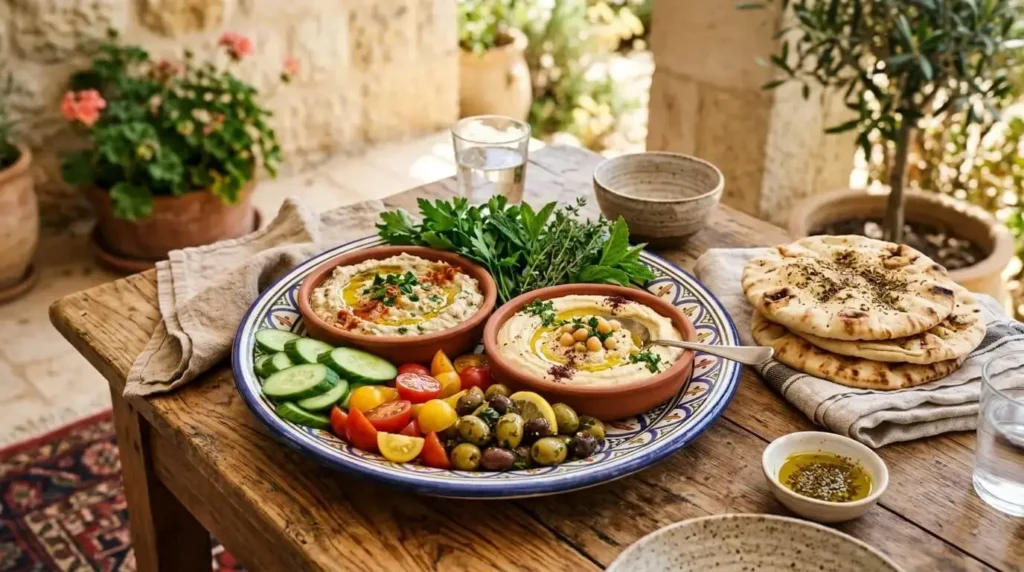
Traditional Mezze Pairings
- Warm pita bread
- Also fresh vegetables like cucumber and radish
- Olives
- Pickles
- Falafel
- Grilled meats
- Kibbeh
- Stuffed grape leaves
Modern Serving Ideas
- Spread on sandwiches
- Filling for wraps
- Stirred into grain bowls
- Topping for salads
- Dip for crackers
Baba ganoush is a natural fit for any Mediterranean appetizer spread – browse more Mediterranean recipes if you’re planning a full mezze table.
Storage & Make-Ahead Tips
Refrigerator Storage
Also store baba ganoush in an airtight container in the refrigerator. Further, it actually improves after 30-60 minutes of chilling, then once the garlic and lemon have had time to settle into the eggplant. Leftovers should be refrigerated promptly and used within a few days for food safety.
Can You Freeze It?
Baba ganoush can be frozen, though the texture softens slightly once thawed – a quick stir usually brings it back together. Moreover, thaw it overnight in the refrigerator rather than at room temperature. Additionally, for general guidance on safe freezing and thawing timelines for prepared foods, the FoodKeeper app is a useful reference.
| Method | Time |
| Refrigerator | 3-4 days |
| Freezer | Up to 3 months |
Frequently Asked Questions
What is baba ganoush made of?
Baba ganoush is made from charred, roasted eggplant blended with tahini, garlic, lemon juice, olive oil and salt. That’s why the charring step is what gives it a smoky flavor and tahini adds richness and body that separates it from a plain eggplant puree.
Is baba ganoush vegetarian?
Yes, baba ganoush is naturally vegetarian and typically vegan as well, since the traditional recipe contains no animal products. Moreover, some Westernized versions add yogurt for extra creaminess, but that’s not part of the traditional preparation.
Is baba ganoush healthy?
Baba ganoush is made mostly from vegetables, olive oil and tahini, which provide fiber and unsaturated fats. Olive oil and vegetables are core components of a Mediterranean-style eating pattern, though portion size still matters, especially with the added olive oil.
Is baba ganoush Israeli food?
Baba ganoush originated in the Levant, the region spanning Lebanon, Syria, Palestine and Jordan and has been enjoyed across that region for generations. That’s why it’s now eaten and served in many countries throughout the Middle East, including Israel, but its roots are Levantine.
What nationality is Baba-Ganoush?
Baba ganoush isn’t tied to a single modern nationality – it’s a regional Levantine dish shared across Lebanon, Syria, Palestine and Jordan, with local variations in texture and seasoning found throughout that shared culinary tradition.
Can you make baba ganoush without tahini?
Yes, but the flavor changes noticeably – tahini contributes richness and a slightly bitter, nutty balance that’s hard to replace. Moreover, leaving it out produces a lighter, brighter dip that’s still tasty but no longer traditional baba ganoush.
Why does my baba ganoush taste bitter?
Bitterness usually comes from leftover charred skin or eggplant that wasn’t fully cooked through. Also, peel the eggplant thoroughly and make sure the flesh is completely soft and collapsed before blending to avoid this.
Can I make baba ganoush ahead of time?
Yes – baba ganoush is genuinely a make-ahead dish. Because the flavor improves after chilling for 30-60 minutes as the garlic and lemon mellow into the eggplant and it keeps well in the refrigerator for several days.
Final Thoughts
Baba ganoush rewards patience more than skill – the charring and cooling steps do most of the work for you. That’s why once you’ve got the technique down, it’s easy to adjust for your own taste, whether that means extra lemon, more garlic or a smokier char. Additionally, I’d love to hear which roasting method you land on and how you like to serve it.