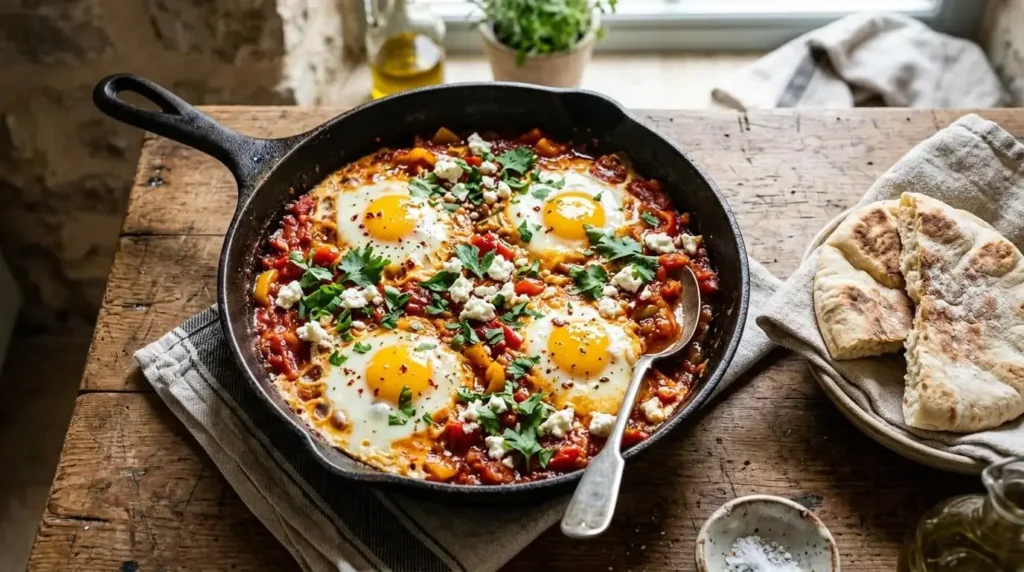
This shakshuka recipe gives you eggs gently poached in a thick, spiced tomato sauce – no special equipment or hard-to-find ingredients required. Moreover, it’s inspired by North African cooking traditions and built for a real home kitchen, with honest timing and step-by-step guidance so first-timers can cook with confidence.
Quick Answer: Shakshuka is a one-pan dish of eggs poached in a spiced tomato and pepper sauce, seasoned with cumin, paprika and garlic. Also, it’s widely traced to North Africa and became a staple across the Levant, where it’s often eaten for breakfast or brunch with warm bread. This shakshuka recipe uses crushed tomatoes, bell pepper and a fully reduced sauce so the eggs cook evenly instead of sitting in watery liquid. That’s why people love it: it’s inexpensive, naturally vegetarian and endlessly customizable.
Why You’ll Love This Shakshuka Recipe
- One pan, minimal cleanup – everything cooks in a single skillet
- Beginner friendly – no advanced techniques required
- Naturally vegetarian and gluten-free
- Customizable spice level – mild or add cayenne and harissa for heat
- Great for brunch – serves well straight from the skillet
- Mediterranean diet friendly -built on vegetables, olive oil and eggs
- Realistic timing – no rushed sauce and no watery results
What Is Shakshuka?
Shakshuka (pronounced shak-SHOO-ka) is a dish of poached eggs directly in a simmered tomato and pepper sauce. Furthermore, the sauce is built from tomatoes, onion, garlic and warming spices – typically cumin and paprika -cooked down until thick before the eggs go in.
The eggs are cracked straight into the sauce and cooked gently, covered, until the whites are set and the yolks are as firm or as runny as you like. Also, it’s a one-pan dish from start to finish, which is part of why it’s become so popular for weekend breakfasts and easy weeknight dinners alike. Although the name itself roughly translates to “a mixture,” which fits – this is a dish built on a handful of pantry staples brought together with patience rather than complexity.
Where Does Shakshuka Come From?
Food historians generally trace shakshuka’s roots to North Africa, particularly Tunisia and Algeria, where tomato-based egg dishes have long been part of everyday cooking. Furthermore, the dish traveled and took hold across the Levant – including Israel and Palestine – where it became a common breakfast and brunch staple; it was also often served with warm pita and fresh vegetables.
Palestinian home cooking includes its own long-standing versions of eggs simmered in tomato sauce, sometimes prepared with different spice blends or vegetable additions depending on the region and household. Additionally, with many dishes that cross borders and generations, exact origins are debated among food historians and this article presents the most widely accepted understanding rather than a single definitive claim.
Turkish menemen is a close relative but not the same dish – it typically uses scrambled rather than poached eggs and often skips the heavier spicing found in shakshuka. That’s why in the US, modern adaptations frequently add feta, extra peppers or a heavier hand with heat, which is a fine variation but worth noting as a departure from more traditional versions.
| Region | Characteristics | Key Ingredients | Notes |
| North Africa (Tunisia, Algeria) | Widely cited origin: simple and spiced tomato base | Tomatoes, cumin, harissa and olive oil | Often the reference point for “traditional” shakshuka |
| Levant (Israel, Palestine) | Also became a signature breakfast dish | Tomatoes, bell peppers, cumin and paprika | Commonly served with pita and fresh salad |
| Turkey (menemen) | Related but distinct dish | Tomatoes, peppers and scrambled eggs | Eggs are scrambled, not poached whole |
| United States (modern adaptation) | It often richer and cheesier | Crushed tomatoes, feta and cayenne | A newer variation, not the traditional version |
Ingredients You’ll Need
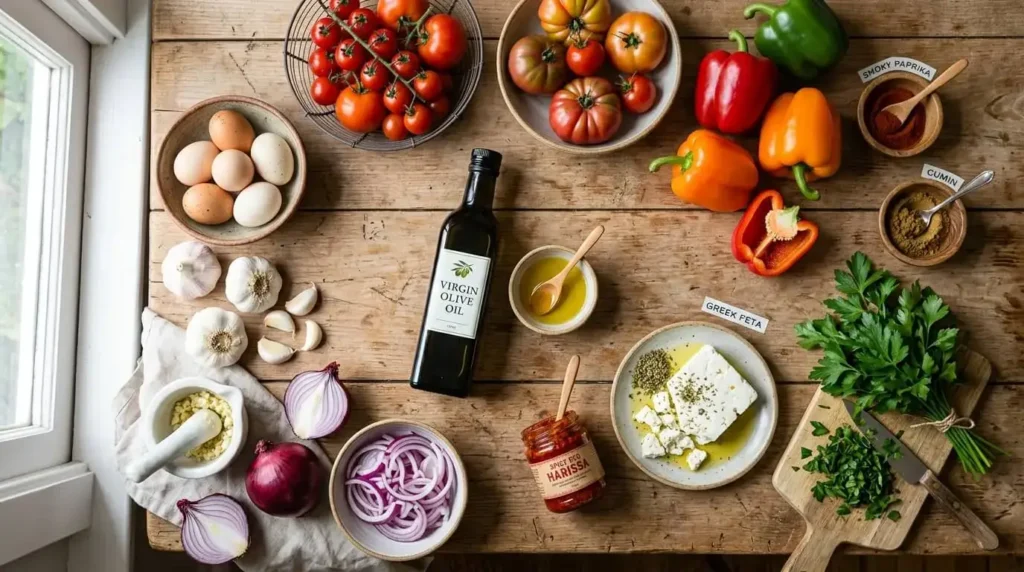
Core Ingredients
The base of any good shakshuka recipe is olive oil, onion, bell pepper, garlic, crushed tomatoes and eggs. because Cumin and paprika provide the dish’s signature warmth, while tomato paste adds depth and helps the sauce thicken properly.
Optional Additions
Crumbled feta, fresh parsley or cilantro and a spoonful of harissa are common finishing touches. That’s why A pinch of cayenne is worth adding if you want real heat rather than just background warmth.
Ingredient Notes
Use good-quality crushed tomatoes – they make a noticeable difference in flavor and texture. Because Ground spices lose potency over time, so smell them before you cook; if they’re faint, use a bit more or replace the jar.
Fresh tomatoes vs. canned tomatoes
| Option | Best For | Notes |
| Fresh tomatoes | Peak summer season | Requires peeling and longer simmering to reduce properly |
| Canned crushed tomatoes | Year-round convenience | Consistent thickness and flavor; recommended for most cooks |
Ingredient Substitutions
Several ingredients in a traditional shakshuka recipe can be swapped for items already in a standard US grocery store without losing the character of the dish.
If you can’t find harissa, then combine crushed red pepper flakes, a spoonful of tomato paste and smoked paprika for a similar flavor base. Furthermore, cilantro and parsley are largely interchangeable – use whichever you prefer or have on hand. Also, feta is traditional in many modern Levantine servings but entirely optional if you’d rather skip dairy. That’s why a well-seasoned stainless skillet can stand in for cast iron, though cast iron holds heat more evenly for the simmer stage.
| Ingredient | Substitute | Notes |
| Harissa | Chili flakes, tomato paste and smoked paprika | Closest flavor match |
| Fresh tomatoes | Canned crushed tomatoes | More consistent texture |
| Aleppo pepper | Smoked paprika or pinch of cayenne | Milder, adjust to taste. |
| Feta | Omit, or use a mild goat cheese. | Both work fine. |
| Cilantro | Parsley | Interchangeable by preference |
| Cast iron skillet | Stainless steel skillet | Slightly less even heat retention |
How to Make Shakshuka
Step 1 – Sauté the Aromatics
Heat olive oil in a large skillet over medium heat. Also add the diced onion and cook until softened, then add the bell pepper and cook until it begins to soften as well. The vegetables should turn soft and lightly sweet – not browned. In my checking, rushing this step leaves the peppers with a raw bite that carries through the whole dish and gives it the full few minutes.
Step 2 – Build the Tomato Sauce
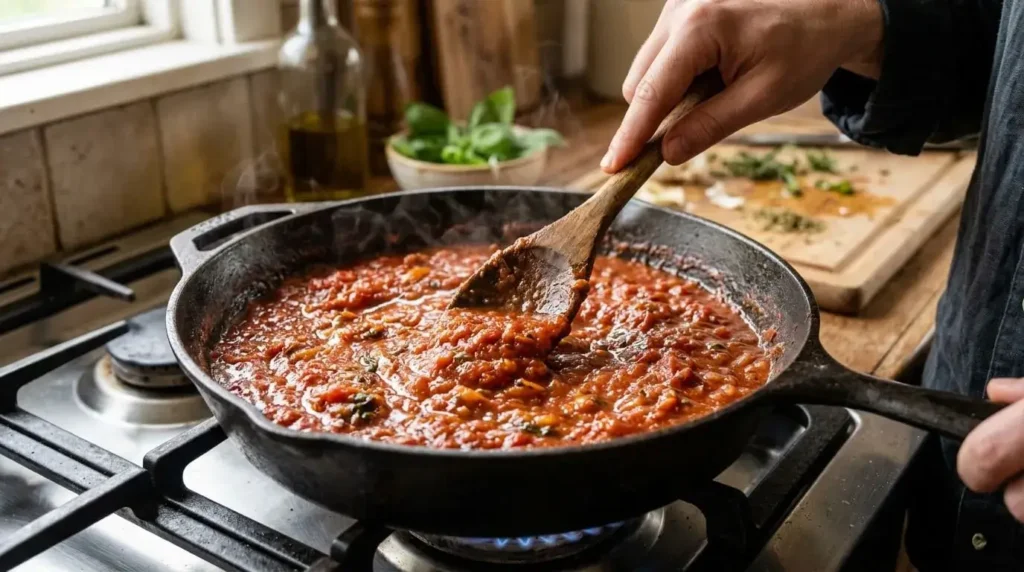
Stir in the garlic and tomato paste, then add the cumin and paprika and let them bloom in the hot oil for about 30 seconds – this wakes up the spices and prevents a flat, dusty flavor. That’s why we add the crushed tomatoes and simmer until the sauce is thick enough to leave a trail when you drag a spoon through it.
Because many recipes rush this stage, reducing excess moisture creates a richer sauce and helps the eggs cook evenly instead of poaching in watery liquid. This is the step where a 25-minute recipe usually cuts corners – plan on a genuine simmer here, not a quick five-minute stir.
Step 3 – Add the Eggs
Also, use the back of a spoon to make small wells in the sauce and then crack each egg gently into its own well, being careful not to break the yolks.
Step 4 – Cover and Cook
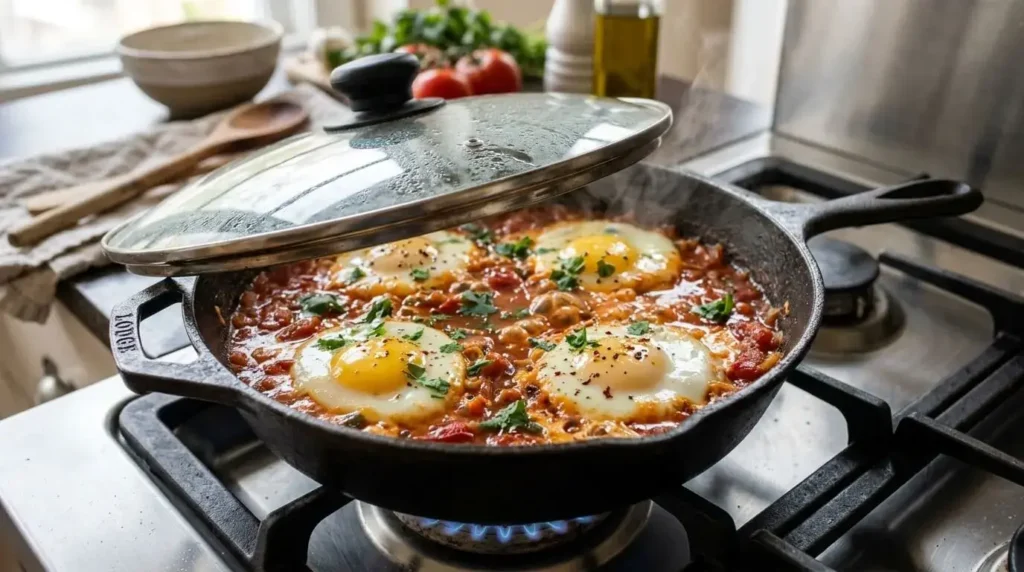
Cover the skillet and cook over low heat until the eggs reach your preferred doneness. Because timing depends on personal preference more than a strict clock, check the watches rather than watching the timer alone.
| Egg Texture | Approx. Covered Cooking Time | Best For |
| Very runny | 5-6 minutes | Toast dipping |
| Jammy | 7-8 minutes | Recommended |
| Fully set | 9-10 minutes | Meal prep |
Step 5 – Finish and Serve
Remove the skillet from heat and finish with chopped parsley or cilantro, crumbled feta if using and a drizzle of olive oil. Furthermore, serve this easy shakshuka recipe straight from the skillet while it’s hot.
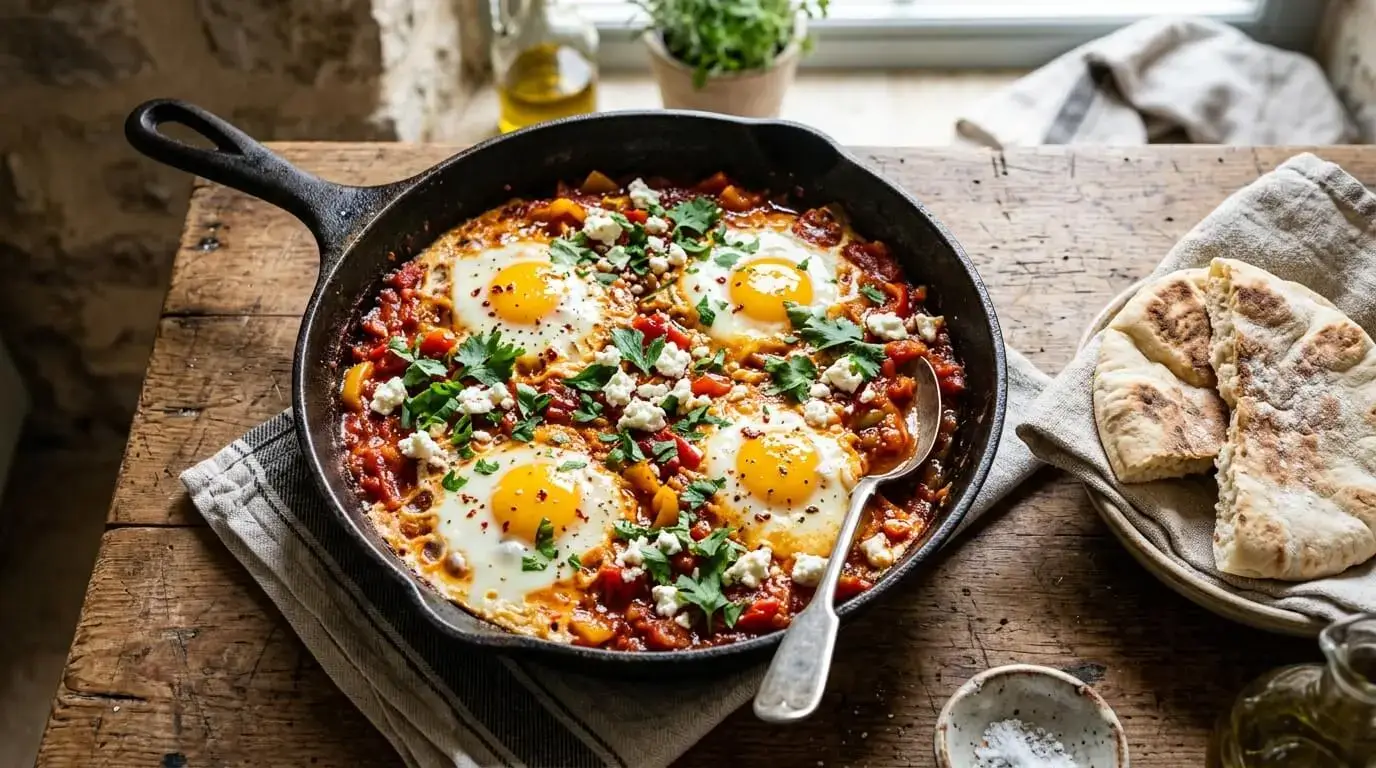
Easy Shakshuka (Eggs in Spicy Tomato Sauce)
Ingredients
Method
- Heat olive oil over medium heat.
- Cook onion until softened.
- Add peppers and continue cooking until tender.
- Stir in garlic.
- Add tomato paste.
- Bloom cumin and paprika.
- Add tomatoes.
- Simmer until thickened.
- Taste and adjust seasoning.
- Make wells in the sauce.
- Crack eggs into wells.
- Cover and cook until desired doneness.
- Garnish with herbs and feta.
- Serve immediately with warm bread.
Notes
- Fresh tomatoes may be substituted when in season.
- Reduce sauce fully before adding eggs.
- Covering the skillet cooks eggs more evenly.
- Feta is optional but traditional in many modern Levantine servings.
- Leftover sauce reheats better than fully cooked eggs.
- Calories: ~260
- Protein: 13 g
- Carbohydrates: 12 g
- Fat: 18 g
- Fiber: 3 g
- Sugar: 7 g
Common Mistakes and How to Avoid Them
Most shakshuka problems trace back to one of a few avoidable habits, because they’re easy to fix once you know what to look for.
| Problem | Cause | Fix |
| Watery sauce | Tomatoes not reduced enough | Simmer longer before adding eggs. |
| Eggs overcooked | Heat too high while covered | Lower heat and cover earlier |
| Burnt garlic | Added too early with raw onion | Add garlic after the onion has softened. |
| Bland flavor | Sauce under-seasoned | Taste and adjust salt before adding eggs. |
| Bitter spices | Spices scorched in the pan | Bloom spices briefly, not over high heat |
Serving Suggestions
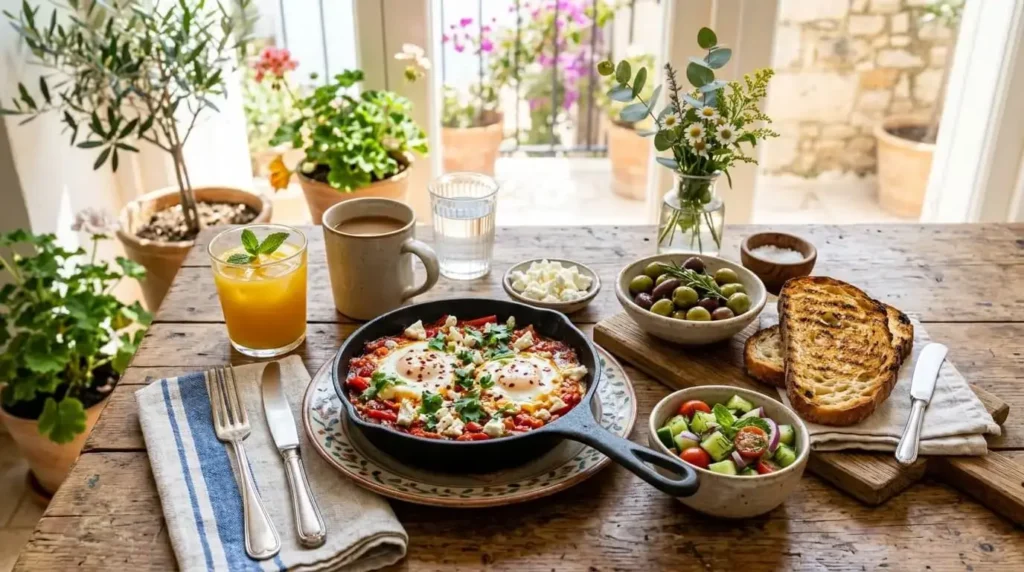
Warm pita or crusty sourdough is the classic pairing – it’s meant for scooping up sauce and yolk. Additionally, a simple cucumber salad adds a cool, crisp contrast to the warm, spiced skillet, while olives and labneh round things out with extra brininess and creaminess. Also, fresh herbs on top keep the whole dish tasting bright rather than heavy.
| Want… | Serve With |
| Light breakfast | Cucumber salad |
| Brunch spread | Warm bread and feta |
| Larger meal | Roasted potatoes |
Storage, Reheating & Make-Ahead Tips
Storage
Also store leftover shakshuka in an airtight container in the refrigerator for up to 3 days.
Reheating
Reheat gently on the stovetop over low heat, or in short bursts in the microwave, until warmed through. Furthermore, add a splash of water if the sauce has thickened too much.
Can You Freeze It?
The tomato sauce freezes well on its own for up to 3 months. Because eggs, however, are best cooked fresh – freezing and reheating already-cooked eggs changes their texture noticeably- freeze the sauce base and add fresh eggs when you’re ready to serve.
Is Shakshuka Healthy?
Shakshuka fits comfortably within a Mediterranean diet pattern, built around vegetables, olive oil and eggs. Tomatoes and bell peppers provide fiber and vitamins, because olive oil offers heart-healthy fats and eggs bring a solid dose of protein to start the day. Also, serving it with vegetables like cucumber or a side salad add even more fiber to the meal. Moreover, as with any dish, portion and overall diet matter more than any single recipe.
Frequently Asked Questions
What is shakshuka?
Shakshuka is a one-pan dish of eggs poached in a spiced tomato and pepper sauce, typically seasoned with cumin, paprika and garlic. That’s why it’s commonly served for breakfast or brunch with warm bread for scooping up the sauce.
What country is shakshuka from?
Shakshuka is generally traced to North Africa, especially Tunisia and Algeria, before becoming popular across the Levant, including Israel and Palestine. Exact origins are debated among food historians, so this reflects the most widely accepted understanding.
What ingredients are traditionally used in shakshuka?
Traditional shakshuka uses tomatoes, onion, garlic, bell pepper, cumin, paprika, olive oil and eggs. Additionally, many versions also include harissa for heat, with parsley, cilantro or feta added as finishing touches.
Can I use fresh tomatoes instead of canned?
Yes, fresh tomatoes work well, especially in summer when they’re at peak ripeness. They’ll need to be peeled and simmered a bit longer to reach the same thick consistency as canned crushed tomatoes.
Can I make shakshuka ahead of time?
Yes – the tomato sauce can be made up to 3 days ahead and reheated on the stove. Furthermore, add and cook the eggs fresh right before serving for the best texture.
Why is my shakshuka watery?
A watery sauce usually means the tomatoes weren’t simmered long enough before the eggs were added. So let the sauce reduce until it leaves a trail when you stir it and then add the eggs.
Is shakshuka spicy?
This shakshuka recipe is mild by default, with cayenne and harissa listed as optional additions. Furthermore, add more of either if you prefer a spicier dish or leave them out entirely for a milder version.
What’s the difference between shakshuka and Turkish menemen?
Menemen typically uses scrambled eggs stirred into the tomato sauce, while shakshuka uses whole eggs poached in wells within the sauce. Menemen also tends to use lighter seasoning than shakshuka’s cumin-and-paprika base.
Final Thoughts
This shakshuka recipe is meant to be a reliable, honestly timed version you can return to whenever you want a warm, satisfying breakfast or brunch. Also, give the sauce the full simmer it needs and the eggs will cook evenly every time. For more ideas, you can browse our full collection of Mediterranean recipes – there’s plenty more to explore beyond this shakshuka recipe.
(Nutritional estimate only.)
Image Placeholders Summary
[IMAGE 1: shakshuka-recipe.jpg | Shakshuka recipe served in a cast-iron skillet with eggs in spicy tomato sauce | Easy Shakshuka Recipe | Classic shakshuka with eggs gently poached in spiced tomato sauce. | Hero image showing the finished recipe ready to serve.]
(Note: Image 1 is placed immediately below the introduction in the live layout; images 2–5 are placed inline above within their respective sections as specified in the brief.)
Image placeholders: 5/5 present (Images 1–5, all fields included)
.