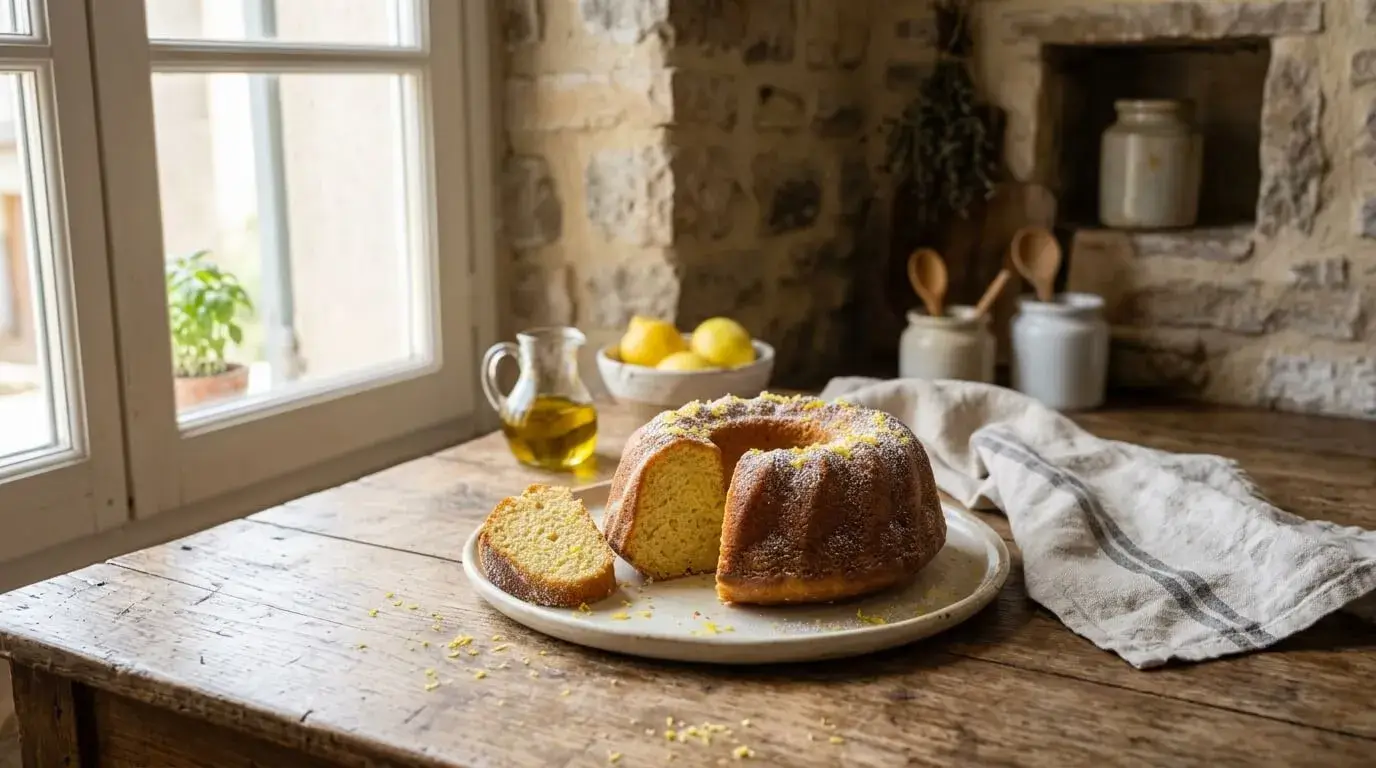
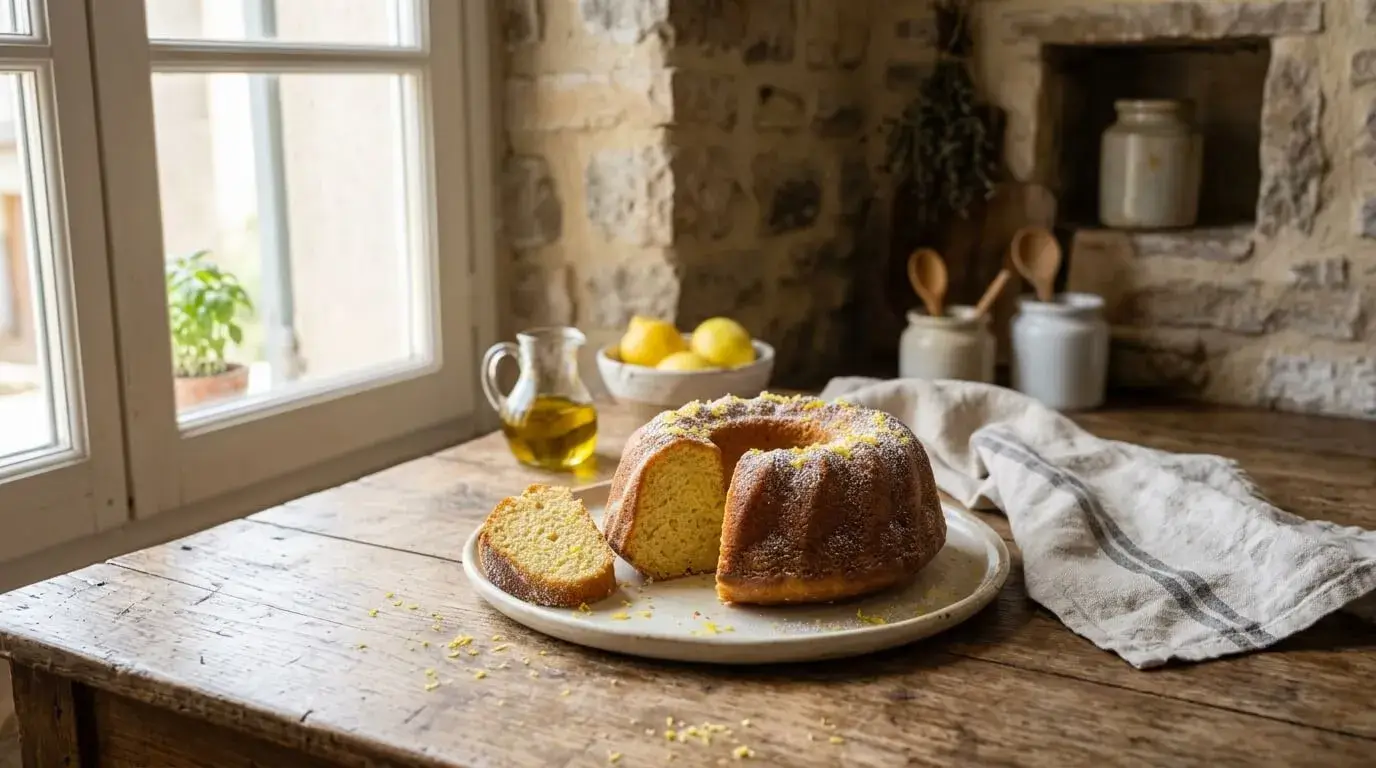
This lemon olive oil cake is an Italian-style version of the simple citrus-and-olive-oil cakes found throughout Italian home baking – moist, tender and built around good olive oil and fresh lemon rather than a heavy frosting. Further, it’s the kind of cake you can make on a weekday afternoon and serve with coffee the next morning. Moreover, the batter takes about twenty minutes to put together, but give the finished cake real time to cool before you slice it – that part matters more than most recipes let on.
Quick Answer: Lemon olive oil cake is a tender cake made with olive oil instead of butter and flavored with fresh lemon. That’s why this Italian-style version keeps the flavor simple and lets the olive oil and citrus stand out.Also, the batter is quick to prepare, but allow time for the cake to bake and cool fully before slicing.
Why This Olive Oil Cake Works
Olive oil does something butter can’t: it stays liquid at room temperature, which keeps the crumb soft and moist for days instead of turning dense and dry the way a butter cake can once it’s been sitting out. Therefore, it also isn’t neutral – a good olive oil brings its own fruity, slightly grassy flavor to the finished cake, which is part of the point here rather than something to mask.
Overall, fresh lemon does the rest of the work. However, the zest carries most of the aromatic oil, so it perfumes the whole cake, while the juice adds acidity that keeps the sweetness in check. Because the cake isn’t stacked, layered or frosted, that olive oil and lemon combination is front and center rather than buried under decoration. But that simplicity is also what makes it so versatile – it works as a breakfast cake with coffee, an afternoon snack with tea or a light dessert after dinner.
What Does Olive Oil Do in Cake?
Olive oil replaces the solid fat in a traditional butter cake and keeps the crumb moist because it doesn’t firm up once the cake cools. because it also adds a mild fruitiness that butter doesn’t have, so the flavor of the oil you choose genuinely shows up in the finished slice. Further, that’s why picking the right olive oil matters more here than in most baking.
What Makes This Cake Italian-Style?
Cakes built on olive oil and citrus have a long-standing place in Italian home baking, where olive oil is the everyday cooking fat rather than a specialty ingredient reserved for dressing salads. Therefore, versions of this cake are made across different regions of Italy and commonly served plain, at breakfast or alongside coffee and tea, rather than as an elaborate dessert. Also, that’s the tradition this recipe draws from.
What it isn’t is a claim to be the one authentic Italian formula. because home bakers across Italy make versions of this cake with different ratios of oil, sugar and citrus and different pans and finishing touches. Moreover, there’s no single standardized recipe passed down as “the” traditional version, so I’m not going to pretend otherwise. Further, what I can say is that this recipe follows the same principles that show up across those versions: good olive oil, real lemon, a tender crumb and a plain, unfussy finish.
Authenticity note: There isn’t one universally standardized Italian lemon olive oil cake formula. because this recipe is Italian-style, built around the simple olive-oil-and-citrus character associated with Italian versions – not a claim to represent a single definitive regional recipe.
You can find more regional dishes and their backgrounds on our Mediterranean recipes by region page.
Choosing the Right Olive Oil
This is the one place where this recipe asks more of you than most cake recipes do. Because olive oil is such a large percentage of the batter, its flavor doesn’t disappear the way it might in a savory dish – it comes through in the finished cake. That’s why a mild, fruity oil gives you a cake where lemon leads and the oil mostly supports the texture. Further, a more assertive extra-virgin oil gives you a cake where the olive flavor is genuinely part of the experience.
Neither is wrong, but they produce noticeably different cakes, so it’s worth choosing on purpose rather than grabbing whatever bottle is open. Also, avoid anything strongly peppery or bitter unless you specifically like that flavor front and center, since that bitterness doesn’t mellow much during baking. Because when I tested this cake with a robust, peppery extra-virgin oil, the olive flavor genuinely competed with the lemon rather than supporting it – a milder oil let the citrus lead the way it does in the version below.
Which Olive Oil Is Best for Cake?
| If you want… | Choose… |
| Subtle olive-oil flavor. | Mild or fruity olive oil. |
| More noticeable olive-oil character. | Fruity extra-virgin olive oil. |
| A lemon-forward cake. | Mild to medium-intensity oil |
| Strong, peppery or bitter flavor. | Usually avoid. |
Ingredients You Need
- Olive oil– The main fat and the biggest flavor contributor; use one you’d be happy to taste on its own.
- Fresh lemons -also zested and juiced separately; the zest carries most of the aroma.
- Flour – it provides the cake’s structure.
- Eggs – also add richness and help the batter hold air.
- Sugar – sweetens and helps the crumb stay tender.
- Baking powder and baking soda -it give the cake its rise.
- Salt – balances the sweetness and sharpens the lemon flavor.
- Plain yogurt – also adds moisture and a slight tang that plays well with the lemon.
- Vanilla extract – rounds out the background flavor without competing with the citrus.
Ingredient Substitutions
| Ingredient | Best substitute | What changes |
| Specialty or imported olive oil | Any mild, fruity extra-virgin olive oil from the grocery store. | Flavor intensity shifts slightly, but texture stays the same. |
| Fresh lemon juice/zest | Bottled lemon juice, as an emergency option only. | Aroma is noticeably weaker without fresh zest. |
| Plain yogurt | Plain full-fat Greek yogurt or sour cream. | Crumb may be slightly denser or richer. |
Fresh lemon zest isn’t optional here – bottled juice can stand in for the juice in a pinch, but there’s no substitute for what fresh zest does for the aroma.

How to Make Lemon Olive Oil Cake
The full ingredient amounts and numbered instructions are in the recipe card below. Furthermore, this section covers the technique choices that actually affect how the cake turns out.
Zest the Lemons Before Juicing
Zest the lemons first, while they’re still whole – it’s much easier to grip a whole lemon over a microplane than a juiced, floppy half. Moreover, the zest is also where most of the lemon’s aromatic oil lives, so getting it off cleanly before juicing makes a real difference in how much lemon flavor ends up in the batter.
Mix the Batter Without Overworking It

Whisk the wet ingredients – olive oil, eggs, sugar, zest and juice – until they’re smooth and slightly thickened. Also add the dry ingredients and mix only until the flour disappears into the batter. That’s why once the flour is hydrated, every extra stir develops more gluten and that’s what turns a tender olive oil cake into a gummy, dense one. Then a few streaks in the batter are fine; stop before it looks perfectly uniform.
Bake Until the Center Is Properly Set
Ovens and pans vary enough that a fixed bake time is only a starting point. Then look for a top that’s golden and set, with the edges just pulling away from the pan. Overall, a tester inserted in the center should come out with a few moist crumbs clinging to it – not wet batter, but not bone dry either. If the top is browning quickly but the center still looks underbaked, tent it loosely with foil and keep baking rather than pulling it early.
Honest Timing: How Long Does Olive Oil Cake Take?
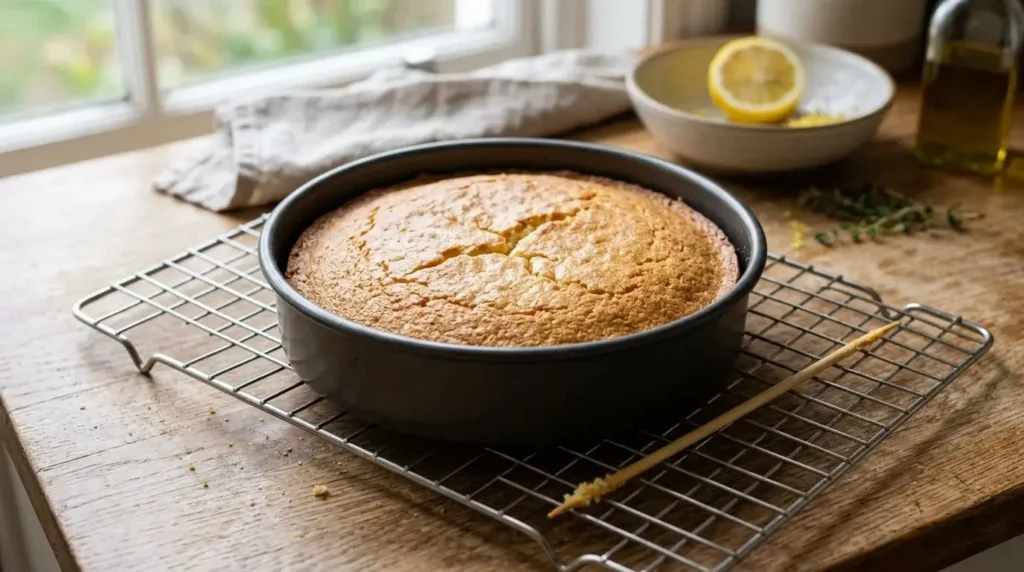
The batter itself comes together quickly, but the total time for this cake is longer than the active prep suggests, because it needs to cool before it can be sliced cleanly. However, a cake that looks “done” the moment it leaves the oven is still too hot and too structurally soft to cut well.
| Stage | Time |
| Active prep | 15-20 minutes |
| Baking | 45-50 minutes |
| Cooling | 35-40 minutes |
| Total | About 1 hour 35 minutes |
Don’t stop the clock when the cake leaves the oven. because it needs cooling time before it can be cleanly sliced and served – plan for closer to an hour and a half from start to finish, not the thirty or forty minutes the baking time alone might suggest.
Lemon Olive Oil Cake
Ingredients
Method
- Preheat the oven to 350°F (175°C). Grease a 9-inch round cake pan and line the bottom with parchment paper.
- Zest the lemons, then juice them; set the zest and juice aside separately.
- In a large bowl, whisk together the olive oil, sugar, eggs, lemon zest and lemon juice until smooth and slightly thickened.
- Whisk in the yogurt and vanilla extract until combined.
- In a separate bowl, whisk together the flour, baking powder, baking soda and salt.
- Add the dry ingredients to the wet ingredients and mix just until no streaks of flour remain; do not overmix.
- Pour the batter into the prepared pan and smooth the top.
- Bake for 45-50 minutes, until the top is golden, the edges pull slightly away from the pan, and a tester inserted in the center comes out with a few moist crumbs.
- Cool in the pan for 15 minutes, then turn out onto a rack to cool completely, about 20-25 minutes more, before dusting with powdered sugar and slicing.
Notes
- Use fresh lemon zest for the strongest citrus aroma – bottled juice can’t replace it.
- Choose an olive oil whose flavor you enjoy on its own; it will come through in the finished cake.
- A very assertive, bitter or peppery oil can dominate the flavor of the cake.
- Do not overmix once the flour is added or the crumb will turn dense.
- Let the cake cool completely before slicing for the cleanest cut and truest texture.
- Store in an airtight container at room temperature for up to 2 days or refrigerate for longer freshness.
- This cake also freezes well, tightly wrapped, for longer storage.
Troubleshooting Lemon Olive Oil Cake
Why Is My Cake Dense?
The most common cause is overmixing once the flour goes in, which develops gluten and tightens the crumb. Moreover, undermeasuring the leavening or using expired baking powder can also leave the cake heavy. Mix just until the flour disappears and check that your baking powder is fresh.
Why Is My Cake Greasy?
This usually means the batter didn’t fully emulsify – the oil wasn’t whisked in thoroughly enough with the eggs and sugar before the dry ingredients were added. because Slicing the cake while it’s still warm can also make it seem greasier than it is, since the structure hasn’t fully set yet. overallWhisk the wet ingredients until they look uniformly thick and let the cake cool completely before cutting.
Why Did the Center Sink?
A sunken center is almost always underbaking, sometimes combined with opening the oven door too early in the bake, which lets the rising structure collapse before it’s set. However, use the tester method above rather than a fixed time, and resist checking the cake before the last ten minutes of baking.
Why Is the Top Too Dark?
This is typically an oven-temperature or rack-position issue – an oven running hot or a pan sitting too close to the top heating element. Therefore, move the rack to the center position and if the top is browning well before the center is done, tent it loosely with foil for the remaining bake time.
Why Does the Cake Taste Bitter?
Bitterness usually comes from one of two places: too much white pith scraped off with the zest or an assertive, peppery olive oil. Moreover, zest is only the colored outer layer of the lemon and stop before you hit the white pith underneath and choose a milder olive oil if you noticed bitterness the first time you made it.
How to Store and Reheat Olive Oil Cake
This cake keeps well at room temperature for a couple of days in an airtight container and the texture actually holds up better than most butter cakes since olive oil stays soft rather than firming up as it cools further. If you need it to last longer, refrigeration is the safer choice – USDA guidance generally recommends refrigerating baked goods with dairy or egg-based ingredients within about two hours and using refrigerated leftovers within three to four days. Overall, for longer storage, this cake also freezes well; wrap slices tightly and thaw them at room temperature before serving. Then reheating isn’t necessary – the cake is meant to be served at room temperature, not warm.
How to Serve Lemon Olive Oil Cake

Keep the finishing touches simple, in line with how the cake is typically served in Italian home baking – a light dusting of powdered sugar is usually enough. Beyond that, let fresh, seasonal additions do the work rather than reaching for frosting.
What Goes Well With Olive Oil Cake?
- A dusting of powdered sugar
- Fresh berries
- A little extra lemon zest on top
- A cup of coffee
- A cup of tea
- A dollop of plain yogurt or lightly whipped cream
- Sliced seasonal fruit
For simpler, citrus-forward bakes and other ideas, browse our Mediterranean Cuisines recipes collection.
Frequently Asked Questions
Can You Use Olive Oil in Cake?
Yes. Olive oil works well in cake and is common in Mediterranean baking, particularly Italian home baking. That’s why it keeps the crumb moist because, unlike butter, it stays liquid at room temperature and it adds its own mild, fruity flavor to the finished cake rather than staying neutral.
Is Olive Oil Good for Baking a Cake?
Yes, especially for cakes meant to stay moist for several days, since olive oil doesn’t firm up as it cools the way butter does. because the flavor of the oil comes through more than it would in a butter cake, so a mild, fruity olive oil generally works best for baking.
Can Olive Oil Replace Butter in Cake?
Olive oil can replace butter in many cake recipes, though it changes both texture and flavor – the crumb stays softer and more moist and the oil’s own flavor becomes part of the cake. Then it works best in recipes specifically developed for oil rather than a direct swap in a butter-based recipe.
What Is Special About Olive Oil Cake?
Olive oil cake stays tender and moist longer than a typical butter cake and the oil itself contributes real flavor rather than acting as a neutral fat. Overall, that combination-a soft, long-lasting crumb plus a distinct fruity flavor – is what sets it apart from standard butter- or vegetable-oil-based cakes.
Is Olive Oil Cake Healthier Than Regular Cake?
Not automatically. Olive oil is rich in monounsaturated fat and is a staple of the Mediterranean dietary pattern, but a cake’s overall nutrition profile still depends on its sugar, flour and portion size. Further, using olive oil doesn’t make the whole cake a health food – it changes the fat source, not the dessert.
How Should Lemon Olive Oil Cake Be Stored?
Store it in an airtight container at room temperature for a couple of days or refrigerate it for longer freshness. because it also freezes well when wrapped tightly. Also, let refrigerated or frozen slices come back to room temperature before serving for the best texture.
What Kind of Olive Oil Is Best for Cake?
A mild, fruity extra-virgin olive oil generally works best, letting the lemon lead while still contributing a soft, rounded flavor. Moreover, strongly peppery or bitter oils can overwhelm the other flavors in the cake, so save those for savory cooking instead.
This cake earns its place on the Mediterranean cuisine table for the same reason so many Italian home bakes do – a handful of good ingredients, treated simply, with nothing extra to get in the way. Once you’ve picked an olive oil you like, this lemon olive oil cake is a recipe worth keeping in regular rotation.
[IMAGE 1: lemon-olive-oil-cake.jpg | Lemon olive oil cake with fresh lemon zest and a tender crumb | Lemon Olive Oil Cake | Tender Italian-style lemon olive oil cake with fresh citrus and a simple powdered-sugar finish. | Hero image showing the finished lemon olive oil cake, including a cut slice that reveals the crumb and demonstrates the texture readers should expect.] (Placement: immediately below the H1/introduction, before the Quick Answer Box)
[IMAGE 2: lemon-olive-oil-cake-ingredients.jpg | Ingredients for lemon olive oil cake including lemons and olive oil | Lemon Olive Oil Cake Ingredients | Fresh lemons and olive oil are the two ingredients that give this cake its distinctive Mediterranean character. | Ingredient-focused image supporting the ingredient guide and helping readers visually identify the principal components of the recipe.] (Placement: under “Ingredients You Need”)
[IMAGE 3: lemon-olive-oil-cake-batter.jpg | Lemon olive oil cake batter being gently mixed | Making Lemon Olive Oil Cake Batter | Mix the batter just until the dry ingredients are incorporated for a tender crumb. | Process image showing the correct batter consistency and gentle mixing technique.] (Placement: under “How to Make Lemon Olive Oil Cake,” after the mixing instructions)
[IMAGE 4: lemon-olive-oil-cake-baked.jpg | Freshly baked lemon olive oil cake cooling on a wire rack | Baked Lemon Olive Oil Cake | Let the cake cool before slicing so the crumb has time to set. | Process/result image illustrating the appearance of the cake after baking and before final serving.] (Placement: end of “How to Make Lemon Olive Oil Cake,” before “Honest Timing”)
[IMAGE 5: lemon-olive-oil-cake-serving.jpg | Lemon olive oil cake served with coffee, tea and fresh berries | Serving Lemon Olive Oil Cake | Serve lemon olive oil cake simply with coffee, tea, berries or a little extra lemon zest. | Serving image showing how the cake fits naturally into breakfast, afternoon coffee, or a simple dessert setting.] (Placement: under “How to Serve Lemon Olive Oil Cake”)