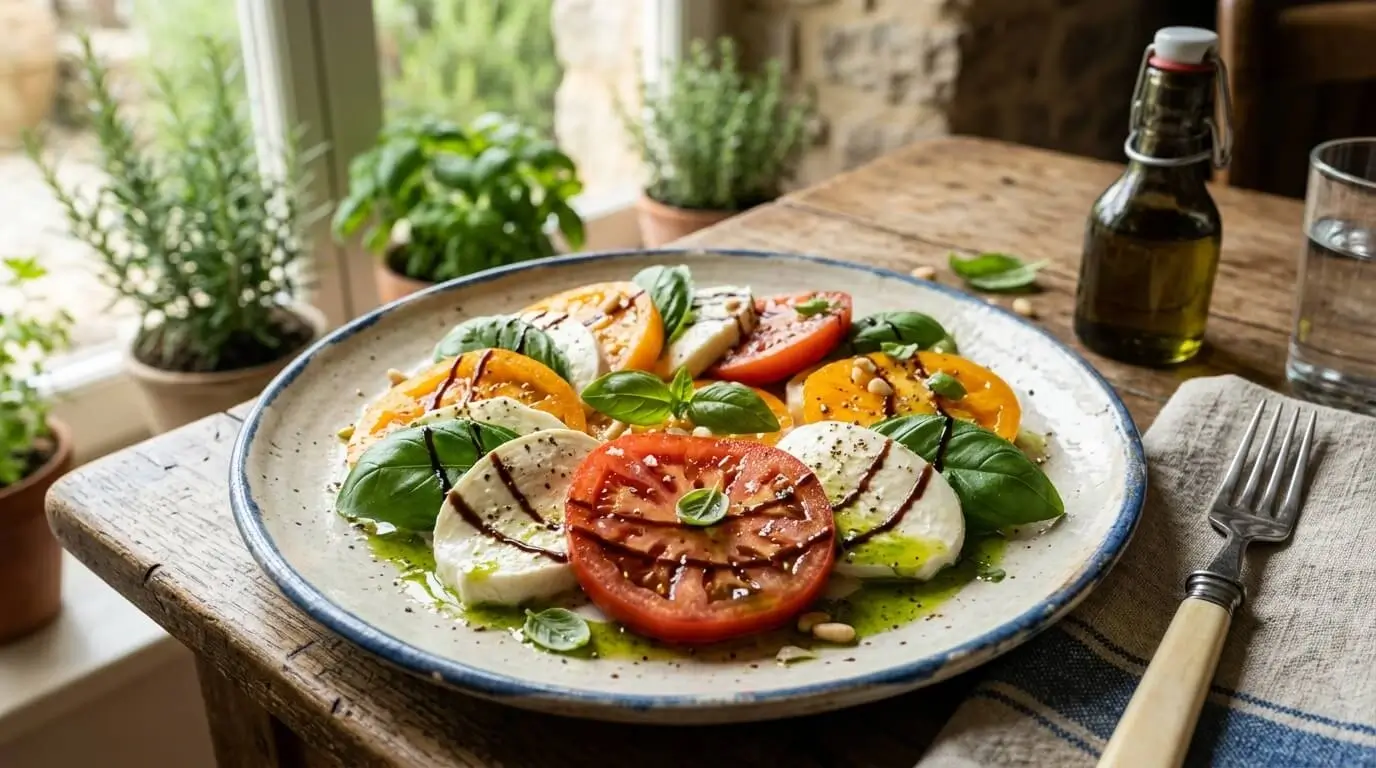
Caprese salad is one of the simplest dishes in Italian cooking and also one of the easiest to get wrong. Moreover, this version sticks to the traditional combination of ripe tomatoes, fresh mozzarella, basil and extra virgin olive oil, with balsamic glaze presented as the optional, modern addition it actually is. That’s why I’ve made this recipe more times than I can count and below I’ll walk you through exactly how to build it, what mistakes to avoid and how long it honestly takes.
Quick Answer: What Is Caprese Salad?
Caprese salad is a cold Italian dish that originated on the island of Capri and is also made from three main ingredients: ripe tomatoes, fresh mozzarella and basil leaves, dressed simply with extra virgin olive oil and salt. Instead, balsamic glaze is a popular but non-traditional addition many home cooks enjoy today. There’s no cooking involved and once your ingredients are prepped or the salad comes together in about 15 minutes.
Why You’ll Love This Caprese Salad
Also, this is a good recipe to start with if you’re new to Italian cooking, because there’s very little room for error once you understand what each ingredient is doing.
- No cooking required, so it’s hard to mess up the technique
- Only a handful of ingredients, but each one matters
- Naturally vegetarian and gluten-free
- Ready in about 15 minutes
- Works as a starter, a side or a light lunch
- Uses Mediterranean pantry staples you likely already have on hand.
What Is Caprese Salad?
Caprese salad (insalata Caprese) takes its name from the island of Capri, off the coast of Naples, where it’s believed to have originated in the early 20th century. Furthermore, the dish is closely associated with the Campania region, home to some of Italy’s best tomatoes and fresh mozzarella production.
Because the classic version uses just three main ingredients: sliced tomatoes, fresh mozzarella and basil leaves, seasoned with salt and dressed with extra virgin olive oil. Then arranged together, the red tomatoes, white mozzarella and green basil happen to mirror the colors of the Italian flag, which is part of why the dish is so often described as a patriotic plate.
Overall, in much of Italy, you won’t find balsamic vinegar or balsamic glaze anywhere near a traditional Caprese salad. Also, that addition is largely an American and international restaurant habit. That’s why it tastes good and I don’t think there’s anything wrong with using it, but it’s worth knowing it’s a modern layer on top of the original Italian Caprese Salad rather than part of the dish’s history.
Ingredients You’ll Need
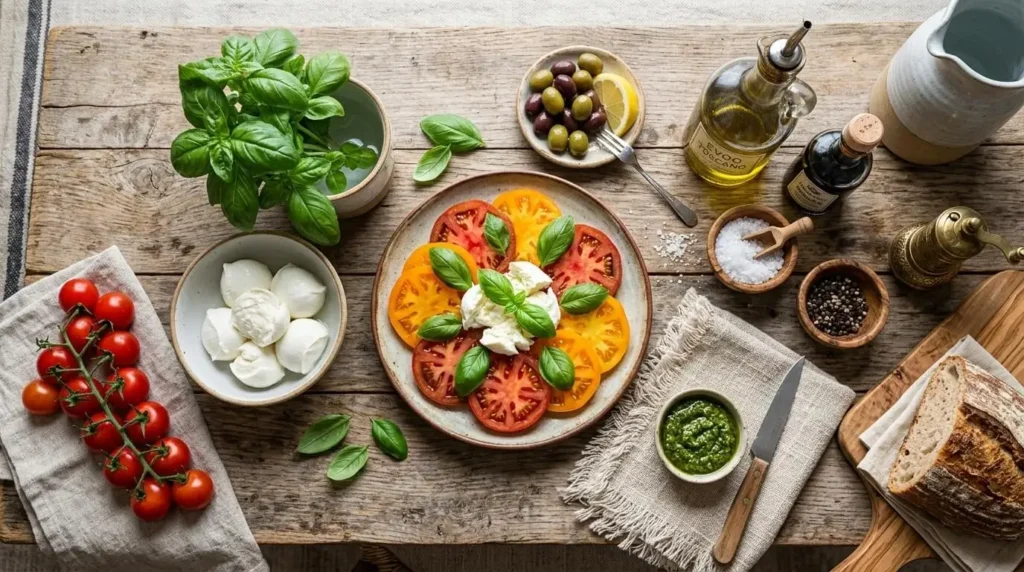
Good caprese salad ingredients come down to a short list, but each one needs some thought before you start slicing.
Tomatoes
Use the ripest tomatoes you can find, and let them come fully to room temperature before serving. Cold tomatoes taste noticeably flatter, and refrigeration dulls their aroma. Beefsteak and heirloom tomatoes work best because of their size and juiciness, though ripe vine tomatoes are a solid everyday option.
Fresh Mozzarella
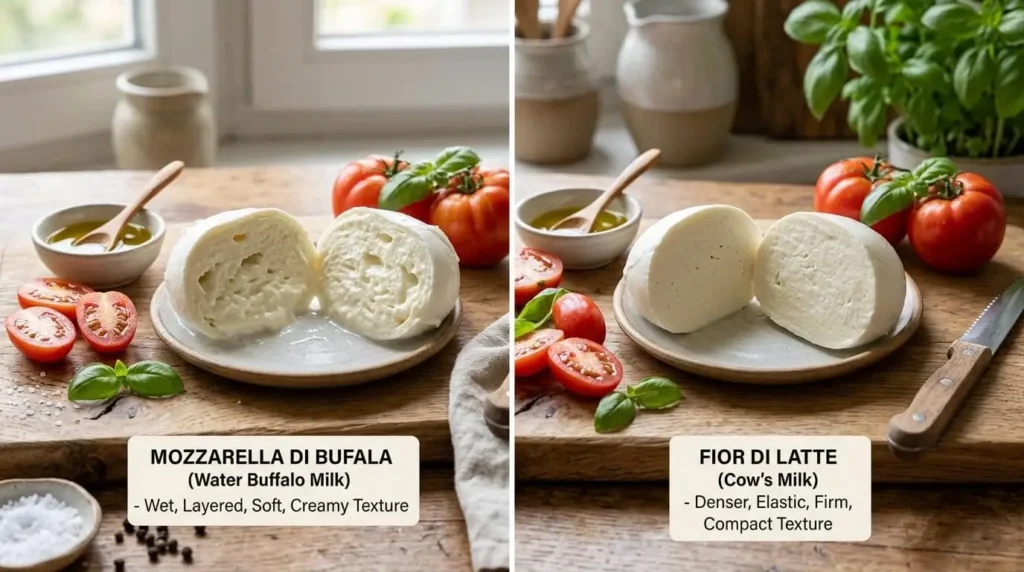
This isn’t the place for shredded, low-moisture mozzarella meant for pizza. You want fresh mozzarella packed in liquid, ideally mozzarella di bufala (made from water buffalo milk, with a tangier flavor and softer texture) or fior di latte (made from cow’s milk, milder and slightly firmer). Either works; di bufala is the more traditional choice in Campania, where the dish originated.
Basil
Only fresh basil belongs in this recipe. Add the leaves just before serving, since basil bruises and discolors quickly once it’s cut or torn, and dried basil won’t give you the aromatic quality the dish depends on.
Extra Virgin Olive Oil
Because the dressing is so minimal, the quality of your olive oil is exposed rather than hidden. Use a good extra virgin olive oil with real flavor, not a neutral, refined one.
Balsamic Vinegar or Balsamic Glaze?
If you want to use balsamic, a light drizzle of balsamic glaze (the thickened, syrupy version) is easier to control than balsamic vinegar, which is thinner and can pool and overpower the plate. Either way, treat it as a finishing touch, not a dressing.
| Ingredient | Best Choice | Acceptable Substitute | Avoid |
| Tomatoes | Ripe heirloom, room temperature | Ripe vine tomatoes | Cold, underripe or hothouse tomatoes |
| Mozzarella | Mozzarella di bufala | Fior di latte | Low-moisture shredded mozzarella |
| Basil | Fresh basil leaves | – | Dried basil |
| Olive Oil | Good extra virgin olive oil | Any fresh extra virgin olive oil | Refined or neutral vegetable oil |
| Balsamic | Balsamic glaze (optional) | Reduced balsamic vinegar | Thin, low-quality balsamic vinegar |
How to Make Caprese Salad
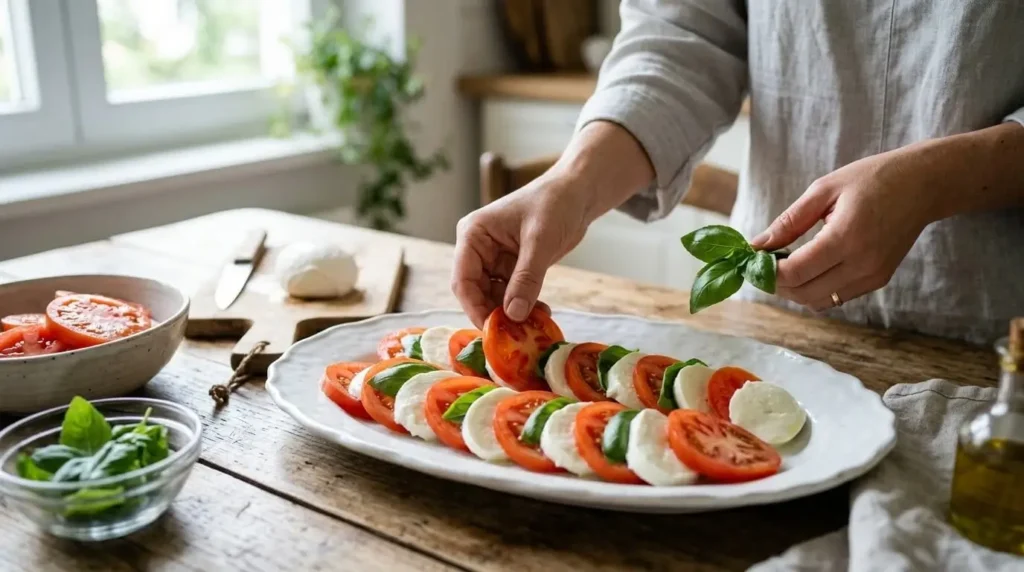
Here’s how to make caprese salad from start to finish. This is the same method I use every time.
- Wash and thoroughly dry the tomatoes and basil leaves. Excess water dilutes the flavor and waters down your plate.
- Slice the tomatoes into even rounds, about ¼-inch thick.
- Drain the mozzarella well and pat it dry with paper towels before slicing. Wet mozzarella is one of the most common reasons this salad turns watery.
- Alternate tomato and mozzarella slices on a serving platter, slightly overlapping them.
- Tuck whole basil leaves between the slices rather than chopping them.
- Season lightly with flaky sea salt and freshly ground black pepper. Salt draws moisture out of tomatoes, so season toward the end, not at the start.
- Drizzle evenly with extra virgin olive oil, going light rather than soaking the plate.
- If using balsamic glaze, add a thin drizzle now, over the top.
- Serve immediately, while everything is at room temperature.
Common Mistakes to Avoid
| Mistake | Why It Happens | Fix |
| Cold tomatoes | Tomatoes stored in the fridge until serving | Let tomatoes sit out for 30–60 minutes before assembling. |
| Wet mozzarella | Mozzarella not drained after opening the package | Pat dry with paper towels before slicing. |
| Too much balsamic | Treating it like a dressing instead of a garnish | Use a light, thin drizzle only. |
| Low-quality olive oil | Using a neutral or refined oil to save money | Choose a flavorful extra virgin olive oil, since it’s not masked by cooking. |
| Wilted basil | Basil was added too early or chopped in advance. | Add whole leaves right before serving. |
| Overseasoning | Salting the tomatoes too early | Season just before plating |
Variations
The base recipe is traditional, but there are a few well-known ways to change it up.
Burrata Caprese
Swapping in burrata instead of mozzarella di bufala adds a creamier, richer center. This is a popular modern variation, not a traditional one.
Cherry Tomato Caprese
Halved cherry tomatoes tossed with small mozzarella pearls (bocconcini) and basil make a good option when large, ripe tomatoes aren’t in season.
Pesto Version
A thin drizzle of basil pesto in place of or alongside the olive oil adds a more concentrated basil flavor. This is a modern adaptation.
Avocado Caprese
Adding sliced avocado is a US-driven variation that adds richness and creaminess, but it moves further from the traditional Italian dish.
Ingredient Substitutions
| Traditional Ingredient | U.S. Grocery Substitute | Flavor Impact |
| Mozzarella di bufala | Fior di latte or standard fresh mozzarella | Slightly milder, less tangy |
| Heirloom tomatoes | Ripe vine or beefsteak tomatoes | Slightly less complex sweetness |
| Fresh basil | Fresh basil only (no substitute recommended) | Dried basil lacks aroma and is not a suitable replacement. |
| High-quality EVOO | Any fresh, good-quality extra virgin olive oil | Milder finish, still workable |
| Balsamic glaze | Reduced balsamic vinegar (simmered until syrupy) | Slightly less concentrated sweetness |
What to Serve with Caprese Salad
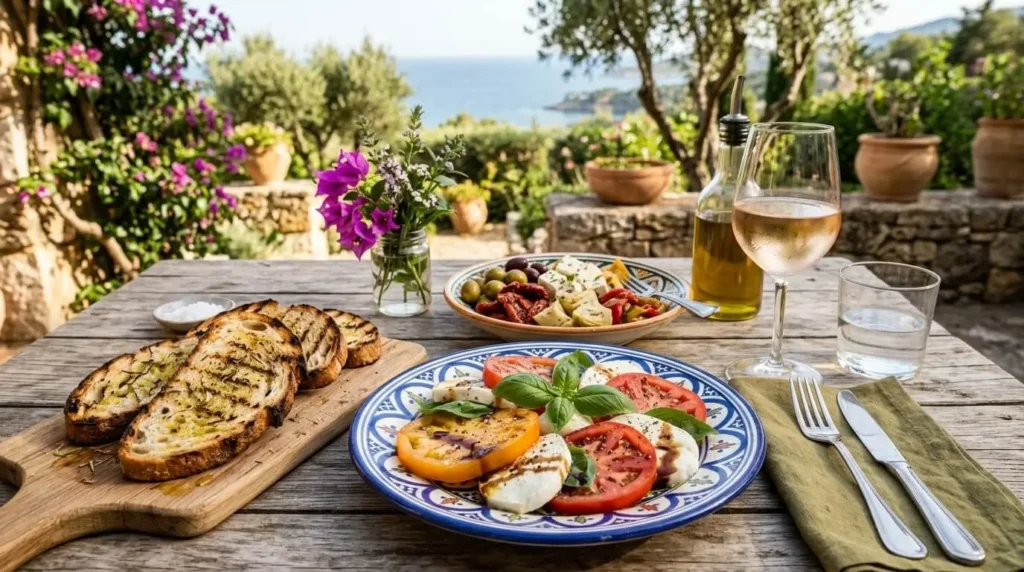
Caprese salad works well as part of a larger spread or alongside a simple main.
- Crusty bread – good for soaking up the olive oil left on the plate
- Grilled chicken – a light, acidic contrast to a simple protein
- Grilled fish – pairs naturally with the same Mediterranean flavor profile
- Pasta – serve as a starter before a tomato- or olive oil–based pasta
- Mediterranean mezze – fits naturally into a spread of Greek dishes and other small plates
- Soups – a light, chilled soup pairs well with the salad’s freshness
Storage and Make-Ahead Tips
This salad is best assembled and eaten immediately, not stored as leftovers. Once tomatoes are sliced and salted, they release liquid and the salad becomes watery within an hour or two.
If you do have leftovers, store the tomatoes, mozzarella and basil separately in airtight containers in the refrigerator and combine them again just before eating. Refrigerate the mozzarella properly and follow general food safety guidance for handling fresh dairy and check cold storage timing for prepared foods if you’re unsure how long components will keep. In practice, I wouldn’t hold any component more than a day or two before the quality drops noticeably.
Honest Timing Notes
Most recipe sites list this salad at 5-10 minutes and in my experience that’s not realistic. Washing and drying the tomatoes and basil, slicing everything evenly, draining and patting the mozzarella dry and arranging the plate neatly takes real time. I consistently land closer to 15 minutes when I make this properly and that’s the number I’m giving you here instead of a rounded-down estimate.
Troubleshooting
| Problem | Cause | Solution |
| Watery salad | Tomatoes salted too early or wet mozzarella | Salt just before serving; dry mozzarella thoroughly. |
| Bland flavor | Cold tomatoes or low-quality olive oil | Bring tomatoes to room temperature; use a flavorful EVOO. |
| Tough tomatoes | Underripe or hothouse tomatoes | Choose fully ripe, in-season tomatoes. |
| Wilted basil | Basil was added too early or chopped ahead. | Add whole leaves right before serving. |
| Uneven presentation | Slices cut inconsistently | Slice tomatoes and mozzarella to matching thickness before layering. |
Frequently Asked Questions
What is a Caprese salad made of?
A traditional Caprese salad is made of sliced tomatoes, fresh mozzarella and fresh basil leaves, dressed with extra virgin olive oil and salt. Balsamic glaze is a common but non-traditional addition many people enjoy today.
Why is it called Caprese salad?
It’s named after the island of Capri, off the coast of Naples in Italy’s Campania region, where the dish is believed to have originated in the early 20th century.
Should caprese salad contain balsamic?
Not traditionally. The classic Italian Caprese salad uses only tomatoes, mozzarella, basil, olive oil and salt. Balsamic glaze is a modern, optional addition rather than part of the original recipe.
Can I make Caprese salad ahead?
Not fully assembled. Tomatoes release liquid once sliced and salted, so the salad turns watery within an hour or two. You can slice components ahead and combine them just before serving.
Which mozzarella is best?
Mozzarella di bufala is the more traditional choice and has a tangier flavor and softer texture. Fior di latte, made from cow’s milk, is a milder and widely available alternative.
Can I use cherry tomatoes?
Yes. Halved cherry tomatoes work well, especially outside of peak tomato season, though large ripe tomatoes are the traditional choice.
How long does caprese salad last?
It’s best eaten immediately after assembling. If you have leftovers, store the components separately in the refrigerator and combine again before eating, ideally within a day or two.
Is Caprese salad healthy?
It’s built around tomatoes, fresh mozzarella, basil and olive oil, ingredients associated with a Mediterranean-style eating pattern, which is generally recognized as part of a healthy dietary pattern. As with any dish, portion and ingredient quality matter.
Recipe Summary
Caprese salad rewards good ingredients over technique. Start with the traditional version – ripe tomatoes, fresh mozzarella, basil and good olive oil – before deciding whether balsamic, burrata or another variation fits your table. Once you’ve made it the classic way, the modern versions will make a lot more sense as adaptations rather than the standard.
For more inspiration, browse our full collection of Mediterranean recipes or head back to the Mediterranean cuisine home page.
Image Placeholders
[IMAGE 1: caprese-salad.jpg | Authentic Caprese salad with fresh mozzarella, tomatoes and basil | Authentic Italian Caprese Salad | Classic Caprese Salad served with fresh mozzarella, ripe tomatoes and basil. | Hero image introducing the finished recipe.] (Placement: directly under H1)
[IMAGE 2: caprese-salad-ingredients.jpg | Ingredients for Caprese salad recipe | Caprese Salad Ingredients | Simple ingredients make the biggest difference. | Ingredient overview before preparation.] (Placement: beginning of “Ingredients You’ll Need”)
[IMAGE 3: assembling-caprese-salad.jpg | Assembling a traditional Caprese salad | How to Assemble Caprese Salad | Layer the tomatoes, mozzarella and basil evenly. | Shows the assembly process.] (Placement: within “How to Make Caprese Salad”)
[IMAGE 4: mozzarella-comparison.jpg | Fresh mozzarella comparison for Caprese salad | Choosing Mozzarella for Caprese Salad | Different mozzarella varieties produce slightly different flavors and textures. | Educational comparison image.] (Placement: ingredient section, after mozzarella discussion)
[IMAGE 5: caprese-salad-serving.jpg | Caprese salad served as a Mediterranean appetizer | Serving Caprese Salad | Caprese Salad pairs well with grilled bread and Mediterranean dishes. | Serving inspiration.] (Placement: beginning of “What to Serve with Caprese Salad” – placed inline above)