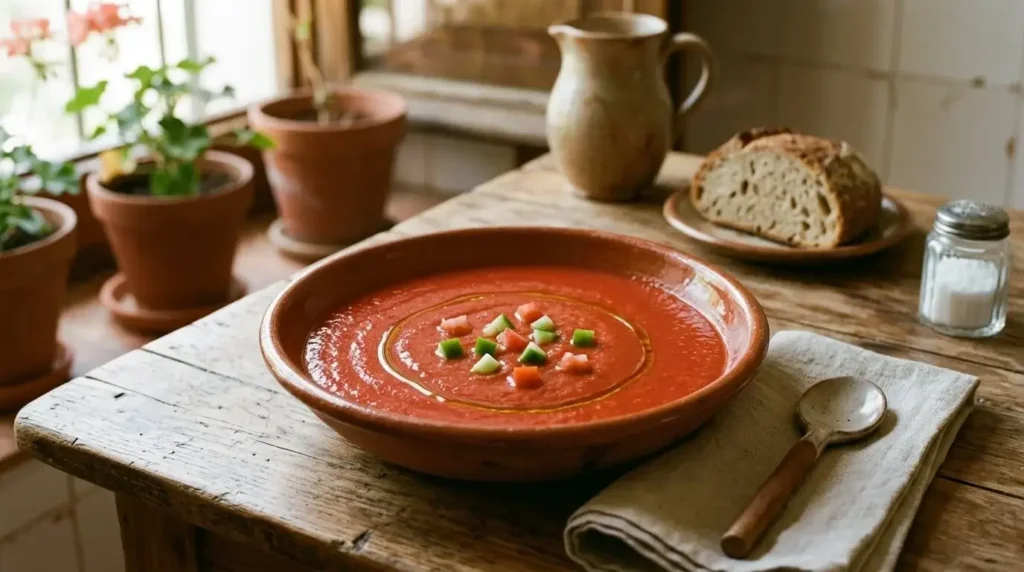
This classic Spanish gazpacho is a cold Andalusian tomato soup blended from ripe tomatoes, green pepper, cucumber, garlic, olive oil and vinegar, with a little traditional bread for body. Moreover, it’s silky, pourable and served ice-cold rather than lukewarm from the fridge door. Furthermore, bread appears in many traditional formulas, though how much (or whether) a household uses it varies – this recipe explains why, so you’re not left guessing whether you’re doing it “right.”
Making good gazpacho isn’t complicated, but it does take longer than most sites admit. Also, give yourself 25-30 minutes of hands-on work, then let the fridge do the rest.
Quick Answer: Classic Gazpacho at a Glance
- What it is: Cold, uncooked Andalusian tomato soup.
- Active time: 25-30 minutes.
- Chill time: At least 2 hours (4 hours or overnight is better).
- Total time: About 2½ hours.
- Texture: Smooth, silky and pourable.
- Key flavor: Ripe tomatoes, good olive oil and sherry vinegar.
- Bread: Traditional in many recipes, but not universal – more on that below.
What Is Gazpacho?
Gazpacho is a cold, uncooked Spanish soup made by blending ripe raw vegetables – tomatoes, green pepper, cucumber and garlic – with olive oil, vinegar and salt, then thinning it to a pourable consistency and chilling it thoroughly. Therefore, nothing goes on the stove. However, the vegetables do the work and the fridge finishes the job. But it’s built for hot weather, meant to be eaten in small bowls or glasses as a starter or light meal and it tastes better the colder it is.
Is Gazpacho Cooked?
No. Classic tomato gazpacho is not cooked. However, raw vegetables are blended with olive oil, vinegar, salt and water, then thoroughly chilled before serving. There’s no simmering, no roasting – the freshness of the raw vegetables is the point.
Where Does Gazpacho Come From?
Gazpacho is strongly associated with Andalusia, the region in southern Spain where hot summers made a cold, hydrating tomato-and-vegetable soup a practical everyday dish. Hence, there isn’t a single documented inventor or origin moment worth repeating as fact – what’s clear is that the tomato-based version most people know today is an Andalusian staple, eaten across the region in some form throughout the summer.
What Makes This a Classic Andalusian Gazpacho?
At its core, this gazpacho is built on ripe tomatoes as the dominant flavor, backed by green pepper, garlic, good olive oil and sherry vinegar. Overall, cucumber shows up in a lot of household versions, either blended in or served as a garnish. Because salt and water round it out and control the final consistency.
What I want to be upfront about: there isn’t one official gazpacho formula that every Andalusian kitchen follows. Moreover, Spain’s official tourism recipe uses ripe tomatoes, green peppers, garlic, farmhouse bread, extra-virgin olive oil and sherry vinegar – and that’s a genuinely traditional framework. But the amounts of cucumber, whether onion is included, how much bread goes in, and even whether bread is used at all shift from house to house. Also, this recipe reflects that traditional framework while being honest that it’s one legitimate version, not the only one.
Is Bread Traditional in Gazpacho?
Yes, in many traditional formulas, Spain’s official recipe specifically calls for soaked farmhouse bread, which adds body and a subtle richness to the texture. That said, plenty of modern Andalusian recipes leave it out entirely and rely on tomatoes and vegetables alone for body. Hence, neither approach is “fake” gazpacho. That’s why I include it here because I like what it does for the texture, but I’ve noted a no-bread variation below if you’d rather skip it.
What Should Classic Gazpacho Taste and Feel Like?
Very cold, tomato-forward and bright with acidity – that’s the target. Also, you should taste fresh vegetables and good olive oil before anything else, with the vinegar sharpening the edges rather than dominating. Further, texture-wise, it should be silky and pourable, closer to a thick juice than a chunky salsa. However, if it’s thick enough to eat with a fork, it’s drifted toward salmorejo territory rather than classic gazpacho.
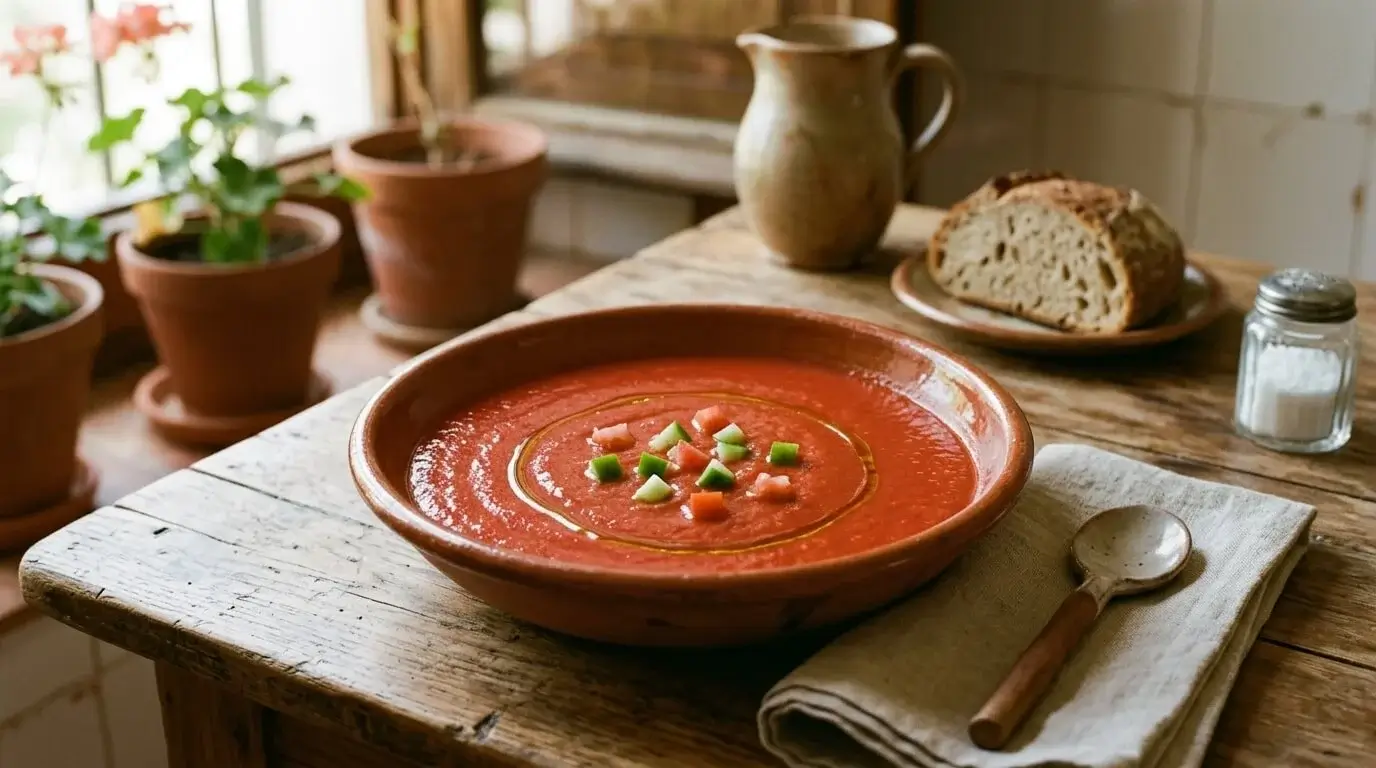
Classic Spanish Gazpacho
Ingredients
Method
Notes
- Use the ripest tomatoes you can find – tomato quality is the biggest flavor variable.
- Don’t rush the chilling step. Two hours is the practical minimum; 4 hours or overnight is better.
- Add water gradually. Tomato and cucumber water content varies considerably.
- Straining is optional. If your blender produces a silky soup, there’s no need to strain it.
- Bread is traditionally supported but variable – some modern Andalusian recipes omit it.
- Taste again after chilling. Cold temperatures change how acidity and seasoning are perceived.
- Store the gazpacho separately from crunchy garnishes so they keep their texture.
- Nutrition (estimate only, not lab-tested): Approximately 240-250 calories per serving. Varies with tomato size, bread type and amount of oil used.
Gazpacho Ingredients & Why Each One Matters
Every ingredient here is doing a specific job – nothing is just for show.
| Ingredient | Function | What to look for |
| Ripe tomatoes | Flavor, liquid and sweetness. | Fully ripe and flavorful. |
| Green pepper | Traditional vegetal aroma. | Fresh and crisp. |
| Cucumber | Freshness and water. | Firm, not watery. |
| Garlic | Aromatic dept. | Use carefully. |
| Extra-virgin olive oil | Richness/body. | Good-quality extra virgin. |
| Sherry vinegar | Traditional acidity. | Vinagre de Jerez. |
| Bread | Traditional body. | Day-old rustic bread. |
| Salt | Seasoning. | Adjust after chilling. |
| Cold water | Controls texture. | Add gradually. |
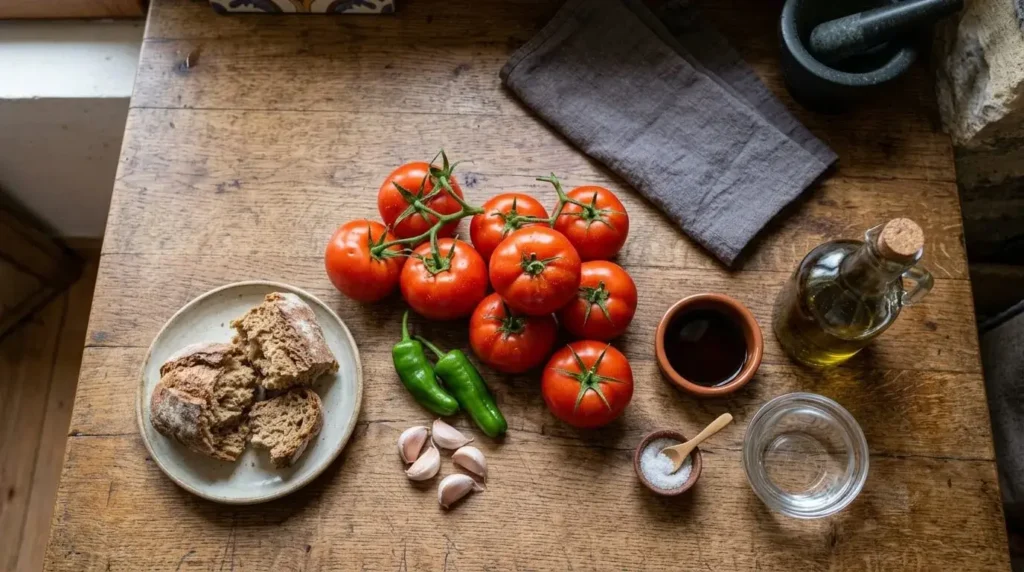
Choosing Tomatoes in a US Grocery Store
Tomato quality is the single biggest variable in how this soup turns out, so prioritize the ripest, most flavorful tomatoes you can actually find rather than chasing a specific variety. Moreover, when good seasonal tomatoes aren’t available, ripe Roma tomatoes are a practical option – they’re consistently available and hold decent flavor. Because canned tomatoes can work in a pinch, but treat them as an adaptation rather than the traditional baseline and expect a slightly different flavor. Whatever tomatoes you use, adjust your water quantity based on how juicy they are – juicier tomatoes need less added water.
How to Make Gazpacho
1. Prepare the Vegetables
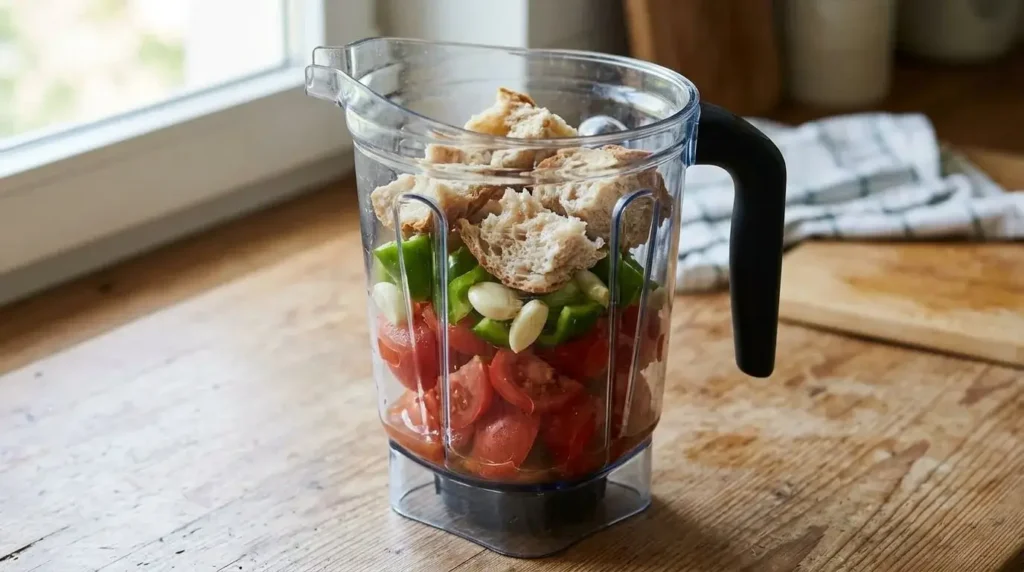
Roughly chop the tomatoes, green pepper, cucumber and garlic. However, there is no need for a fine dice – everything is headed into the blender, so rough chunks are fine.
2. Soak the Bread
If you’re using bread, tear it into pieces and soak it briefly in cold water until softened, then squeeze out the excess liquid before adding it to the blender.
3. Blend Until Silky
Add the vegetables, garlic and soaked bread to a high-speed blender and blend thoroughly, working in batches if your blender is small. Hence, once the base is smooth, stream in the olive oil and blend again until it’s fully incorporated and the mixture looks cohesive and silky rather than separated. Overall, hold off on adding much water at this stage – you want to control texture after the base is fully blended, not before.
4. Strain Only If Needed
Taste and look at the texture. But if your blender already produced something smooth, you’re done – skip this step. If you can still feel or see tomato skins, seeds or pepper fibers, pass it through a fine-mesh strainer. Also, straining isn’t a mandatory traditional step; it’s a fix for a specific problem.
5. Adjust, Then Chill
Add cold water gradually until the gazpacho is smooth and pourable rather than thick, then adjust salt and vinegar to taste. Moreover, cover and refrigerate for at least 2 hours. I always taste it again once it’s fully cold, because chilling changes how salt and acidity come across – what tastes balanced at room temperature can taste flat or sharp once it’s cold. Hence, for the best flavor and integration, chill for 4 hours or overnight.
6. Serve
Pour into chilled bowls or glasses and top with a few of the traditional garnishes below, plus a light drizzle of olive oil.
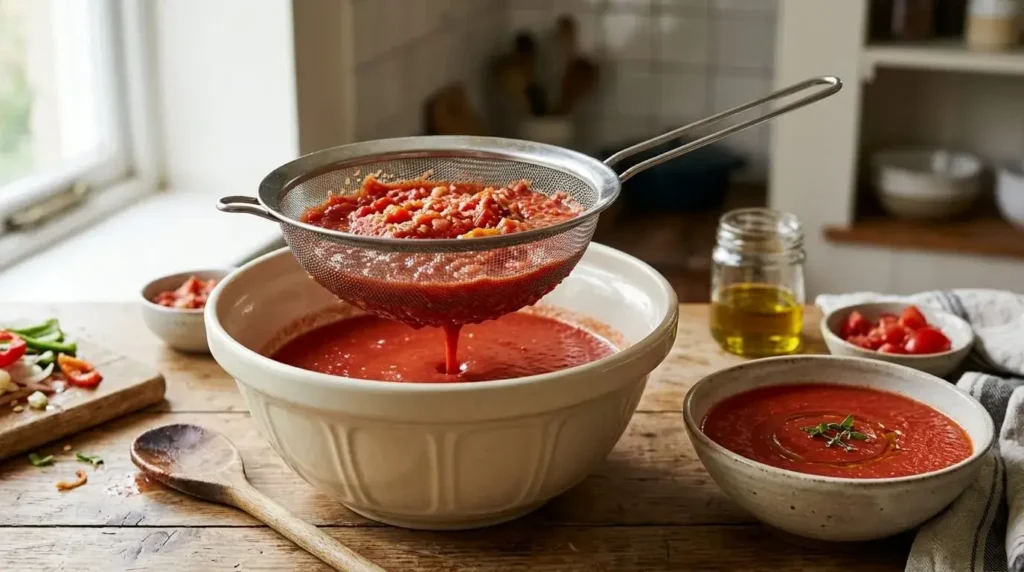
[IMAGE 4: gazpacho-smooth-texture-straining.jpg | Smooth gazpacho texture after blending and optional straining | Smooth Gazpacho Texture | Strain the gazpacho only if your blender leaves noticeable skins, seeds or pepper fibers. | Educational image showing when straining can improve texture without presenting it as a mandatory traditional step.]
Smooth or Chunky? Use This Texture Guide
| If you want… | Do this | Result |
| Classic silky gazpacho | Blend thoroughly; strain if needed. | Smooth and pourable. |
| Lightly textured | Blend less aggressively. | More rustic. |
| Chunky presentation | Reserve diced vegetables for garnish. | Smooth soup and fresh texture on top. |
| Very thick soup | Increase bread. | Moves toward Salmorejo/porra territory. |
Classic Andalusian gazpacho is smooth and pourable – the evidence for this is much stronger than for a chunky, salsa-like version. Moreover, if you want texture, the traditional move is to serve diced vegetables on the side rather than leaving the base chunky.
Gazpacho vs. Salmorejo, Porra & Ajoblanco
Spain has several cold soups that get lumped together, but they’re distinct dishes.
| Dish | Region | Main distinction | Texture |
| Gazpacho Andaluz | Andalusia | Tomatoes, vegetables and vinegar. | Pourable. |
| Salmorejo | Córdoba | More bread, less or no water. | Thick/creamy. |
| Porra antequerana | Antequera, Málaga | Denser bread-based relative. | Very thick. |
| Ajoblanco | Málaga/Andalusia | Almond, garlic, and no tomato. | White/creamy |
One Spanish Dish Name to Know: Gazpacho Manchego
Despite the name, gazpacho manchego is a different, cooked dish from Castilla-La Mancha – a hearty meat and flatbread stew, nothing like the chilled Andalusian tomato soup in this recipe. Therefore, it’s worth knowing so you don’t end up with the wrong dish when searching for more recipes.
Substitutions for US Home Cooks
| Traditional ingredient | Practical US substitute | What changes |
| Sherry vinegar | Red wine vinegar. | Slightly different acidity/flavor. |
| Green pepper | Green bell pepper. | Very close, practical swap. |
| Rustic bread | Day-old white or country bread. | Similar body. |
| Ripe seasonal tomatoes | Good Roma tomatoes. | Slightly less juicy, depending on quality. |
Can You Make Gazpacho Without Bread?
Yes. Skip the bread and rely on the vegetables and a slightly smaller amount of water for body – you’ll get a lighter, more purely vegetable-forward soup. Because it’s not “less authentic,” just a different traditional direction, since plenty of modern recipes already leave bread out.
Common Gazpacho Problems & How to Fix Them
| Problem | Likely cause | Fix |
| Too watery | Excess water or very watery produce. | Add liquid gradually; adjust body with a little bread if needed. |
| Too thick | Too much bread or not enough water. | Add cold water gradually. |
| Too acidic | Too much vinegar. | Balance gradually and reassess once cold. |
| Bland | Not enough salt, acidity or underripe tomatoes. | Taste again after chilling and adjust. |
| Too garlicky | Too much garlic. | Dilute with a bit more tomato base. |
| Gritty or fibrous | Skins, seeds or pepper fibers. | Strain. |
| Separated | Oil not fully incorporated. | Blend briefly again. |
How to Store Gazpacho
Refrigerate leftover gazpacho promptly in an airtight container and keep it at 40°F (4°C) or below. I’d stick to a conservative 3-4 day window rather than pushing it further – flavor holds up, but freshness fades past that point. Moreover, keep any diced garnishes stored separately so they don’t go soft. Because gazpacho can technically be frozen, but the texture tends to separate and turn watery once thawed, so it’s not really equivalent to fresh.
Can You Reheat Gazpacho?
No. Gazpacho is meant to be served cold – reheating changes the character of the dish entirely and isn’t part of any traditional preparation.
How to Serve Gazpacho
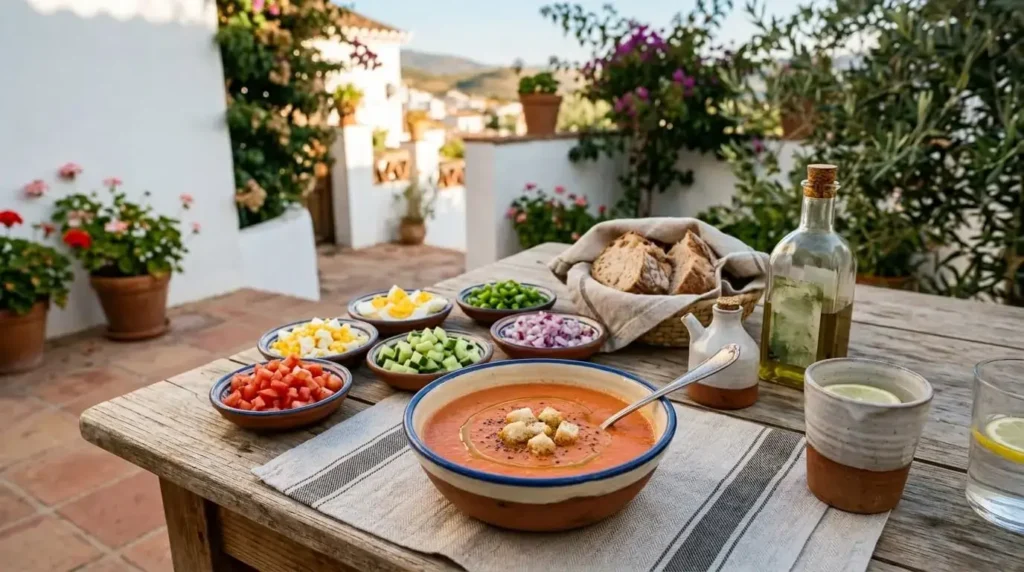
Serve gazpacho in chilled bowls or small glasses as a starter or in slightly larger portions as a light summer meal. Therefore, the traditional approach is to keep garnishes separate rather than blending them in, so everyone can add what they like: finely diced tomato, cucumber, green pepper, onion, croutons or bread and hard-boiled egg, finished with a light drizzle of olive oil.
Frequently Asked Questions
What is gazpacho?
Gazpacho is a cold, uncooked Spanish soup, most closely associated with Andalusia, made by blending ripe tomatoes and vegetables with olive oil, vinegar and salt. But it’s chilled thoroughly before serving and eaten as a starter or light meal.
Is bread traditional in gazpacho?
Yes, many traditional recipes include soaked bread for the body and Spain’s official tourism recipe uses it. Because modern versions often skip it. Neither approach is more “authentic” than the other – it’s a genuine regional variation.
Should gazpacho be smooth or chunky?
Classic Andalusian gazpacho is smooth, silky and pourable, not chunky. That’s why if you want texture, serve diced vegetables as a garnish on top rather than leaving the base itself chunky.
Do you have to strain gazpacho?
No. Straining is only necessary if your blender leaves noticeable tomato skins, seeds or pepper fibers. Moreover, if your gazpacho is already smooth after blending, you can skip it entirely.
Can I substitute red wine vinegar for sherry vinegar?
Yes. Red-wine vinegar is the closest practical substitute for sherry vinegar and works well, though the flavor will be slightly different – a little less nutty and complex than true sherry vinegar.
How long should gazpacho chill?
Chill it for at least 2 hours before serving. Overall, for the best flavor and the coldest, most integrated result, chill it for 4 hours or overnight.
How long does homemade gazpacho last in the refrigerator?
Stored in an airtight container at 40°F (4°C) or below, homemade gazpacho keeps well for about 3-4 days.
What is the difference between gazpacho and salmorejo?
Gazpacho is a thinner, pourable tomato soup from Andalusia. Salmorejo, from Córdoba, uses more bread and little or no added water, giving it a much thicker, creamier consistency closer to a dip.