This gluten-free tabbouleh swaps traditional bulgur for quinoa, keeping the herb-forward, lemony character that makes tabbouleh what it is. Therefore, it’s built for home cooks who want the real flavor of the dish without the wheat – whether you’re strictly gluten-free or just curious how the swap holds up.
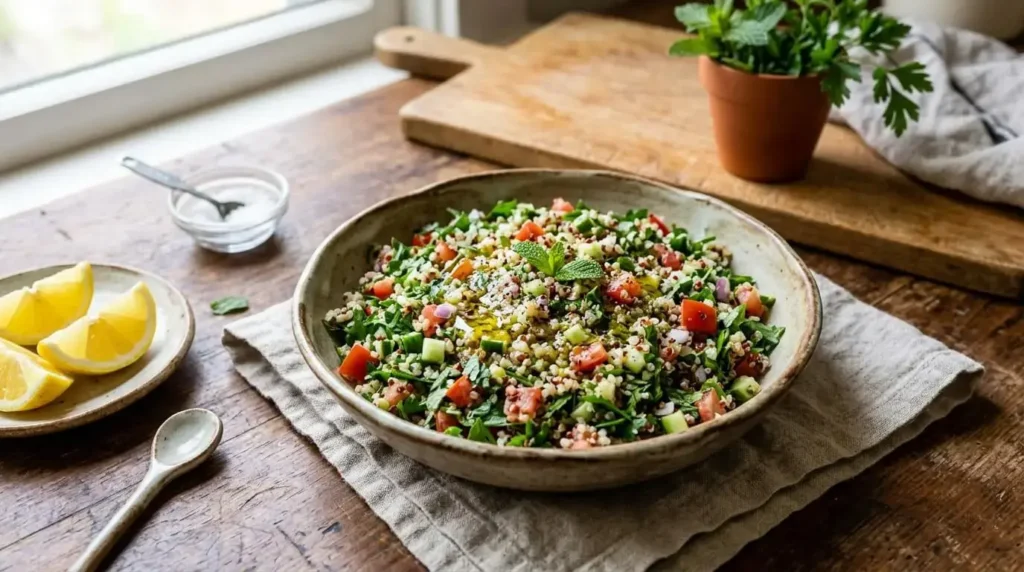
Quick Answer: Is Tabbouleh Gluten-Free?
Traditional tabbouleh is not gluten-free – it’s made with bulgur, which is a wheat product. However, this recipe replaces the bulgur with quinoa, a naturally gluten-free seed, so you get the same fresh, parsley-heavy salad without the wheat. Moreover, if you’re cooking for someone with celiac disease or a gluten intolerance, the ingredient swap matters more than the seasoning – quinoa is the part that actually makes this version safe.
What Makes This Tabbouleh Gluten-Free?
The gluten question comes down to one ingredient: the grain. Because the Classic tabbouleh is built around bulgur, a wheat product, which is exactly why so many people searching for “gluten-free tabbouleh” land here instead of on a traditional recipe. But this version keeps everything else that makes tabbouleh recognizable – the parsley, the mint, the lemon-forward dressing – and changes only the grain.
Does Traditional Tabbouleh Contain Wheat?
Yes. Bulgur is parboiled, cracked wheat and it’s the base of traditional tabbouleh – not just a minor add-in. Because bulgur is wheat, standard tabbouleh contains gluten and isn’t appropriate for anyone who needs to avoid it, whether for celiac disease, a wheat allergy or a gluten sensitivity. Furthermore, that’s also why “is tabbouleh gluten-free” is such a common question: the salad looks like a vegetable-forward dish, but the grain underneath it is the issue.
Why Use Quinoa Instead of Bulgur?
Quinoa works as a substitute because it shares some of bulgur’s practical qualities – small, separate grains that hold dressing well and give the salad body without turning it into mush. Because it’s not a flavor match for bulgur (quinoa is earthier and slightly more assertive), but its texture is close enough that, once it’s outnumbered by herbs the way tabbouleh should be, most people don’t miss the bulgur. Since quinoa is also widely available, naturally gluten-free (not just processed to remove gluten) and easy to cook at home.
| Feature | Bulgur | Quinoa |
| Role in tabbouleh | Traditional base grain. | Gluten-free adaptation. |
| Gluten status | Contains gluten (wheat). | Naturally gluten-free. |
| Texture | Light, chewy and cracked. | Small, springy and slightly firmer. |
| Preparation | Soaked or briefly simmered. | Rinsed and simmered, then cooled. |
| Flavor | Mild and nutty. | Slightly earthier, more assertive. |
What Is Tabbouleh? A Brief Regional Note
Tabbouleh belongs to Levantine cuisine – the food traditions of Lebanon and Syria in particular, where it’s a mezze staple rather than a side dish that only shows up occasionally. That’s why understanding that context is part of what separates a genuine gluten-free adaptation from a recipe that just happens to include parsley.
Where Tabbouleh Comes From
Tabbouleh (also spelled tabouli) originates in the Levant, with Lebanon and Syria most closely associated with the dish. Moreover, in its traditional form, it’s a parsley salad first and a grain salad second – the herbs are the bulk of the dish, with bulgur mixed in as a supporting ingredient rather than the main event. Furthermore, that herb-to-grain ratio is part of what defines tabbouleh and distinguishes it from other regional grain salads.
Traditional Tabbouleh vs. This Quinoa Version
This recipe is a gluten-free adaptation, not a traditional preparation – and it’s worth being upfront about that distinction rather than calling it “authentic,” because the parsley-forward ratio and lemon-olive oil dressing follow the traditional approach; the grain does not.
| Traditional Approach | This Recipe |
| Bulgur (cracked wheat). | Quinoa. |
| Contains gluten. | Gluten-free adaptation. |
| Bulgur is soaked or briefly cooked, then mixed cold. | Quinoa is cooked, drained and fully cooled before mixing. |
Ingredients for Gluten-Free Tabbouleh
Every ingredient here is doing a specific job – this isn’t a generic quinoa salad with parsley added on top.
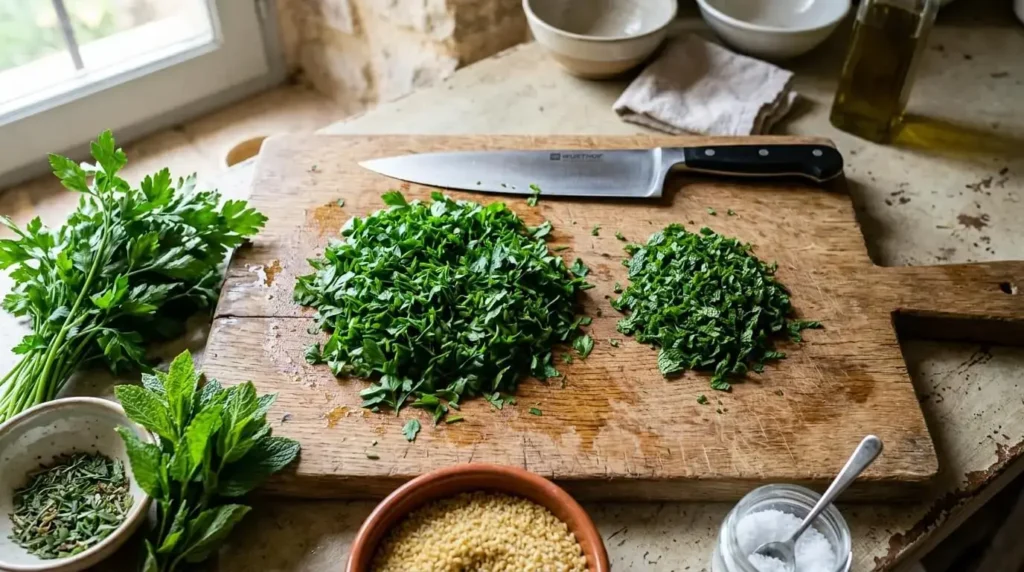
Core Ingredients
- Quinoa – the gluten-free stand-in for bulgur- provides body and a little bite.
- Flat-leaf parsley – the backbone of the dish. Because Tabbouleh should be a parsley salad, not a grain salad with parsley in it.
- Fresh mint – adds brightness and keeps the herb mix from tasting flat.
- Tomatoes – for juiciness and acidity, but also the main source of excess moisture if not handled carefully.
- Lemon juice – the primary acid in the dressing; it should be assertive.
- Extra-virgin olive oil – carries the dressing and rounds out the lemon’s sharpness.
- Onion or scallion – adds a sharp, savory note that balances the herbs.
- Salt and black pepper – seasoning that should be adjusted at the end, after the salad has had a chance to sit.
Choosing and Preparing Quinoa
Rinse quinoa before cooking to remove its natural coating, which can taste bitter or soapy if skipped. Also, cook it in a measured amount of water rather than boiling it like pasta and once it’s done, spread it out on a tray or plate rather than leaving it in the pot – that’s what keeps it from steaming itself into a clumpy, wet mass while it cools.
US Grocery Substitutions
Quinoa, flat-leaf parsley and fresh mint are all standard items at most US grocery stores, including mainstream chains – no specialty Mediterranean market required. However, if flat-leaf (Italian) parsley isn’t available, it’s a closer substitute for tabbouleh than curly parsley, which has a milder flavor and tougher texture.
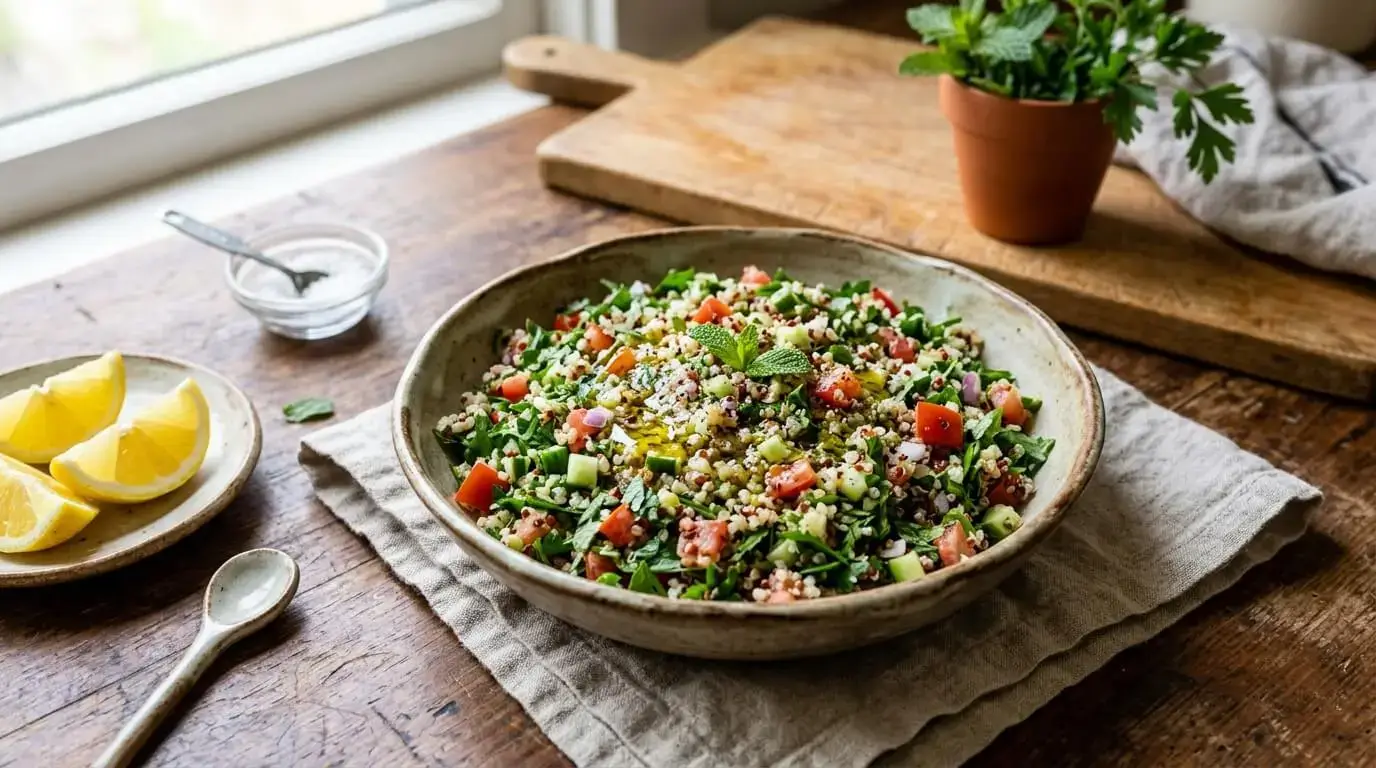
Gluten-Free Tabbouleh with Quinoa
Ingredients
Method
Notes
- This is a gluten-free adaptation of tabbouleh, not a traditional preparation – traditional tabbouleh uses bulgur.
- Cooling the quinoa fully is the single biggest factor in avoiding a watery salad.
- Keep it herb-forward: parsley should visually dominate the bowl, not the quinoa.
- Check packaged ingredient labels for strict gluten-free needs; FDA rules require “gluten-free” labeled foods to contain less than 20 ppm gluten, and the Celiac Disease Foundation recommends watching for cross-contact during prep.
- Best eaten within 2-3 days; texture softens as herbs and tomatoes sit in the dressing
Nutrition (estimated per serving, 6 servings)
Estimated from standard USDA ingredient data for the amounts above – recalculate once your final tested recipe is locked in.- Calories: ~150
- Carbohydrates: ~15g
- Protein: ~3g
- Fat: ~9g
- Fiber: ~3g
- Sugar: ~2g
- Sodium: ~300mg
How to Make Gluten-Free Tabbouleh
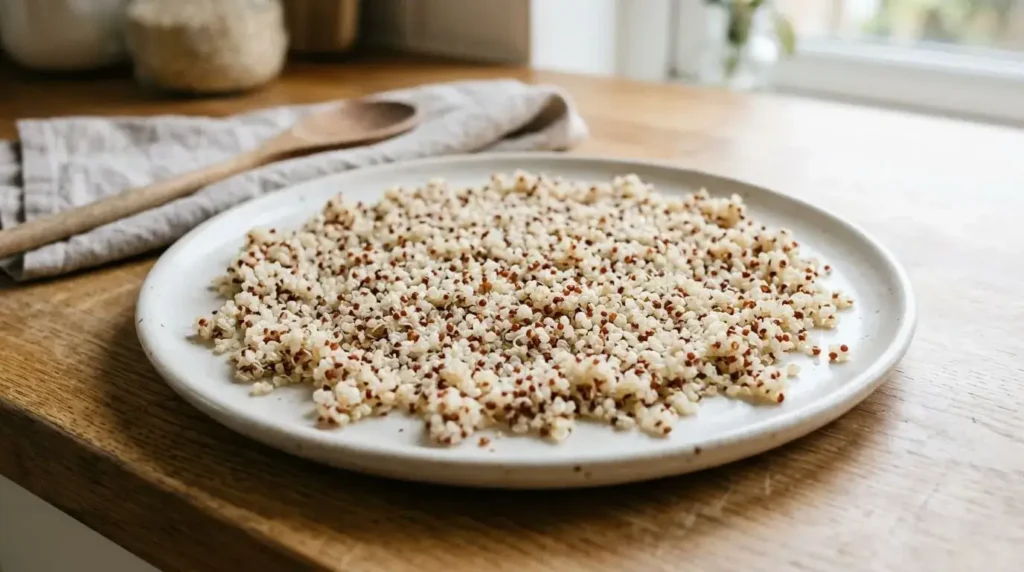
1. Cook and Cool the Quinoa
Rinse the quinoa, cook it until tender and drain off any remaining liquid. Moreover, then spread it in a thin layer on a plate or baking sheet so it cools quickly and evenly – this step matters more than it looks like it should.
2. Chop the Herbs and Vegetables
Chop the parsley and mint finely – tabbouleh’s texture depends on the herbs being cut small enough to distribute evenly rather than sitting in big leafy clumps. Because Dice the tomatoes and onion or scallion to a similar size so every bite has a mix of everything.
3. Make the Lemon-Olive Oil Dressing
Whisk the lemon juice, olive oil and salt together separately before adding them to the salad. That’s why building the dressing on its own lets you taste and adjust the acid-to-oil balance before it’s mixed into everything else, which is much harder to fix afterward.
4. Combine and Rest
Add the cooled quinoa to the chopped herbs and vegetables, then pour the dressing over the top and toss thoroughly. Because letting the salad rest briefly before serving gives the flavors time to come together, rather than tasting like separate ingredients that were just stirred.
Technique callout-Keep the quinoa dry and fluffy: The single biggest difference between tabbouleh that tastes fresh and tabbouleh that tastes waterlogged is how the quinoa is handled before it goes into the bowl. Also, warm or wet quinoa releases moisture into the herbs and dressing as it sits, which is what turns a bright, herb-forward salad into something soggy by the time you serve it.
How to Get the Right Tabbouleh Texture
Getting this right is less about the recipe and more about handling moisture at every stage – the quinoa, the tomatoes and the dressing all contribute.
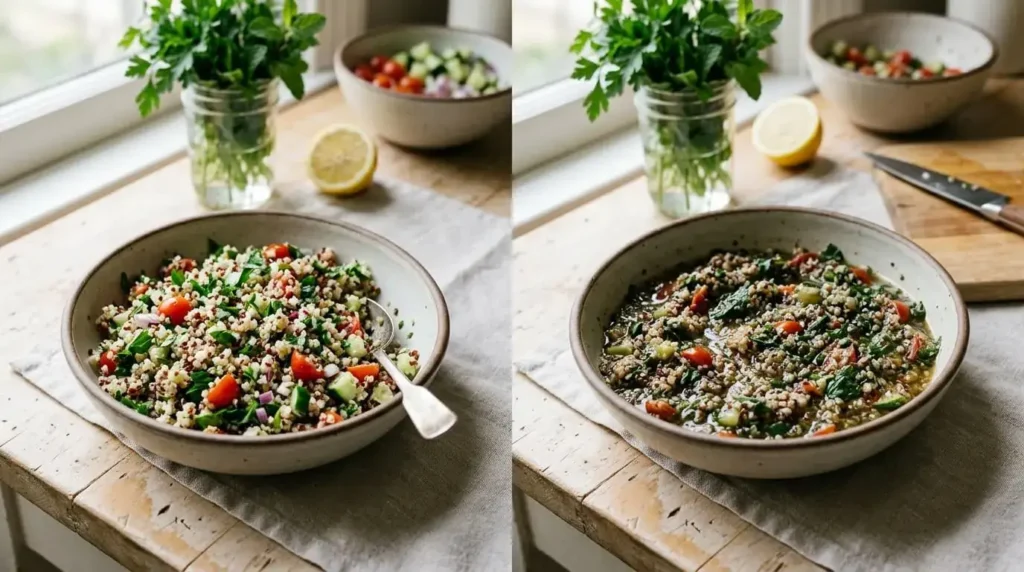
Why Watery Tabbouleh Happens
Watery tabbouleh usually comes down to one of three things: quinoa that wasn’t drained or cooled properly, tomatoes that released their juice before being added or dressing added too far in advance. Furthermore, any one of these on its own can be manageable; combined, they turn the salad soupy.
How to Keep It Fresh Rather Than Soggy
Cool the quinoa completely before combining and if your tomatoes are especially juicy, consider salting and draining them briefly before adding them to the bowl. Also, dress the salad closer to serving time rather than well in advance, especially if you’re not planning to eat it right away.
| If your tabbouleh is… | Do this. |
| Watery | Drain tomatoes briefly before adding; make sure quinoa is fully cooled and drained. |
| Dry | Add a small amount of extra olive oil and lemon juice and toss again. |
| Too acidic | Balance with a bit more olive oil or a pinch more salt rather than more lemon. |
| Bland | Add salt gradually and taste – herb-forward salads often need more salt than expected. |
| Heavy on quinoa | Increase the parsley and mint ratio next time; tabbouleh should be herb-first. |
Gluten-Free Tabbouleh Substitutions
Can You Make Tabbouleh Without Quinoa?
Yes – some cooks skip grains entirely for a grain-free version that leans even more heavily on herbs and vegetables or use another gluten-free grain in place of quinoa. Because the result will taste and feel different from this recipe, but it can still work within the same basic structure: parsley-forward, lemon-dressed and chopped fine.
Can You Get Gluten-Free Bulgur?
Standard bulgur is wheat-based and not gluten-free and there isn’t a widely available “gluten-free bulgur” product on the US market – bulgur is defined by being a wheat product, so a genuinely gluten-free version isn’t the same grain. Therefore, if you want a bulgur-like texture without the gluten, a different gluten-free grain is a more realistic starting point than looking for gluten-free bulgur specifically.
Which Substitute Is Best?
| If you want… | Consider… |
| Closest traditional texture direction | A different fine, gluten-free grain with a similar small texture to bulgur. |
| Easy supermarket option | Quinoa. |
| No grain at all | A grain-free version leaning further into herbs and vegetables. |
How Long Does Gluten-Free Tabbouleh Take?
Honest timing note: [PLACEHOLDER – prep, cook, cooling/resting and total time must be filled in from the actual tested recipe before publishing. But do not publish generic “20-minute” timing; if cooling or resting adds meaningful time, that needs to be stated plainly rather than folded into “prep.”
Because the real-time commitment for this recipe isn’t just chopping – it’s the quinoa’s cook time plus the time it needs to cool before it goes anywhere near the herbs. Also, active prep (rinsing quinoa, chopping herbs and vegetables and making the dressing) is separate from the quinoa’s cooking and cooling time and both should be reflected honestly in the total.
Storage and Reheating
How to Store Tabbouleh
Store finished tabbouleh in an airtight container in the refrigerator. Because it’s a fresh herb salad rather than a cooked dish, quality (not just safety) declines the longer it sits – the herbs soften and the tomatoes release more liquid over time. Moreover, for general leftover storage guidance, the USDA Food Safety and Inspection Service{:target=”-blank”} notes that most refrigerated leftovers are good for 3-4 days.
Can You Reheat Tabbouleh?
Tabbouleh isn’t meant to be reheated – it’s served cold or at room temperature and warming it would wilt the herbs and change the texture entirely. However, if you’re cooking the quinoa ahead, it’s fine to prepare just that component in advance and combine it with the fresh herbs and dressing closer to serving.
What to Serve with Gluten-Free Tabbouleh
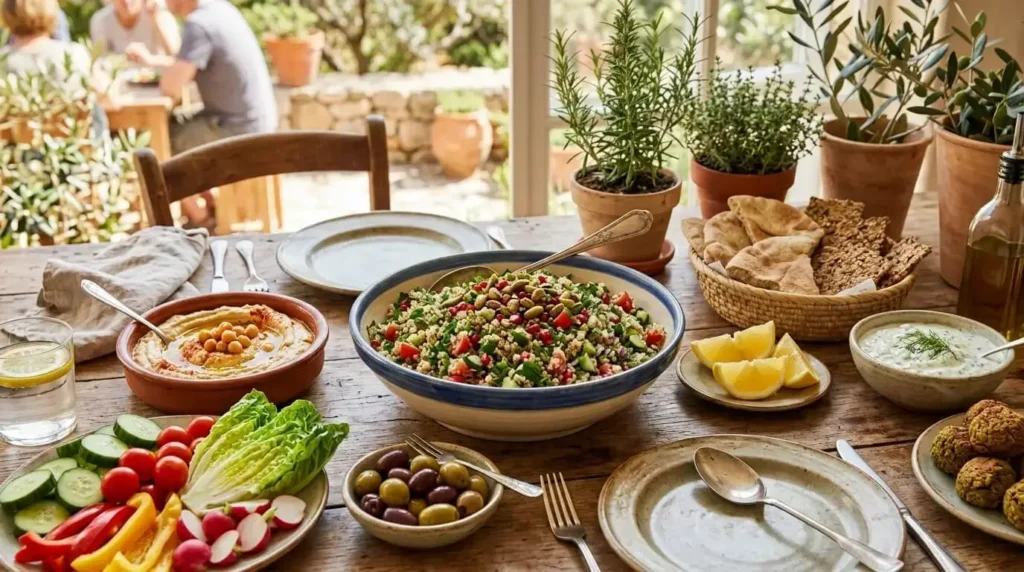
Tabbouleh is traditionally part of a mezze spread rather than a standalone main course. But it pairs naturally with:
- Hummus and other dips.
- Grilled meats or other proteins.
- Roasted vegetables.
- Other mezze dishes.
- Gluten-free flatbread or crackers, if you’re keeping the whole spread gluten-free.
Troubleshooting Gluten-Free Tabbouleh
Why Is My Tabbouleh Watery?
Usually, it’s a combination of warm quinoa, juicy tomatoes and dressing added too early. Because the quinoais fully, drain the tomatoes if needed and dress closer to serving time.
Why Is the Quinoa Mushy?
Overcooked quinoa or quinoa left sitting in its cooking liquid will turn mushy. Therefore, drain it promptly once it’s tender and spread it out to cool rather than leaving it covered in the pot.
Why Does It Taste Too Sour?
Too much lemon relative to olive oil and salt will throw off the balance. Also, add a little more oil and a pinch of salt rather than trying to fix it with more lemon.
Why Does It Taste More Like Quinoa Salad Than Tabbouleh?
This usually means the herb-to-grain ratio has tipped too far toward the grain. Because tabbouleh should be parsley-forward with the quinoa as a supporting player, not the other way around.
Why Are the Herbs Overpowering?
If the mint in particular is too dominant, it’s easy to over-add relative to the parsley. That’s why parsley should be the majority herb, with mint used more sparingly for brightness.
Frequently Asked Questions
Is tabbouleh gluten-free?
Traditional tabbouleh is not gluten-free because it’s made with bulgur, a wheat product. Moreover, this recipe replaces the bulgur with quinoa, which is naturally gluten-free, so the finished dish avoids wheat entirely while keeping the same herb-forward character as the original.
Does tabbouleh have wheat in it?
Traditional tabbouleh does contain wheat, specifically bulgur, which is cracked and parboiled wheat. However, it’s a core ingredient in the classic recipe, not a minor addition, which is why traditional tabbouleh isn’t suitable for anyone avoiding gluten.
Is quinoa tabbouleh gluten-free?
Yes, as long as quinoa fully replaces the bulgur and no other wheat-based ingredients are used. Hence, quinoa is naturally gluten-free, but if you have celiac disease, it’s worth checking that your specific quinoa was processed without cross-contact with gluten-containing grains.
What can I substitute for bulgur wheat in tabbouleh?
Quinoa is the most common gluten-free substitute for bulgur, offering a similar small, separate texture. Then other gluten-free grains can work too, though the flavor and texture will vary; a grain-free, herb-heavy version is also an option.
Can you get gluten-free bulgur?
No – bulgur is inherently a wheat product, so there isn’t a genuinely gluten-free version of bulgur itself. Because if you want a similar texture without gluten, look at other gluten-free grains rather than searching for “gluten-free bulgur” specifically.
Is tabbouleh salad gluten-free?
It depends entirely on the grain used. Traditional tabbouleh salad made with bulgur is not gluten-free, while a version made with quinoa or another gluten-free grain, like the one in this recipe, is.
Is quinoa gluten-free?
Yes, quinoa is naturally gluten-free – it’s a seed, not a grass-family grain like wheat, barley or rye. Therefore, for strict gluten-free needs, check the packaging, since cross-contact during processing is possible depending on the brand.
Is tabbouleh vegan?
Traditional tabbouleh, made with bulgur, herbs, vegetables, lemon and olive oil, is naturally vegan and this quinoa version is as well, as long as no non-vegan ingredients are added to the dressing or mix-ins.