Homemade hummus recipe is one of those dishes that seems simple until you taste a version made properly, with real tahini, good olive oil and chickpeas cooked until they’re soft enough to blend into something genuinely silky. And this recipe walks through both the fast route with canned chickpeas and the traditional route with dried ones, so you know exactly what you’re signing up for. Moreover, you’ll get honest timing, real technique explanations, and the kind of troubleshooting that comes from making a lot of hummus in a real kitchen, not just once for a photo. Also, if you’re new to Mediterranean recipes, this is a solid place to start.
Quick Answer: Homemade hummus is a creamy chickpea dip made by blending cooked chickpeas with tahini, lemon juice, garlic and olive oil until smooth. Also, it comes from the Levant region and is traditionally served as part of a mezze spread. If it’s made with canned chickpeas, it takes about 25-30 minutes to start to finish. And if made with dried chickpeas for the best texture, plan on several hours, mostly hands-off soaking and simmering time.
Why You’ll Love This Homemade Hummus Recipe
- Authentic flavor- it’s real tahini and fresh lemon juice instead of shortcuts that flatten the taste
- Naturally vegan and gluten-free, no substitutions needed
- Genuinely creamy texture, not just smooth on top with grainy bits underneath
- Freezer-friendly, so a double batch pays off later
- Beginner-friendly, with clear steps and no special equipment beyond a food processor
Hummus also fits comfortably into a Mediterranean Diet way of eating, since it leans on chickpeas, olive oil and simple plant-based ingredients rather than anything processed.
What Is Homemade Hummus?
Homemade hummus is a chickpea-based dip or spread made by blending cooked chickpeas with tahini (a paste made from ground sesame seeds), fresh lemon juice, garlic and olive oil until smooth. Traditionally, salt and a touch of cumin round out the flavor because the finished dip is usually loosened with a bit of water until it reaches a soft and spreadable texture.
In the Levant, hummus isn’t treated as a stand-alone snack food the way it’s often marketed in US grocery stores. That’s why it’s part of a mezze spread, a collection of small dishes served together at the start of a meal or as a full meal on its own, alongside warm pita, olives and other dips like baba ghanoush. Understanding hummus this way changes how you think about serving it: as a result, not as an isolated app-store dip, but as one piece of a shared table.
A Brief Look at Hummus Origins
Hummus comes from the Levant, the region that today includes Lebanon, Syria, Jordan and Palestine. Chickpeas and sesame have been staple ingredients across the Eastern Mediterranean for centuries; also, several versions of blended chickpea dishes appear in historical Arabic cookbooks going back hundreds of years. However, exactly which country “invented” hummus in its current form is genuinely disputed among food historians and is also a point of cultural and political sensitivity, because this article won’t claim a single definitive origin story.
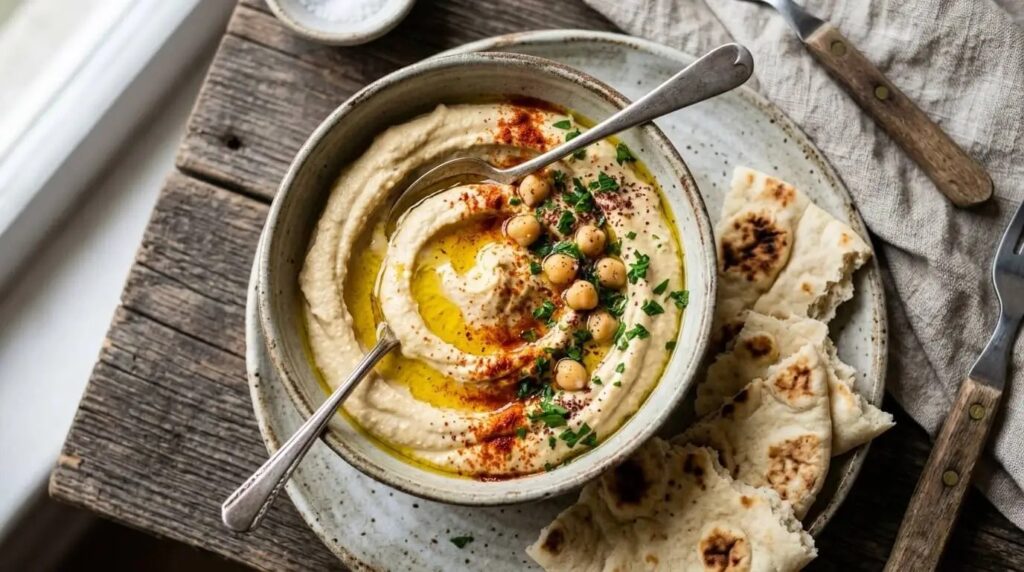
What is well documented is how hummus is traditionally served: also spread in a shallow bowl, finished with a well of olive oil in the center and topped with whole chickpeas, a dusting of paprika or sumac and chopped parsley. More importantly, presentation is a part of the dish, not just decoration.
Traditional Levantine vs Common American Versions
| Traditional Levantine | Common American Version | |
| Ingredients | Chickpeas, tahini, lemon, garlic and olive oil | Often lighter on tahini, sometimes flavored (roasted red pepper and ranch) |
| Texture | Very smooth and almost whipped | It ranges from smooth to noticeably grainy |
| Serving style | Shallow bowl with olive oil well | Also straight from a tub or spread flat |
| Garnish | Paprika, sumac, parsley and whole chickpeas | Often unadorned |
| Typical use | Part of a mezze spread with pita and other dips | Also a stand-alone snack dip with chips or vegetables |
For more regional dishes from the same culinary tradition, you can browse recipes by region, and until a dedicated Levantine collection is live, that’s why our Greek recipes offer a related look at Eastern Mediterranean cooking.
Ingredients You’ll Need
Core Ingredients for Hummus
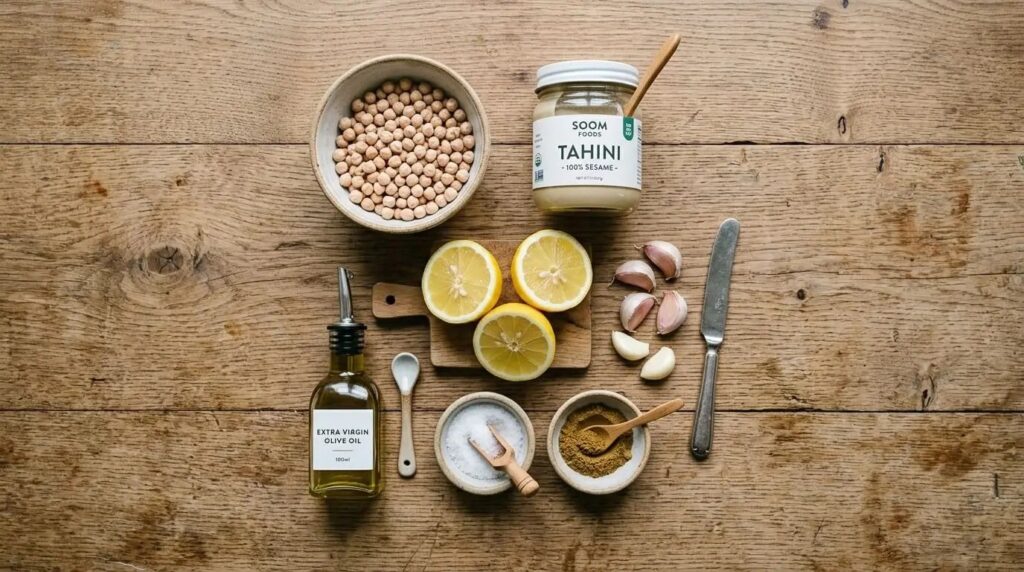
For this, you primarily need chickpeas, tahini, fresh lemon juice, garlic, olive oil, salt and ice water. Simply put, that’s genuinely it for a classic version. However, ground cumin is optional and more common in some home kitchens than others; it’s not universal across the region, so treat it as a personal preference rather than a traditional requirement.
Optional Garnishes
Paprika, sumac, chopped parsley, whole chickpeas and a finishing drizzle of good olive oil all bring the dish closer to how it’s traditionally presented.
Ingredient Notes
Tahini quality matters more than almost anything else in this recipe. For this reason, a fresh and well-stirred tahini with a pourable consistency will blend into something creamy, whereas an old, separated or bitter tahini will drag the whole dip down no matter how well you follow the rest of the steps. Use fresh lemon juice if you can, because bottled juice tends to taste flatter and more acidic. Similarly, raw garlic can be sharp right out of the food processor, which is why letting it sit briefly in the lemon juice helps mellow the bite before the rest of the ingredients go in.
| Ingredient | Purpose | Authentic? | US Substitute |
| Tahini | Provides richness and traditional flavor | Yes | Sunflower seed butter (changes flavor) |
| Chickpeas | Base of the dip | Yes | Canned or dried, both work |
| Olive oil | Adds richness, used for finishing | Yes | Any neutral oil, though flavor suffers |
| Lemon juice | Brightness and acidity | Yes | Bottled juice in a pinch |
| Cumin | Optional warmth | Regional, but not universal | Omit entirely |
Canned vs Dried Chickpeas
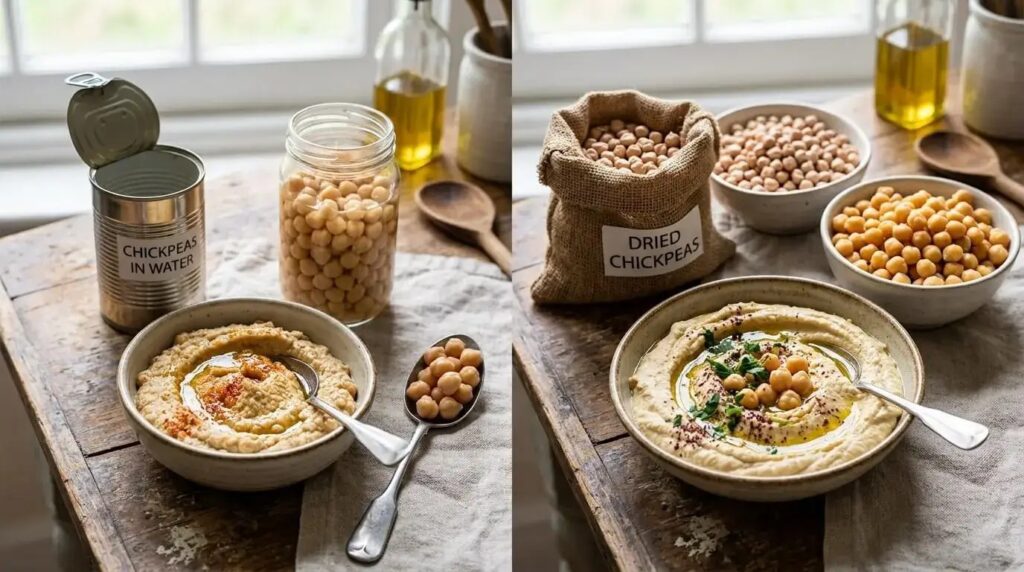
This is the single biggest decision that affects both your timing and your texture.
| Canned Chickpeas | Dried Chickpeas | |
| Preparation time | About 25-30 minutes total | Several hours, mostly inactive |
| Texture | Good and occasionally slightly firmer skins | Noticeably smoother and creamier |
| Flavor | Slightly more “tinny” or neutral | Cleaner and fresher chickpea flavor |
| Convenience | High | Low |
| Best for | Weeknight hummus, first-timers | Best texture, make-ahead batches |
| Authenticity | Common in home kitchens everywhere, including the Levant today | Closer to older traditional preparation |
Both paths make legitimate hummus. In fact, canned chickpeas are genuinely fine and plenty of home cooks in the region use them today too – the “dried chickpeas only” however, the idea is more of an internet purity test than a hard rule.
How to Make Homemade Hummus Recipe
Using Canned Chickpeas
- Drain and rinse 2 cans of chickpeas.
- Simmer them in water for 8-10 minutes until very soft; this extra step, which most recipes skip, is what pushes the texture from “good” to genuinely creamy.
- Drain and let cool slightly.
- In a food processor, blend the tahini and lemon juice together for a full minute until pale and creamy.
- next add the garlic and salt; pulse briefly.
- Add the chickpeas gradually and blend in batches.
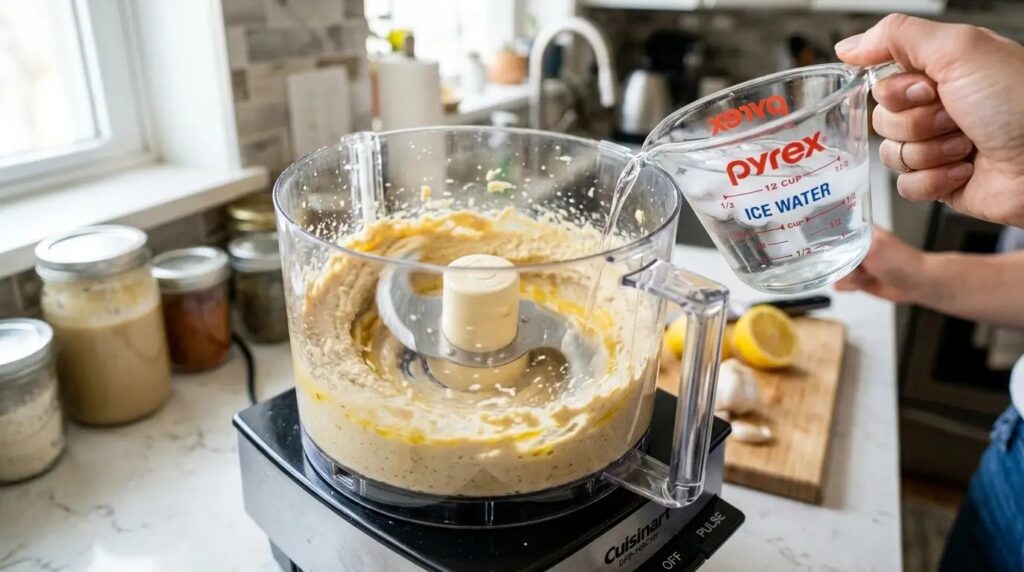
- Stream in ice water, 1 tablespoon at a time, until the texture loosens to a smooth and spreadable consistency.
- Taste and also adjust salt or lemon as needed.
Why blend tahini first? Blending tahini with lemon juice before adding anything else lets it emulsify, lighten in color and almost whip. On the other hand, adding chickpeas to unblended tahini traps small clumps that never fully smooth out.
Using Dried Chickpeas
- Soak 1 cup of dried chickpeas in plenty of water overnight (8-12 hours).
- Drain, then simmer in fresh water for 45-60 minutes, because the chickpeas are very soft and starting to fall apart.
- Drain and cool slightly before blending.
- Follow the same blending order as above: tahini and lemon first, then garlic and salt, then chickpeas and then ice water.
Should you peel chickpeas? Peeling removes the thin skins for a marginally smoother result, but it’s optional; what matters more is cooking the chickpeas until they’re genuinely soft matters far more for texture than peeling them.
How to Make Hummus Extra Creamy
- Overcook the chickpeas slightly. Soft, almost falling-apart chickpeas blend far more smoothly than chickpeas that are merely tender.
- Use ice water, not room-temperature water. Cold water helps emulsify the tahini and olive oil into a lighter, also fluffier texture instead of a dense paste.
- Blend longer than feels necessary. Two to three full minutes of processing and scraping the sides in between break down fibers that a quick 30-second blend leaves behind.
- Use quality tahini. A stiff, separated, or old tahini simply won’t blend into the same silky result as a fresh one.
- Let the garlic mellow. A few minutes resting in the lemon juice softens its sharpness before it hits the rest of the dip.
- Scrape the processor bowl often. Unblended pockets along the sides and bottom are the most common cause of a hummus that looks smooth on top but is grainy underneath.
Honest Timing Notes
Many recipes advertise “10-minute hummus,” which is only true if you’re using canned chickpeas and skip the extra simmering step that actually improves texture. In reality, you factor in real prep and cooking, the honest numbers look more like this:
| Task | Active | Inactive | Total Time |
| Canned chickpeas | ~25 minutes | None | ~25-30 minutes |
| Dried chickpeas | ~35 minutes | 8-12 hours (soaking) | ~9-13 hours |
The dried chickpea total looks intimidating, but nearly all of it is unattended soaking time overnight. If you’re planning, it’s an easy method; if you need hummus in the next hour, because canned chickpeas are the honest choice.
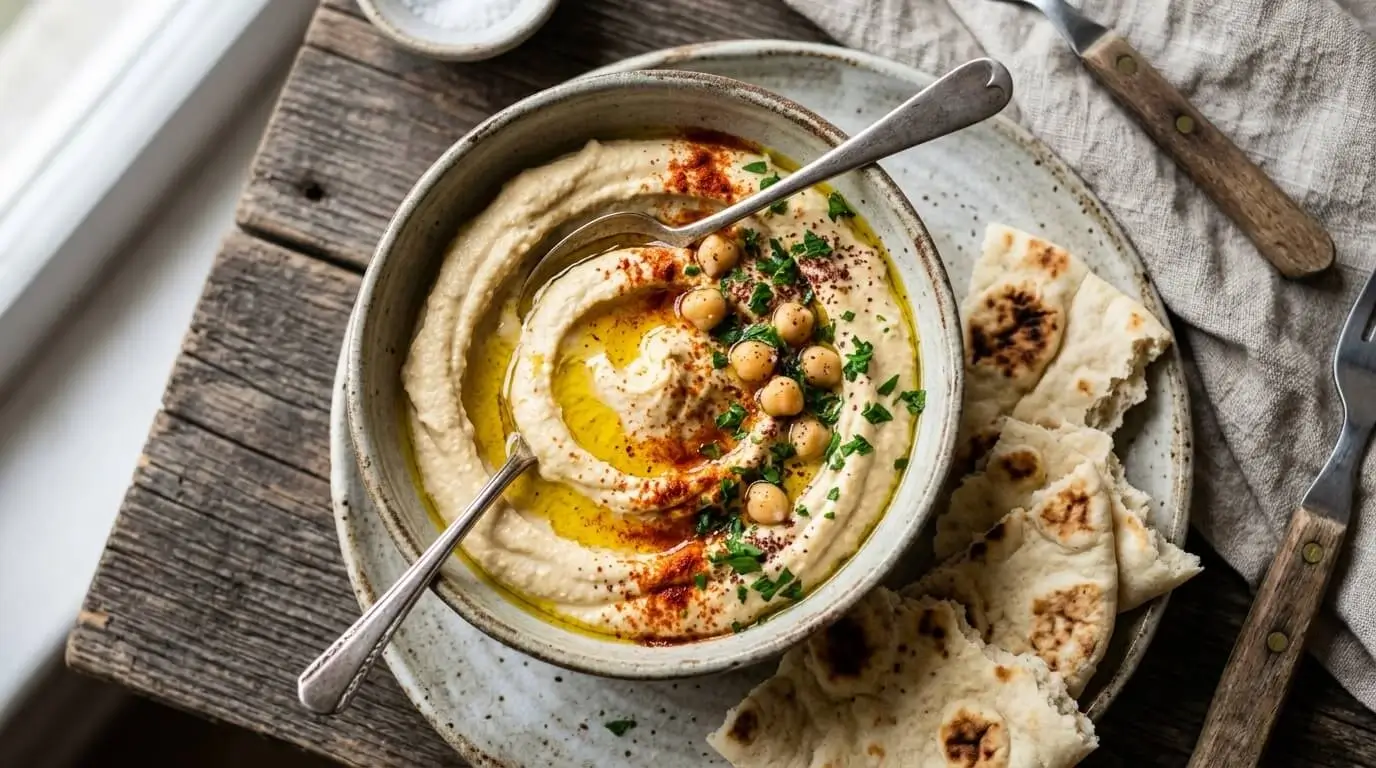
Classic Homemade Hummus
Ingredients
Method
- Prepare chickpeas (simmer canned chickpeas 8-10 minutes or soak and cook dried chickpeas as described above).
- Blend tahini and lemon juice until pale and creamy, about 1 minute.
- Add garlic and salt; pulse briefly to combine.
- Add chickpeas gradually and blend in batches.
- Blend in ice water, a tablespoon at a time, until smooth.
- Adjust seasoning to taste.
- Spoon hummus into a serving bowl.
- Create a shallow well in the center with the back of a spoon.
- Finish with olive oil, paprika, parsley and whole chickpeas.
- Serve immediately; refrigerate in an airtight container
Notes
- Total time for the dried chickpea version includes overnight soaking.
- Peeling chickpeas is optional; also cooking them until very soft matters more for texture.
- Choose a fresh, pourable tahini rather than an old or separated one.
- Freezes well for up to 3 months; thaw overnight in the refrigerator.
- Sunflower seed butter can replace tahini, but the flavor will change noticeably.
- Best served at room temperature or slightly warm.
- Can be made up to 2 days ahead and refreshed with a little lemon juice and water before serving.
Calories: ~180 | Protein: ~6 g | Fat: ~11 g | Carbohydrates: ~16 g | Fiber: ~5 g | Sugar: ~2 g | Sodium: Varies by chickpeas and added salt (estimate only)
Substitutions & Ingredient Swaps
Authentic Ingredients Worth Finding
Real tahini a decent olive oil and fresh lemons make a bigger difference in this recipe than almost any technique tip. If your grocery store carries more than one tahini brand it’s also worth trying a couple to find one that’s smooth and not bitter.
Acceptable US Grocery Store Alternatives
| Ingredient | Best Substitute | Notes | |
| Tahini | Sunflower seed butter | Changes flavor noticeably | |
| Chickpeas | Canned chickpeas | Convenient and slightly less traditional | |
| Lemon | Bottled lemon juice | Fresh preferred | |
| Parsley | Cilantro | Different flavor profile |
Avoid: peanut butter, mayonnaise, cream cheese, sesame oil, or avocado if the goal is authentic-tasting hummus But these show up in some “hummus hack” recipes online, but they push the flavor and texture away from anything traditional.
Common Hummus Problems (Troubleshooting)
| Problem | Cause | Fix |
| Grainy | Chickpeas too firm | Cook longer until very soft |
| Too thick | Not enough liquid | Blend in ice water and a tablespoon at a time |
| Too thin | Too much liquid added | Add more chickpeas or tahini to thicken |
| Bitter | Poor-quality or old tahini | Switch to a fresher tahini |
| Too sour | Too much lemon juice | Balance with extra tahini or a pinch of salt |
| Bland | Under-seasoned | Add salt gradually, tasting as you go |
Serving Suggestions
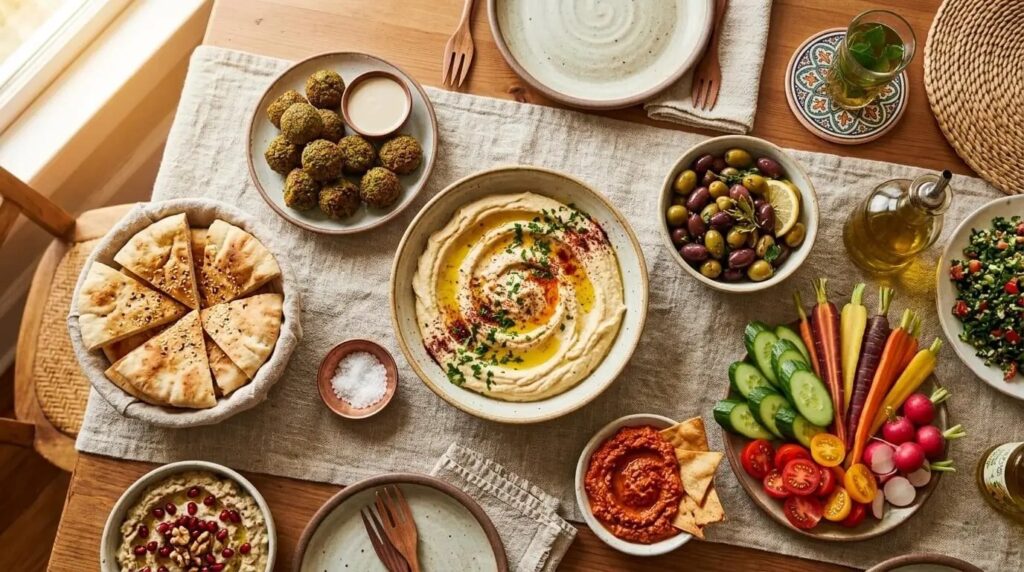
Hummus is traditionally part of a mezze spread rather than a single stand-alone dip, so its consider serving it alongside a few other small dishes rather than by itself.
- Warm pita bread
- Pita chips
- Cucumber and carrot sticks
- Olives
- Falafel
- Grilled chicken or grilled vegetables
- Tabbouleh
- Baba ghanoush
For the traditional presentation, spread the hummus in a shallow bowl, create a small well in the center and fill it with olive oil. To Finish with a dusting of paprika or sumac and a scattering of whole chickpeas and chopped parsley. It’s a small step that makes a noticeable difference in how the dish looks and tastes.
Looking for more dishes to build out the spread? Our full Mediterranean recipes collection has plenty of options that pair naturally with hummus.
Storage, Freezing & Make-Ahead Tips
| Method | Time |
| Refrigerator | 4-5 days |
| Freezer | Up to 3 months |
| Thawing | Overnight in the refrigerator |
| Refreshing | Stir in a little lemon juice and water to loosen |
Store hummus in an airtight container and keep it refrigerated at all times; because it contains fresh garlic and lemon juice with no preservatives, it shouldn’t sit out at room temperature for more than about two hours. Moreover, if you’re freezing a batch, for longer storage leave a little room at the top of the container, since the hummus will expand slightly as it freezes.
Frequently Asked Questions
How do you make hummus at home?
Blend cooked chickpeas with tahini, lemon juice, garlic and olive oil in a food processor until smooth, adding ice water gradually to reach a creamy consistency. For the time involved, using canned chickpeas takes about 25-30 minutes, and dried chickpeas require overnight soaking and roughly an hour of cooking.
What are the basic hummus ingredients?
Classic hummus needs just chickpeas, tahini, fresh lemon juice, garlic, olive oil and salt. Beyond the basics, additions like ground cumin, paprika, or sumac add flavor and traditional garnish, but the core recipe relies on only those six ingredients.
How long does homemade hummus last?
Homemade hummus keeps for about 4-5 days in the refrigerator when stored in an airtight container. because, it contains fresh lemon juice and garlic with no added preservatives; also, it has a shorter shelf life than most store-bought versions.
Can you freeze homemade hummus?
Yes, homemade hummus freezes well for up to 3 months. Thaw it overnight in the refrigerator, and then stir in a small amount of lemon juice or water to restore its original creamy texture before serving.
Is hummus authentic without tahini?
Tahini is a core ingredient in traditional Levantine hummus, and leaving it out moves the dip away from an authentic result. While it’s possible to make a chickpea dip without tahini, it will taste noticeably different and shouldn’t be labeled truly traditional.
Should you peel chickpeas for hummus?
Peeling chickpeas is optional and creates a marginally smoother texture, but it isn’t required for good results. More importantly, cooking the chickpeas until they’re very soft matters far more for creaminess than removing their skins.
Why is my hummus grainy?
Graininess almost always comes from chickpeas that weren’t cooked long enough before blending. Simmering them until they’re very soft, then blending for a full two to three minutes with ice water usually resolves the issue.
Can hummus be served warm?
Yes, warm hummus is common in parts of the Levant and has a softer, more fragrant quality straight after blending. Simply serve it right after making it, or gently warm leftovers before finishing with olive oil and garnishes.
Conclusion
Homemade hummus doesn’t need shortcuts to be good – just soft chickpeas, real tahini and a few extra minutes of blending. Whether you go with canned chickpeas for a weeknight batch or dried ones for the smoothest possible texture, the technique behind each step is what actually makes the difference. If you try this recipe, I’d genuinely love to hear how it turns out – leave a rating or a comment below and take a look around Mediterranean Cuisines for more recipes from the same tradition.