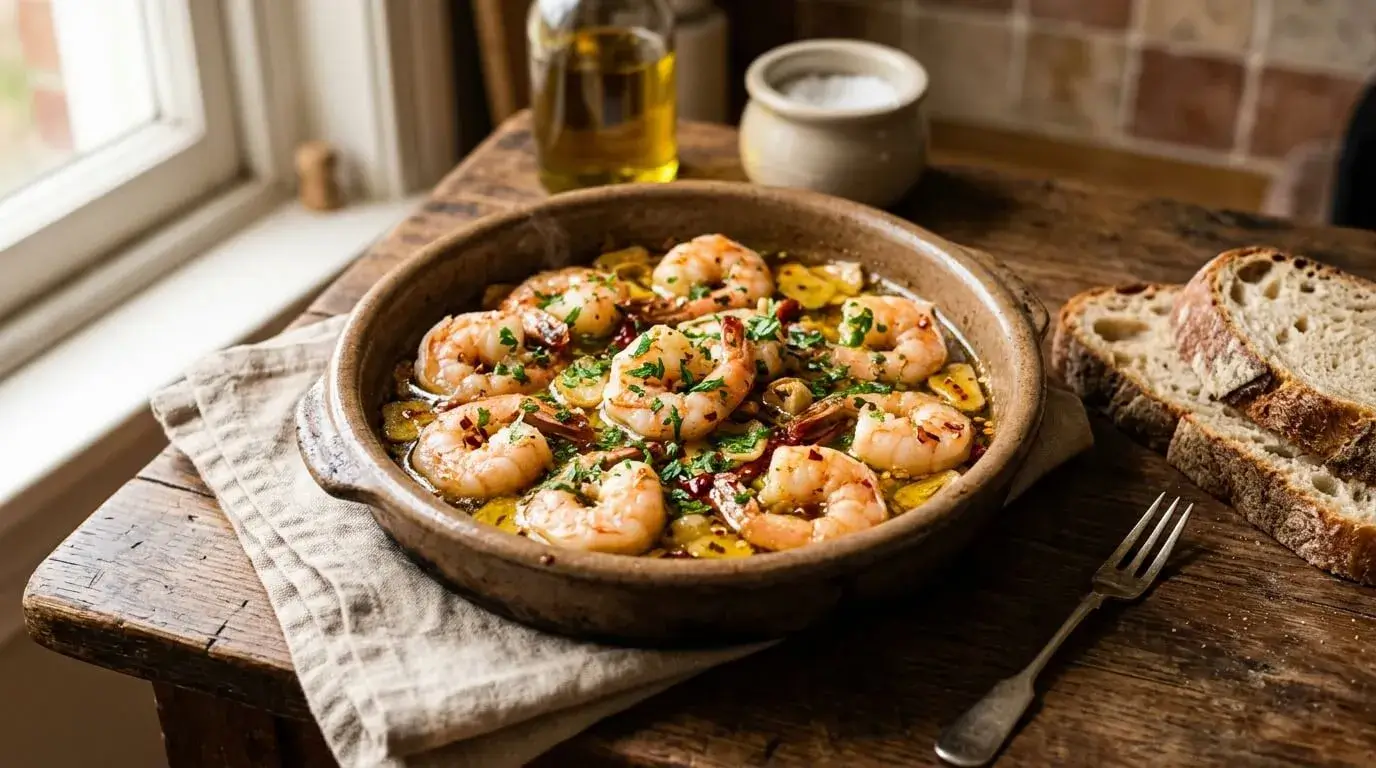
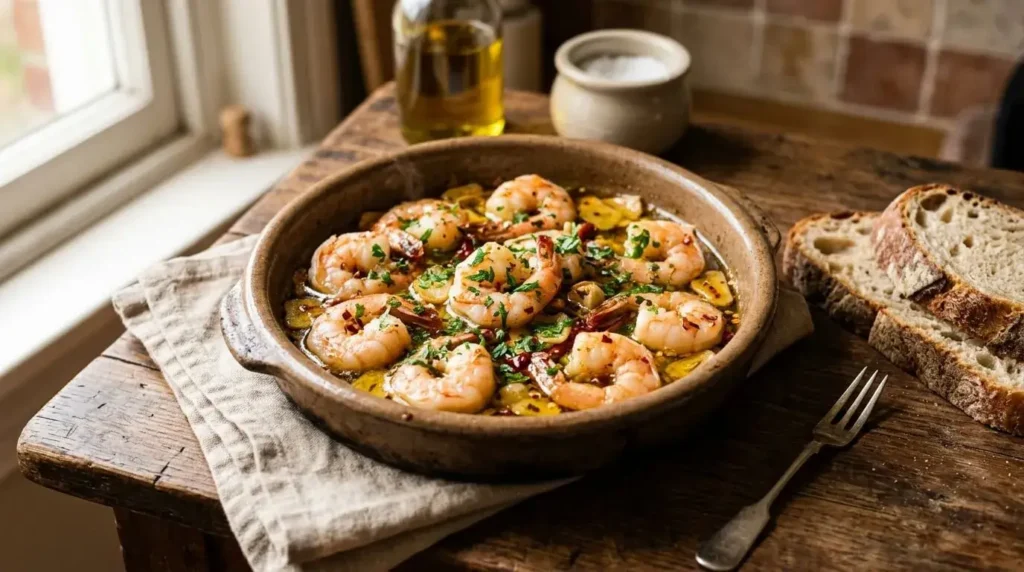
Gambas al ajillo is Spain’s classic sizzling shrimp dish – plump shrimp cooked quickly in olive oil that’s been infused with sliced garlic and a touch of chili, then brought straight to the table still bubbling. because it’s one of the simplest dishes in Spanish cooking and also one of the easiest to get wrong: burnt garlic, rubbery shrimp or oil that never actually tastes like garlic. That’s why this recipe walks through the technique that makes the difference, with honest timing – about 18 minutes start to finish – and the ingredients worth getting right.
Quick Answer: What Is Gambas al Ajillo? Gambas al ajillo means “shrimp in garlic” in Spanish and it’s one of the most common tapas served in bars and homes across Spain. Therefore, the dish is just shrimp, sliced garlic, olive oil and usually a dried chili or red pepper flakes, cooked together in a shallow pan until the shrimp turn pink and the oil turns fragrant and golden. Also, it comes together in under 20 minutes and is traditionally served straight from the pan with crusty bread for soaking up the oil.
What Is Gambas al Ajillo?
At its core, gambas al ajillo is a straightforward preparation: shrimp cooked quickly in olive oil with plenty of garlic and a bit of heat from chili. However, what makes it recognizable as gambas al ajillo – rather than just “shrimp with garlic” – is the ratio and technique: a generous amount of olive oil that becomes part of the dish, garlic sliced thin enough to turn golden without disappearing and shrimp cooked hot and fast so they stay tender. because it’s typically served in the same shallow dish it’s cooked in, still sizzling, with crusty bread nearby.
This is a tapas dish first and a home-cook favorite second. forever. You’ll find it on nearly every tapas menu in Spain, usually listed simply as “gambas al ajillo” and it’s just as common in home kitchens because it requires almost no prep beyond peeling shrimp and slicing garlic. Moreover, the dish’s appeal is its simplicity – there’s nowhere for a rushed technique to hide.
What Does “Gambas al Ajillo” Mean?
Gambas al ajillo translates literally to “shrimp in garlic” or “garlic shrimp.” because “gambas” is the Spanish word for shrimp or prawns and al ajillo describes the cooking method – simmered in olive oil with sliced garlic, a technique used for other Spanish dishes too, like champiñones al ajillo (garlic mushrooms). Further, in English-language recipes, you’ll usually see it called Spanish garlic shrimp.
Is Gambas al Ajillo a Tapas Dish?
Yes gambas al ajillo is a staple tapas dish, meant to be shared from the pan rather than plated individually. Moreover, it’s typically ordered alongside other small plates rather than as a standalone entrée and the shallow cazuela (earthenware dish) it’s cooked in usually goes straight to the table. Overall, that said, there’s nothing stopping you from serving it as a main course at home with a larger portion of shrimp and extra bread.
Where Gambas al Ajillo Comes From
Gambas al ajillo belongs to a broader family of Spanish al ajillo dishes – garlic-and-olive-oil preparations applied to shrimp, mushrooms and other quick-cooking ingredients. Also, it’s associated most closely with Andalusia, the southern region where tapas culture as it’s known today largely developed, though it’s cooked and served across Spain rather than tied to one province.
because the dish reflects two ingredients Spain has in abundance: olive oil and shellfish. Therefore, along the southern and Mediterranean coasts, fresh gambas are a routine catch and olive oil is the default cooking fat rather than a specialty item – so a dish built almost entirely from the two makes practical sense as everyday tapas food, not a special-occasion recipe. That’s why you can browse more Mediterranean recipes by region to see how neighboring cuisines handle similar olive-oil-and-garlic techniques.
Because gambas al ajillo is simple and widely made at home, you won’t find one single “correct” version, so much as a shared technique with small household variations – more or less chili, a shorter or longer garlic infusion, bread served on the side or underneath the shrimp.
Traditional Gambas al Ajillo vs. Modern Variations
However, the table below outlines the difference between the classic preparation and adaptations that have become common outside Spain, particularly in the U.S., where recipes sometimes drift toward heavier sauces or added ingredients that aren’t part of the traditional version.
| Element | Traditional/Core Approach | Common Adaptation |
| Shrimp | Small-to-medium shrimp, sometimes shell-on for flavor. | Large peeled shrimp, more common in the U.S. |
| Garlic | Thinly sliced and generous amount. | Minced garlic and milder flavor. |
| Olive oil | Generous pour, treated as part of the dish. | Reduced amount, used mainly for cooking. |
| Chili | Dried chili (such as guindilla) or red pepper flakes. | Fresh chili or omitted entirely. |
| Wine | Often omitted or a small splash of dry sherry. | White wine was added for a pan sauce. |
| Tomato | Not part of the classic preparation. | Tomato-based variation, closer to shrimp scampi. |
Gambas al Ajillo Ingredients
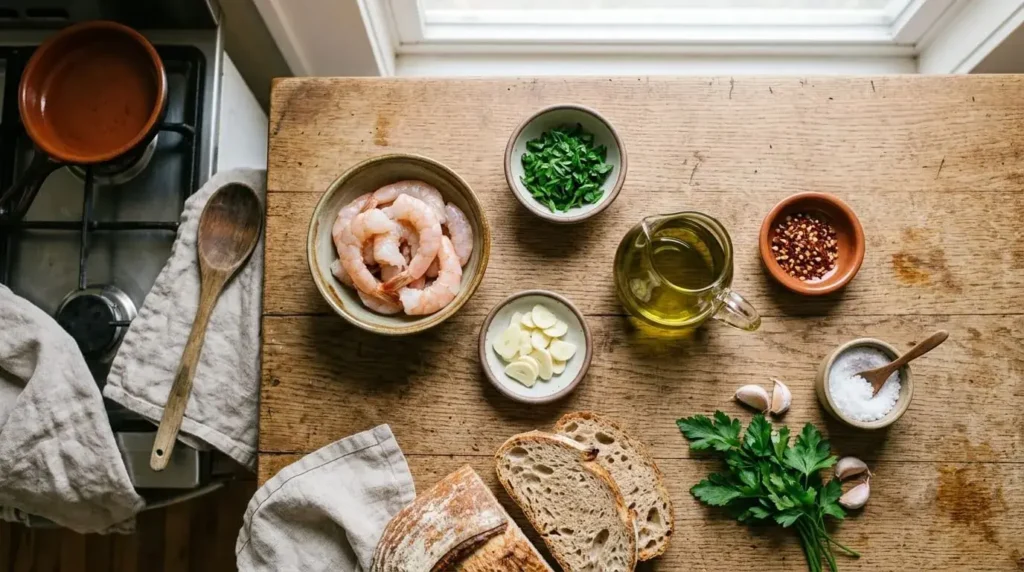
Gambas al ajillo only has a handful of ingredients, so each one carries real weight in the finished dish.
The Essential Ingredients
Shrimp (gambas). Use the best quality available – fresh if you can get it or shrimp that’s been frozen and properly thawed. Because freshness matters more than size; shrimp is the main event and should taste clean and sweet, not fishy.
Garlic. This dish uses more garlic than most recipes – six cloves per pound of shrimp isn’t excessive. Further slice it thin rather than mincing so it turns golden instead of burning bitter.
Extra-virgin olive oil. Not just a cooking medium: the oil becomes part of the dish, meant for soaking up with bread, so use one worth tasting on its own.
Chili, salt, and parsley. Dried chili flakes add background heat and a scattering of fresh parsley rounds out the seasoning at the end.
Ingredient Substitutions for U.S. Kitchens
Traditional gambas al ajillo relies on a few ingredients that aren’t always easy to find in a U.S. grocery store. Moreover, these swaps keep the dish workable without pretending they’re identical to the original.
| If You Can’t Find… | Use… | What Changes |
| Guindilla chili (dried Spanish chili) | Red pepper flakes. | Slightly less complex heat, but a similar warmth. |
| Fresh shell-on gambas | Peeled, deveined shrimp (fresh or properly thawed frozen). | Slightly less shellfish depth in the oil still works well. |
| Dry sherry | Dry white wine or omit entirely. | Loses a nutty note; omitting keeps the dish closer to the simplest classic version. |
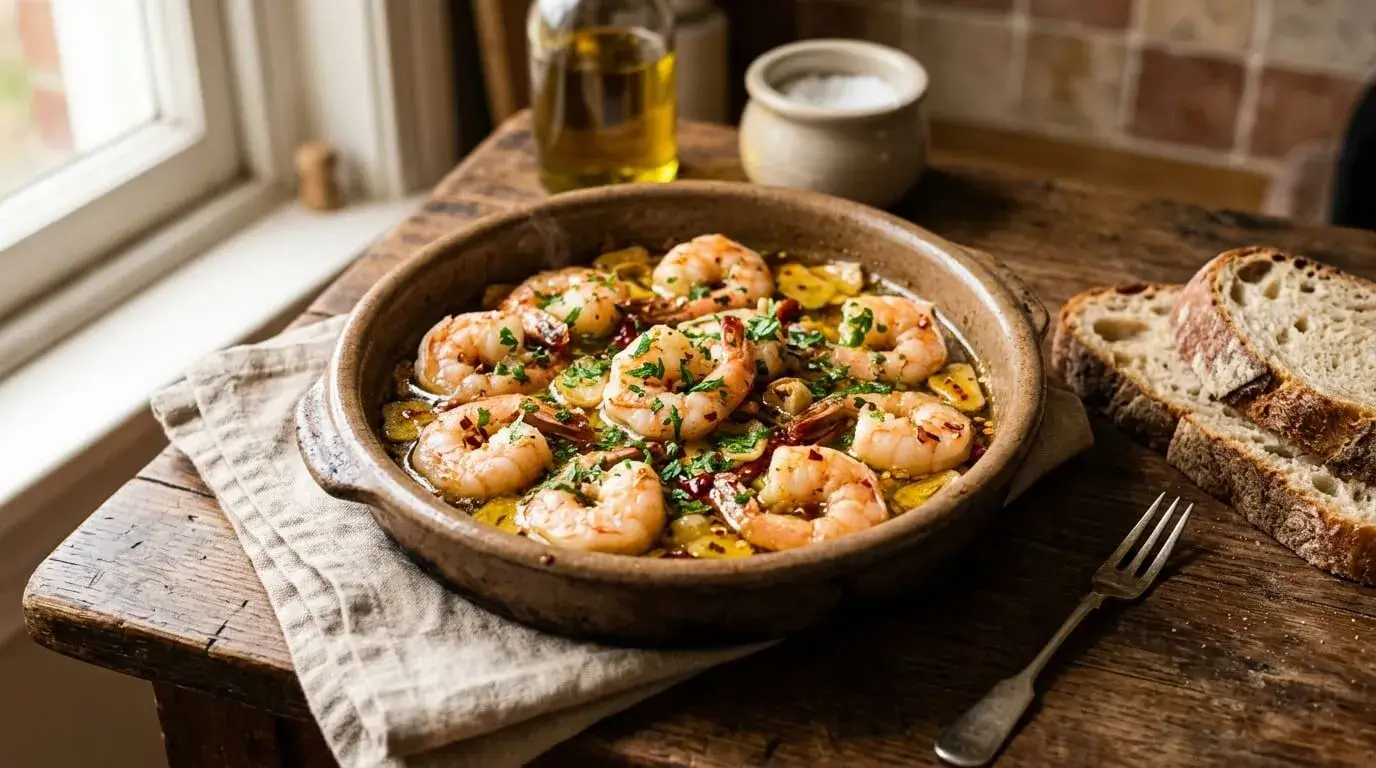
Gambas al Ajillo (Spanish Garlic Shrimp)
Ingredients
Method
Notes
- Don’t overcook the shrimp – the texture should stay tender, not rubbery.
- Keep the garlic under control; burnt garlic makes the whole pan of oil taste bitter.
- Dry shrimp cook more predictably and reduce excess liquid in the pan.
- Serve immediately for the best texture.
How to Make Gambas al Ajillo
Prepare the Shrimp and Garlic
Pat the shrimp completely dry with paper towels – this is the step people skip and it’s the reason a lot of gambas al ajillo ends up watery instead of golden. Also season lightly with salt. Because slice the garlic thin rather than mince it; thin slices cook more evenly and give you visible, edible pieces of garlic in the oil instead of a paste that scorches. Have everything measured and within reach before the pan goes on the heat, since the actual cooking happens fast.
Infuse the Olive Oil With Garlic
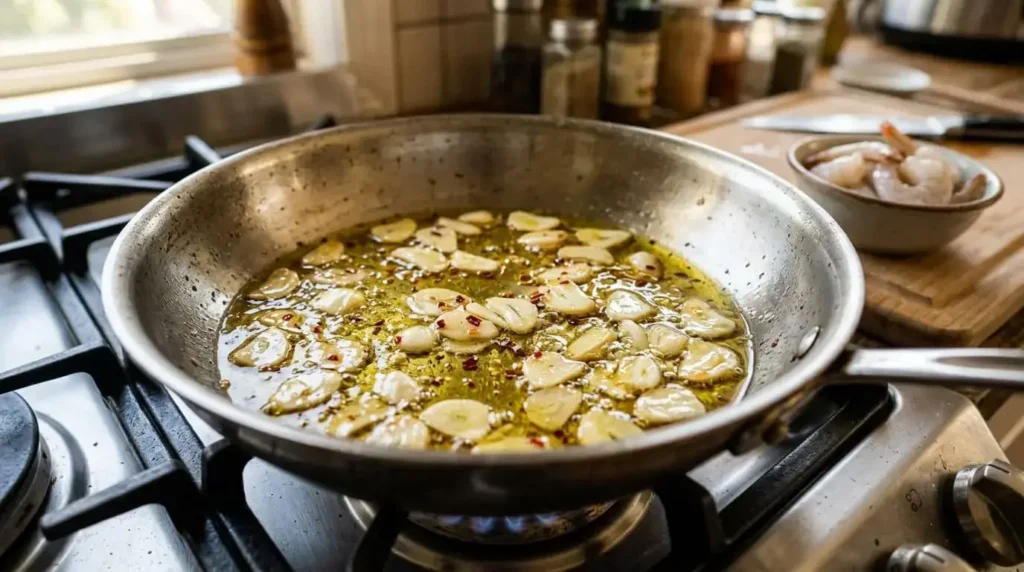
Add the olive oil to a wide, shallow skillet over medium-low heat, then add the garlic and chili flakes while the oil is still cool. Further, let them warm up together gradually – this is what actually infuses the oil, rather than just frying garlic in already hot oil. That’s why when I tested this, the garlic browned much faster than the shrimp cooked, so keeping the heat moderate until the garlic turns lightly golden matters more than rushing to get the shrimp in the pan.
Cook the Shrimp
Once the garlic is fragrant and just turning golden, raise the heat to medium-high and add the shrimp in a single layer – crowding the pan traps steam and gives you rubbery shrimp instead of a quick sear. Also cook for about 1 to 2 minutes per side, turning once you see the color change from gray to pink climbing up the sides. Therefore, shrimp are done as soon as they turn opaque and curl into a loose “C” shape; a tight, tense curl usually means they’ve gone a step too far. Because shrimp keep cooking briefly from residual heat, pull the pan off the burner a few seconds before they look completely done.
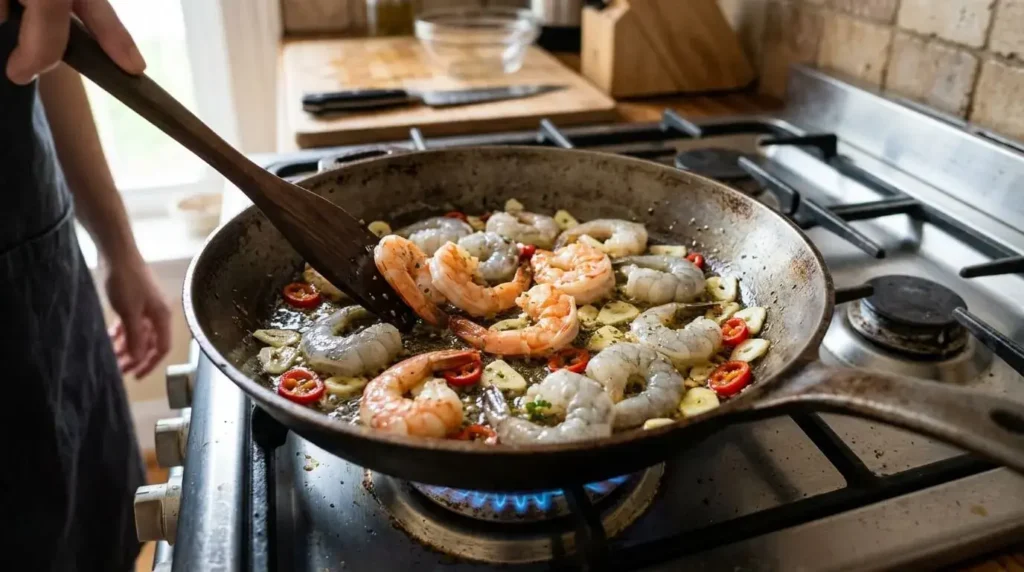
Finish and Serve Immediately
Taste the oil and adjust salt if needed, then scatter fresh parsley over the top. Then bring the pan straight to the table while it’s still sizzling – gambas al ajillo loses its appeal fast once it cools and the oil firms up instead of staying pourable. Also serve with plenty of crusty bread for soaking up what’s left in the pan.
How Long Does Gambas al Ajillo Take?
Gambas al ajillo is genuinely fast, but “5-minute recipe” claims you’ll sometimes see online skip real prep time. Because in this kitchen, prep – peeling shrimp if needed, slicing garlic, drying everything – takes about 10 minutes. Also, cooking, from oil going into the cold pan to the shrimp coming off the heat, takes roughly 8 minutes. Overall, that’s an 18-minute total, which is honest rather than optimistic: it accounts for letting the garlic infuse slowly instead of blasting it on high heat, which is where a lot of rushed versions end up with bitter oil.
Honest Timing: Prep time: 10 minutes. Cook time: 8 minutes. Total time: 18 minutes.
Gambas al Ajillo Decision Guide
Should You Add White Wine?
Wine isn’t part of the simplest, most common version of gambas al ajillo – the classic build is just shrimp, garlic, oil and chili. Because a small splash of dry sherry is a reasonable, well-established adaptation if you want extra depth, but it’s an addition rather than something the dish is missing without it.
Can You Make Gambas al Ajillo With Tomato?
Tomato isn’t part of the traditional preparation. Moreover, if you add it, you’re making a variation closer to shrimp in tomato sauce than classic gambas al ajillo – still good, just a different dish with a different texture and flavor balance.
Can You Make Gambas al Ajillo Without Wine?
Yes, easily – the recipe in this article doesn’t use wine at all. Further, skipping it doesn’t require reformulating anything else; you’ll just end up with a slightly more straightforward, garlic-forward oil instead of one with a subtle wine note.
Troubleshooting Gambas al Ajillo
Even with just four or five ingredients, gambas al ajillo goes wrong in predictable ways. Here’s what’s usually happening and how to fix it.
| Problem | Likely Cause | Fix |
| Shrimp are rubbery. | Overcooked or the pan was too crowded. | Cook in batches if needed and pull shrimp off the heat as soon as they turn opaque and curl loosely. |
| Garlic tastes bitter. | Cooked over heat that’s too high, too fast. | Start the garlic in oil that’s still cool and keep the heat at medium-low until it’s lightly golden. |
| Oil lacks garlic flavor. | Garlic added to already hot oil or cooked too briefly. | Let the garlic warm up gradually with the oil instead of frying it for just a few seconds. |
| Dishes taste flat. | Under-salted or served after it’s cooled. | Season at the end, not just the start and taste again right before serving. |
| Too much liquid in the pan. | Shrimp weren’t dried before cooking. | Pat shrimp thoroughly dry with paper towels and avoid crowding the pan. |
Most of these problems trace back to two things: heat that’s too aggressive for the garlic or shrimp that went into the pan wet. Fix those two and the rest tends to fall into place.
What to Serve With Gambas al Ajillo
Best Bread and Tapas Pairings
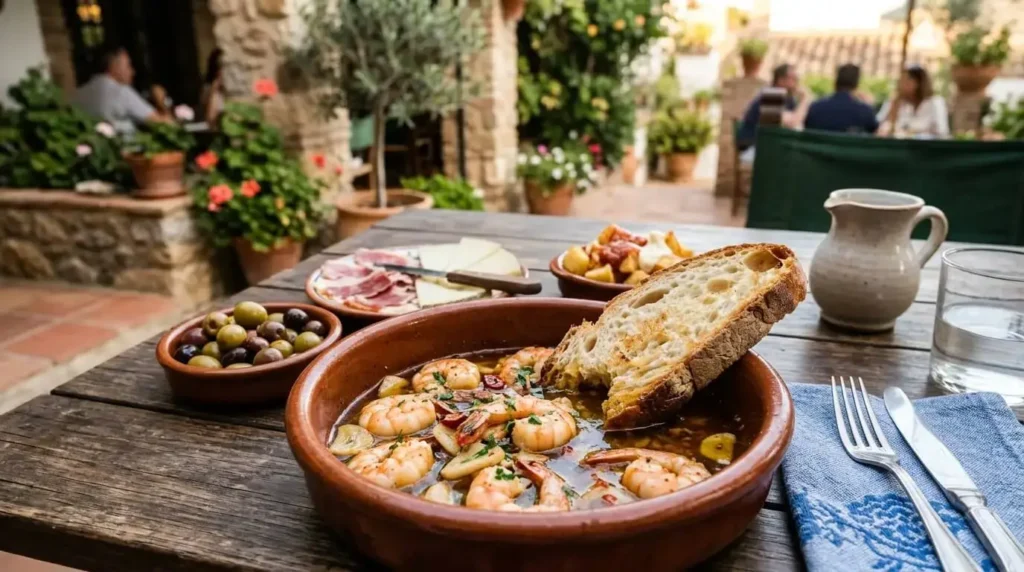
Crusty bread is non-negotiable here – the garlic-infused olive oil is arguably the best part of the dish and a rustic loaf with a sturdy crust holds up to dipping without falling apart. Therefore, pair it with other simple tapas that don’t compete for attention: marinated olives, manchego cheese or patatas bravas all work well alongside gambas al ajillo without overwhelming the garlic and shrimp.
Building a Spanish-Inspired Meal
For a fuller spread, add a simple green salad and one or two more tapas so guests can build their own plate. That’s why if you’re exploring more of this style of cooking, browse Mediterranean recipes for other small-plate ideas that pair naturally with garlicky, olive-oil-forward dishes like this one.
Storage and Reheating
Let leftover gambas al ajillo cool briefly, then refrigerate it in an airtight container. Further, cooked shrimp keep safely in the refrigerator for about three to four days and cooked seafood dishes should generally follow USDA safe food-handling guidance for storage and reheating temperatures.
Reheat gently – shrimp overcook fast the second time around. Then a quick warm-up in a skillet over low heat works better than a microwave, which tends to turn already-cooked shrimp rubbery. Moreover, if you’re unsure about handling raw shrimp safely before cooking, the FDA’s guidance on selecting and serving seafood is a solid reference. because freezing the finished dish isn’t recommended – the texture of the shrimp and the emulsified oil don’t hold up well after thawing.
Are Gambas al Ajillo Healthy?
Gambas al ajillo isn’t a diet dish, but it’s not far from how a lot of Mediterranean cooking works: a lean protein cooked in olive oil, without heavy sauces, cream or breading. because shrimp is a good source of protein and relatively low in calories on its own and olive oil contributes the kind of unsaturated fat associated with the Mediterranean dietary pattern, as described by Harvard T.H. Chan School of Public Health. Further, if you want to see how this fits into a broader way of eating, our Mediterranean diet guide covers the pattern in more depth.
That said, this dish is typically served with a generous amount of oil and plenty of bread for dipping, so portion size matters more than any single ingredient. Treat it as part of a balanced spread of tapas rather than a stand-alone “health food.”
Frequently Asked Questions
What Is Gambas al Ajillo?
Gambas al ajillo is a classic Spanish tapas dish of shrimp cooked in olive oil with sliced garlic and a bit of chili heat. Therefore, the name translates to “shrimp in garlic.” It’s simple, quick to cook and traditionally served sizzling straight from the pan with crusty bread for the flavorful oil.
What Are Gambas al Ajillo Made Of?
The core ingredients are shrimp, garlic, extra-virgin olive oil, dried chili or red pepper flakes, salt and parsley. Because some versions add a splash of dry sherry, but that’s an optional adaptation rather than part of the essential recipe. Then tomato- and wine-heavy sauces are modern variations, not the traditional build.
Is Gambas al Ajillo a Spanish Dish?
Yes. Gambas al ajillo is a staple of Spanish tapas culture, associated especially with Andalusia in southern Spain, though it’s cooked and served throughout the country. Overall, it belongs to a family of Spanish al ajillo dishes that use the same garlic-and-olive-oil technique on other quick-cooking ingredients.
How Do You Make Gambas al Ajillo?
Dry the shrimp, slice the garlic thin and warm both garlic and olive oil together over medium-low heat until fragrant. Forever raise the heat, add the shrimp in a single layer and cook briefly until opaque and just curled. Also finish with salt and parsley and serve immediately with bread.
Can You Make Gambas al Ajillo Without Wine?
Yes – the classic version doesn’t require wine at all. because this recipe skips it entirely, relying on garlic and olive oil for flavor. Then leaving wine out doesn’t mean substituting something else; the dish is designed to work with just shrimp, garlic, oil, salt and chili.
Can You Add Tomato to Gambas al Ajillo?
You can, but it turns the dish into a variation rather than the classic preparation – closer to a tomato-based shrimp dish than traditional gambas al ajillo. Moreover, if you want the authentic version, skip the tomato and let the garlic and olive oil carry the flavor instead.
What Do You Serve With Gambas al Ajillo?
Crusty bread is essential, since the garlic-infused olive oil is meant to be soaked up. However, beyond that, pair it with simple Spanish tapas like marinated olives, manchego cheese or patatas bravas and keep other dishes light so they don’t compete with the garlic.
Are Gambas al Ajillo Healthy?
It can fit comfortably into a balanced diet – shrimp is a lean protein and olive oil provides unsaturated fat, both hallmarks of Mediterranean cooking. That said, it’s typically served with a generous amount of oil and bread for dipping, so portion size matters more than treating it as a standalone health food.
Final Recipe Notes
Gambas al ajillo rewards patience with the garlic and confidence with the heat once the shrimp go in. Keep bread on hand before you start cooking – the dish moves fast once it’s ready and the point of gambas al ajillo is eating it hot, oil and all, not letting it sit and cool on the counter.
published as placeholders.