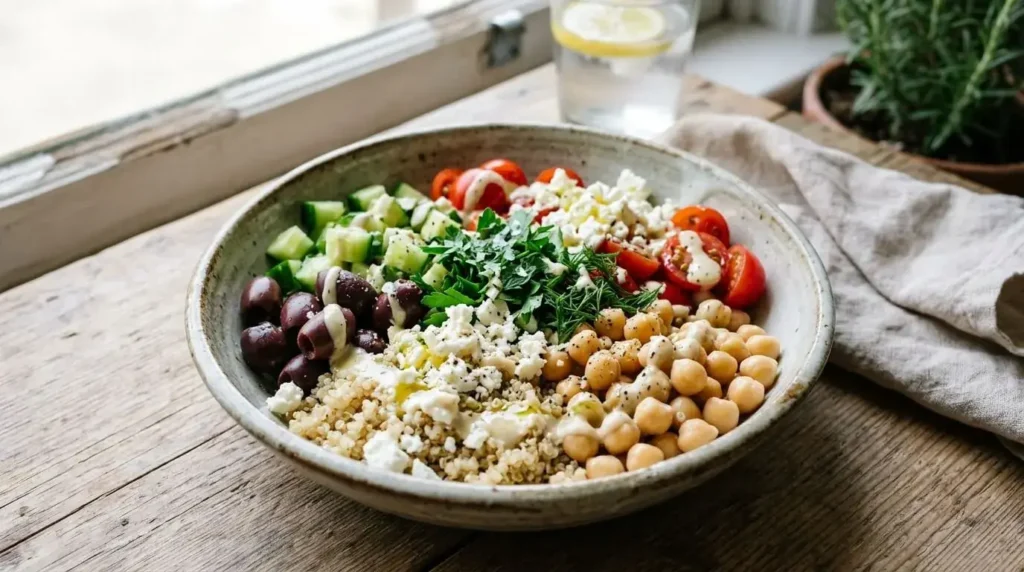
This Mediterranean chickpea bowl recipe layers cooked quinoa, chickpeas, crisp vegetables, feta and a creamy lemon tahini dressing into one high-protein bowl. Furthermore, it draws on real Greek cooking principles rather than a vague, however, “Mediterranean” label and it’s built for anyone who wants a plant-forward lunch or dinner they can prep ahead. because realistic prep time is 40 minutes from scratch or about 20-25 minutes if your grains are already cooked.
What is a Mediterranean chickpea bowl? A Mediterranean chickpea bowl is a grain bowl built on cooked chickpeas, a whole grain like quinoa or brown rice and fresh vegetables – cucumber, tomatoes, red onion – finished with feta, olives and a lemon tahini dressing. Therefore, it draws its flavor and protein logic from Greek and wider Eastern Mediterranean cooking and takes about 40 minutes to make from raw ingredients.
Why You’ll Love This Mediterranean Chickpea Bowl
This bowl earns a place in a regular rotation for a few practical reasons:
- Meal-prep friendly – every component holds up in the fridge for several days when stored correctly.
- High in protein – chickpeas, quinoa, feta and optional add-ins push each serving well past a typical vegetable-forward lunch.
- Fully customizable – swap the grain, the protein or the vegetables without losing the flavor profile.
- Naturally gluten-free when built on rice or certified gluten-free quinoa.
- Made from fresh, recognizable ingredients -also no processed shortcuts required.
What Makes This Bowl Mediterranean?
I want to be upfront about something most recipe sites gloss over: this isn’t a traditional, centuries-old Greek dish. Because grain bowls as a format are a modern, largely American way of eating – nobody in a Greek village is assembling quinoa in a bowl with a fork drizzle of tahini. What makes this dish genuinely Mediterranean is that it’s built from real Greek ingredients and flavor logic, then arranged in a contemporary format.
Traditional Greek Ingredients Used
The ingredients doing the actual work here are authentic. because extra virgin olive oil is the backbone of Greek cooking, used both as a cooking fat and a finishing touch. Further, feta, made from sheep’s or goat’s milk, is a defining Greek cheese with a sharp, briny character that plain block cheeses can’t replicate. That’s why fresh herbs-parsley, dill, oregano – are used generously rather than as garnish. Also, tomatoes and cucumber are the base of the classic Greek village salad and chickpeas (revithia) show up in Greek stews and salads well before grain bowls existed.
How Other Mediterranean Regions Would Make It
Chickpeas and tahini aren’t exclusively Greek – they show up across the eastern Mediterranean or North Africa, then each region handles them a little differently.
| Region | Typical treatment | Signature flavor addition |
| Greek | Chickpeas in salads or stews, herbed and olive-oil-forward. | Oregano, lemon and feta. |
| Levantine (Lebanese orPalestinian) | Chickpeas mashed into hummus or fried as falafel. | Cumin, sumac, and tahini-heavy sauces. |
| Turkish | Chickpeas simmered into nohut yemeği stews. | Paprika, mint and yogurt. |
| North African | Chickpeas in tagines and couscous dishes. | Cumin and harissa are preserved lemons. |
This bowl leans Greek but borrows tahini, which is more central to Greek cuisine as it overlaps with Levantine and Turkish tables – a good example of how Mediterranean food traditions influence each other rather than existing in isolation. Moreover, for more dishes rooted in this tradition, see our full collection of Greek recipes.
Ingredients You’ll Need
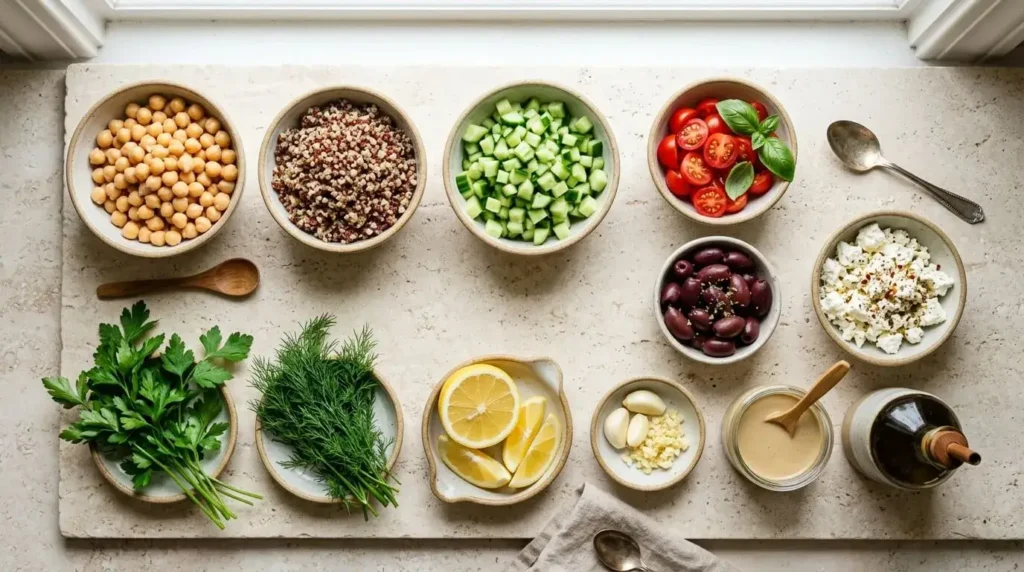
Every ingredient here is doing a specific job – this isn’t a random assortment of “healthy” items.
Base Ingredients
Chickpeas provide the bulk of the plant protein and a firm, slightly nutty bite. because quinoa adds a complete protein profile and a light, fluffy texture that won’t turn mushy the way some grains do when dressed ahead of time.
Vegetables
Cucumber and cherry tomatoes bring moisture and crunch, red onion adds sharpness and Kalamata olives contribute the briny depth that ties the whole bowl back to Greek flavor logic.
Protein Boosters
Feta is the easiest way to raise both protein and richness. Greek yogurt, grilled chicken or a soft-boiled egg all work as optional add-ons if you want more.
Tahini Lemon Dressing
Tahini forms the creamy base; further lemon juice cuts through the richness and a small amount of garlic and oregano rounds it out without overpowering the vegetables.
| Ingredient | Purpose | Possible Substitution | US Grocery Alternative |
| Chickpeas | Protein and texture | White beans | Canned cannellini beans |
| Quinoa | Complete protein grain base | Brown rice or farro | Bagged pre-cooked rice |
| Feta | Salty and tangy richness | Goat cheese | Crumbled goat cheese |
| Tahini | Creamy and nutty dressing base | Sunflower seed butter | Trader Joe’s or Whole Foods brand |
| Kalamata olives | Brininess | Green olives | Any pitted olive at a standard grocer |
| Fresh dill | Bright and grassy note | Fresh mint | Dried dill (use sparingly) |
How to Make Mediterranean Chickpea Bowls
- Cook the quinoa according to package directions, then spread it on a plate to cool slightly. That’s why I’ve found that letting the quinoa cool for a few minutes keeps the vegetables crisp instead of slightly wilting when everything gets layered together.
- Rinse and drain the chickpeas thoroughly – leftover canning liquid can make the bowl taste tinny.
- Dice the cucumber, tomatoes, and red onion and roughly chop the parsley and dill. Moreover, keeping the dice small and even helps every bite get a bit of everything.
- Whisk the dressing: combine tahini, lemon juice, olive oil, grated garlic, oregano, salt and pepper, and further add water a tablespoon at a time until it turns smooth and pourable rather than clumpy.
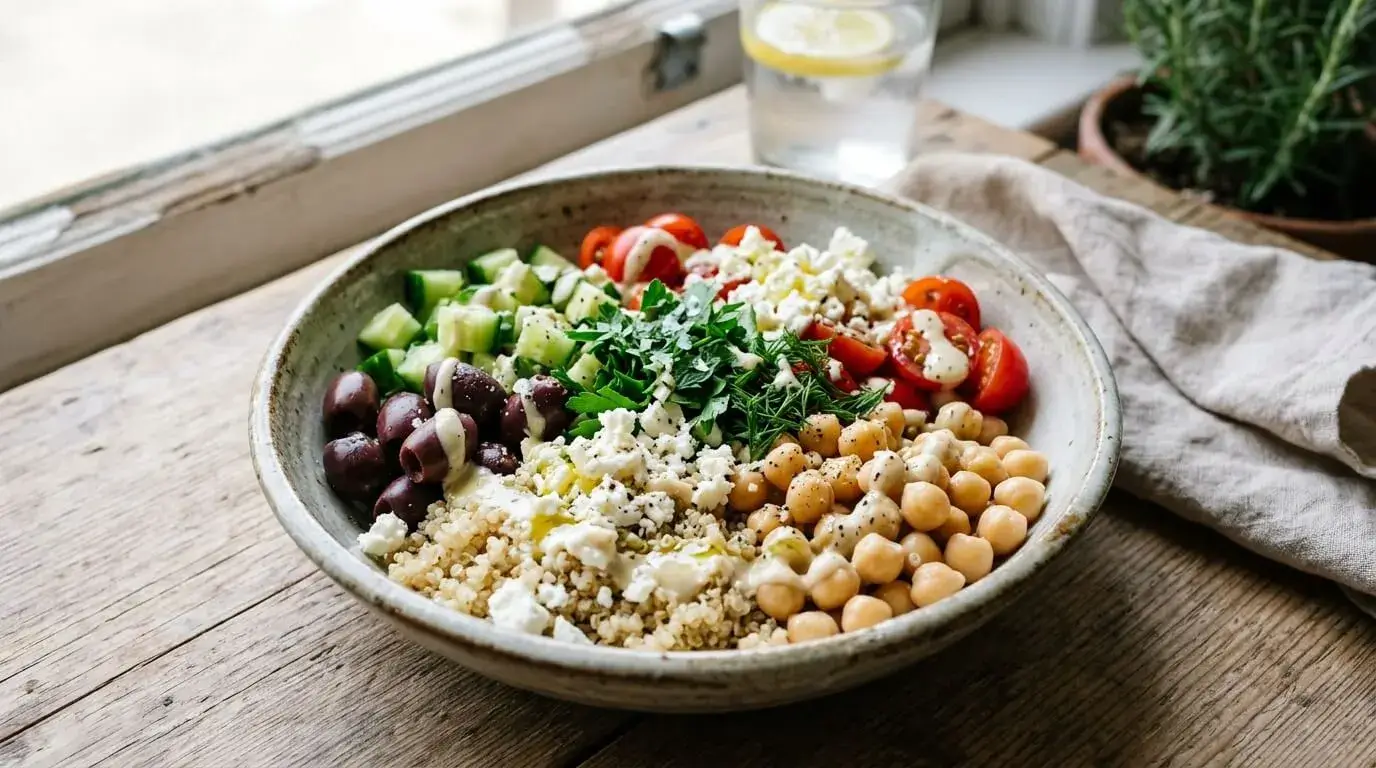
- Divide the quinoa among four bowls as the base layer.
- Add the chickpeas, then arrange the cucumber, tomato and onion around them.
- Scatter the olives and feta over the top.
- Toss the dressing just before serving so the vegetables stay crisp and the herbs remain vibrant, rather than dressing everything ahead of time.
- Finish with parsley, dill, and a crack of black pepper, plus an optional final drizzle of olive oil.
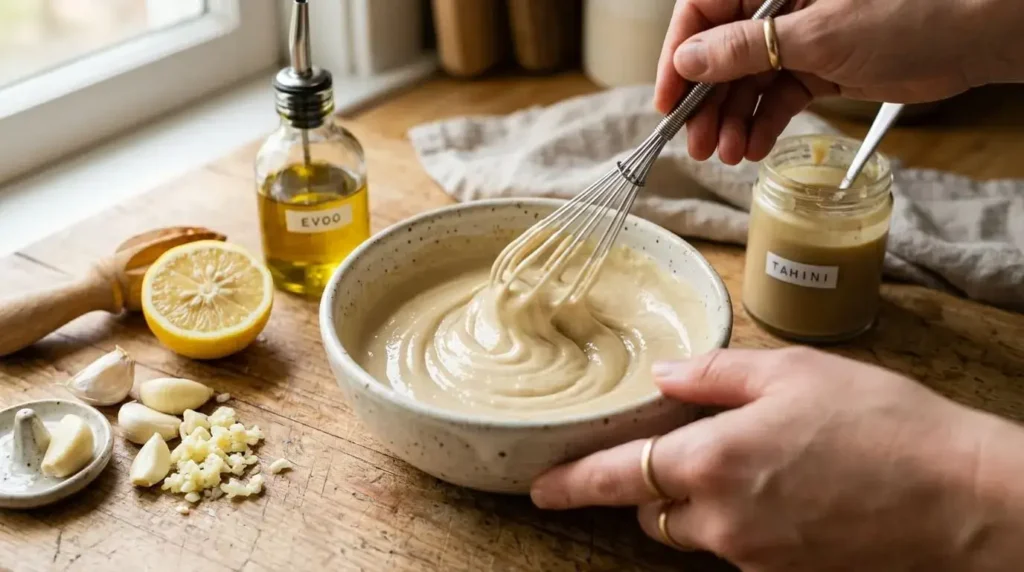
[IMAGE 4: assembling-mediterranean-chickpea-bowl.jpg | Assembling a Mediterranean chickpea bowl recipe | Building the Bowl | Layer ingredients before adding the dressing for the freshest presentation. | Shows readers the recommended assembly order for balanced flavor and presentation.]
Honest Timing Notes
A lot of recipes online quote 15-20 minutes for a bowl like this and after testing this recipe several times, that’s why I can say that number only holds if your grain is already cooked and your vegetables are pre-chopped. Because starting from raw quinoa and unwashed produce, this recipe realistically takes 40 minutes: 20 minutes of prep and 20 minutes to cook the quinoa (which can happen at the same time as chopping).
| Starting Point | Real Total Time |
| Raw quinoa and fresh vegetables | 40 minutes |
| Pre-cooked grain and fresh vegetables | 20-25 minutes |
| Pre-cooked grain and pre-chopped vegetables | 10-15 minutes |
High-Protein Mediterranean Chickpea Bowl
Ingredients
Method
- tions:
- Cook quinoa according to package directions and allow it to cool slightly.
- Rinse and drain chickpeas thoroughly.
- Dice cucumber, tomatoes, onion, herbs and olives.
- Whisk together tahini, lemon juice, olive oil, garlic, oregano, salt, pepper and water until creamy.
- Divide quinoa among serving bowls.
- Top with chickpeas.
- Arrange vegetables evenly.
- Add olives and feta.
- Drizzle generously with dressing.
- Finish with parsley, dill, cracked pepper and a drizzle of olive oil.
- Serve immediately.
Notes
- Homemade dressing tastes fresher than bottled.
- For meal prep, store dressing separately.
- Quinoa can be replaced with brown rice or farro.
- Add grilled chicken for additional protein.
- Use vegan feta for a dairy-free variation.
- Fresh herbs make the biggest flavor difference.
- Calories: 460-520
- Protein: 18-22 g
- Carbohydrates: 42-48 g
- Fat: 24-28 g
- Fiber: 10–12 g
- Sodium: Varies with feta and olives
(Final values should be generated by WP Recipe Maker’s nutrition calculator.)
How to Build the Best Bowl Every Time
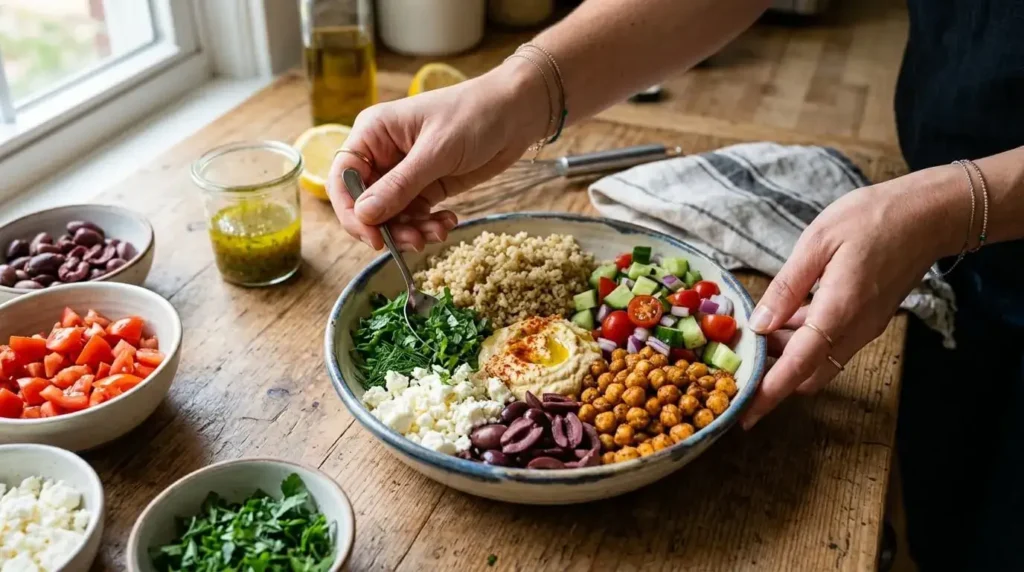
Once you understand the underlying structure, you can rebuild this bowl endlessly without a recipe.
| Step | Options |
| Base | Quinoa, brown rice, farro and couscous |
| Protein | Chickpeas, grilled chicken, lentils and soft-boiled egg |
| Vegetables | Cucumber, tomato, bell pepper and roasted zucchini |
| Sauce | Tahini lemon, Greek yogurt herb sauce and red wine vinaigrette |
| Crunch | Olives, toasted pine nuts and pumpkin seeds |
| Fresh herbs | Parsley, dill, mint and oregano |
Pick one item from each row and the bowl will taste balanced, because regardless of which combination you choose.
High-Protein Variations
Protein content shifts noticeably depending on which additions you build in.
| Base | Protein Level |
| Chickpeas only | Moderate |
| Chickpeas and Greek yogurt | Higher |
| Chickpeas and feta | Higher |
| Chickpeas and grilled chicken | Highest |
| Chickpeas and quinoa | Complete protein profile |
If you’re eating this as a stand-alone meal rather than a side, I’d lean toward chickpeas plus quinoa as a baseline and also then add grilled chicken or a soft-boiled egg if you want more staying power.
Substitutions
None of these swaps will break the recipe, but they will shift the flavor slightly.
| Original Ingredient | Replacement | Flavor Impact | Availability |
| Feta | Goat cheese | Milder tang and creamier texture | Widely available |
| Parsley | Cilantro | Brighter and slightly citrusy | Common in most stores |
| Quinoa | Brown rice or farro | Chewier, more filling | Very common |
| Tahini | Sunflower seed butter | Slightly sweeter and less nutty | Specialty or health food aisle |
| Kalamata olives | Green olives | Sharper and less fruity | Common |
Serving Suggestions
This bowl works as a standalone meal, but a few pairings round it out further. Therefore, a cup of lentil soup adds warmth on cooler days and warm pita on the side is useful for scooping up stray chickpeas and dressing. Also, a simple Greek salad doubles down on the same flavor profile if you want more vegetables. Because roasted vegetables or lemon potatoes make good additions for a heartier dinner spread and sparkling water or fresh fruit keeps the meal light. For more ideas built around these same flavors, browse our Mediterranean recipe collection.
Storage & Meal Prep
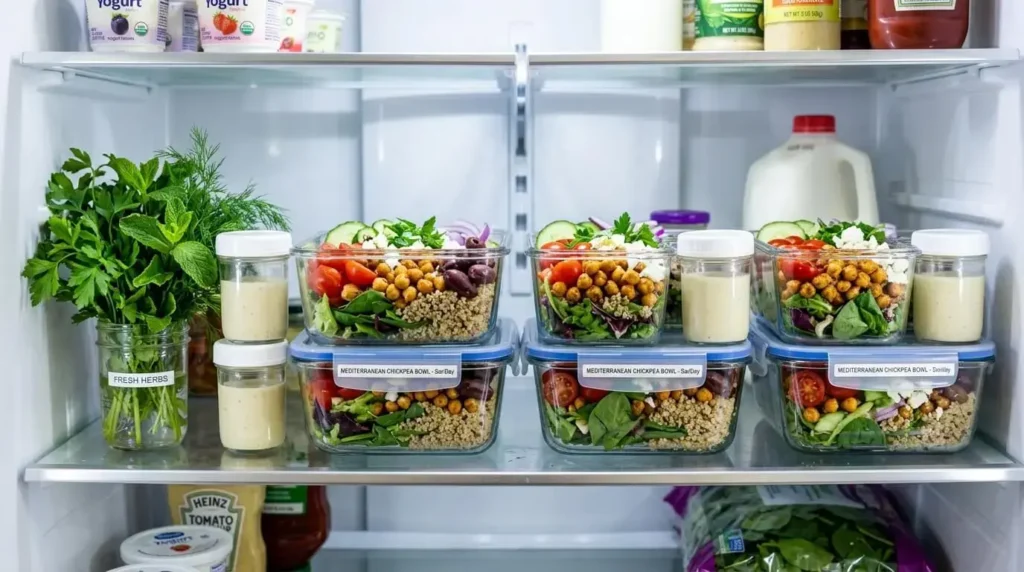
This bowl is genuinely built for meal prep, but a few storage details matter for texture. Then store the dressing separately from the assembled bowl – dressed vegetables turn soft and watery within a day. Because keep the quinoa, chickpeas and vegetables in one container and the dressing in a small, separate one, then combine right before eating. Refrigerate everything promptly after cooking and assembly and use safe reheating practices if you’re warming the grain component.
| Component | Storage Method | Shelf Life |
| Assembled bowl (no dressing) | Airtight container and refrigerated | 3-4 days |
| Dressing | Separate small container, refrigerated | 5-6 days |
| Cooked quinoa alone | Airtight container and refrigerated | 4-5 days |
[IMAGE 5: mediterranean-chickpea-bowl-meal-prep.jpg | Mediterranean chickpea bowl meal prep containers | Meal Prep Mediterranean Bowls | Store dressing separately to keep vegetables crisp. | Illustrates proper meal prep and storage for freshness.]
Troubleshooting
Most problems with this bowl come down to timing or proportion rather than the recipe itself.
| Problem | Cause | Fix |
| Bowl tastes bland. | Under-salted dressing or vegetables. | Salt each component separately, not just at the end. |
| The bowl is too dry. | Too little dressing or oil. | Add dressing gradually and taste as you go. |
| Dressing is too thick. | Not enough water whisked in. | Add water one tablespoon at a time until pourable. |
| Vegetables turn watery. | Dressed too far ahead of time. | Store dressing separately and combine right before eating. |
| Quinoa is mushy. | Overcooked or not drained well. | Cook just until the germ ring appears, then fluff and cool uncovered. |
Mediterranean Diet Benefits of Chickpeas
Chickpeas fit naturally into a Mediterranean-style eating pattern, which emphasizes legumes, vegetables, whole grains and olive oil as everyday staples rather than occasional additions. Legumes are considered a core component of healthy Mediterranean-style eating patterns, largely because of their fiber and plant protein content. Moreover, chickpeas specifically contribute fiber, plant-based protein and micronutrients that complement the vegetables and olive oil already central to this style of cooking – detailed nutrient breakdowns are available through USDA FoodData Central. Further, this bowl isn’t a cure for anything, but it’s a straightforward way to build more legumes and vegetables into a regular meal rotation.
Frequently Asked Questions
What are the ingredients in a Mediterranean chickpea bowl?
A Mediterranean chickpea bowl typically includes chickpeas, a cooked grain like quinoa or rice, cucumber, cherry tomatoes, red onion, Kalamata olives, feta cheese, fresh herbs and a lemon tahini dressing. Because the exact mix varies, but chickpeas and a tahini-based sauce are the defining elements.
Are chickpeas good on the Mediterranean diet?
Yes. Chickpeas are a legume and legumes are considered a staple protein source in Mediterranean-style eating patterns, valued for their fiber and plant protein content alongside vegetables, whole grains and olive oil.
Can I make this bowl vegan?
Yes. Swap the feta for a plant-based feta alternative or simply omit it and skip any yogurt-based add-ins. Therefore, the tahini dressing is already dairy-free.
Can I use canned chickpeas?
Yes and most people do. Also, rinse and drain them thoroughly before adding them to the bowl to remove excess sodium and canning liquid, which can otherwise make the dish taste flat.
What grain works best?
Quinoa is the best default because it cooks quickly and adds its own protein. Because brown rice or farro both work well if you prefer a chewier texture or already have one on hand.
Can I meal prep these bowls?
Yes – this recipe is well suited to it. Then store the components separately from the dressing and combine them just before eating to keep the vegetables from turning watery.
Can I freeze it?
Freezing isn’t recommended. Further, the fresh vegetables and dressing don’t hold their texture after thawing, though the cooked quinoa and chickpeas can be frozen separately if needed.
What dressing goes best?
The lemon tahini dressing in this recipe is the most traditional pairing, but a Greek yogurt herb sauce is a good lighter alternative if you want less richness.
Conclusion
This bowl is meant to be a starting point, not a fixed formula. However, swap in whatever vegetables are in season, adjust the protein to what you have on hand and keep the Mediterranean flavor principles – good olive oil, fresh herbs, acid from lemon – intact. Also explore more ideas across Mediterranean cuisines for other ways to build meals around these same ingredients.
[IMAGE 1: mediterranean-chickpea-bowl-recipe.jpg | Mediterranean chickpea bowl recipe with quinoa, feta and tahini dressing | Mediterranean Chickpea Bowl Recipe | Fresh Greek-inspired chickpea bowl topped with creamy tahini dressing. | Hero image showing the finished Mediterranean chickpea bowl from a 45-degree angle with vibrant vegetables and authentic Mediterranean ingredients.]
[IMAGE 2: mediterranean-chickpea-bowl-ingredients.jpg | Ingredients for Mediterranean chickpea bowl recipe | Mediterranean Chickpea Bowl Ingredients | Everything needed to build a fresh Mediterranean-inspired bowl. | Ingredient overview helping readers identify fresh produce and pantry staples before cooking.]